
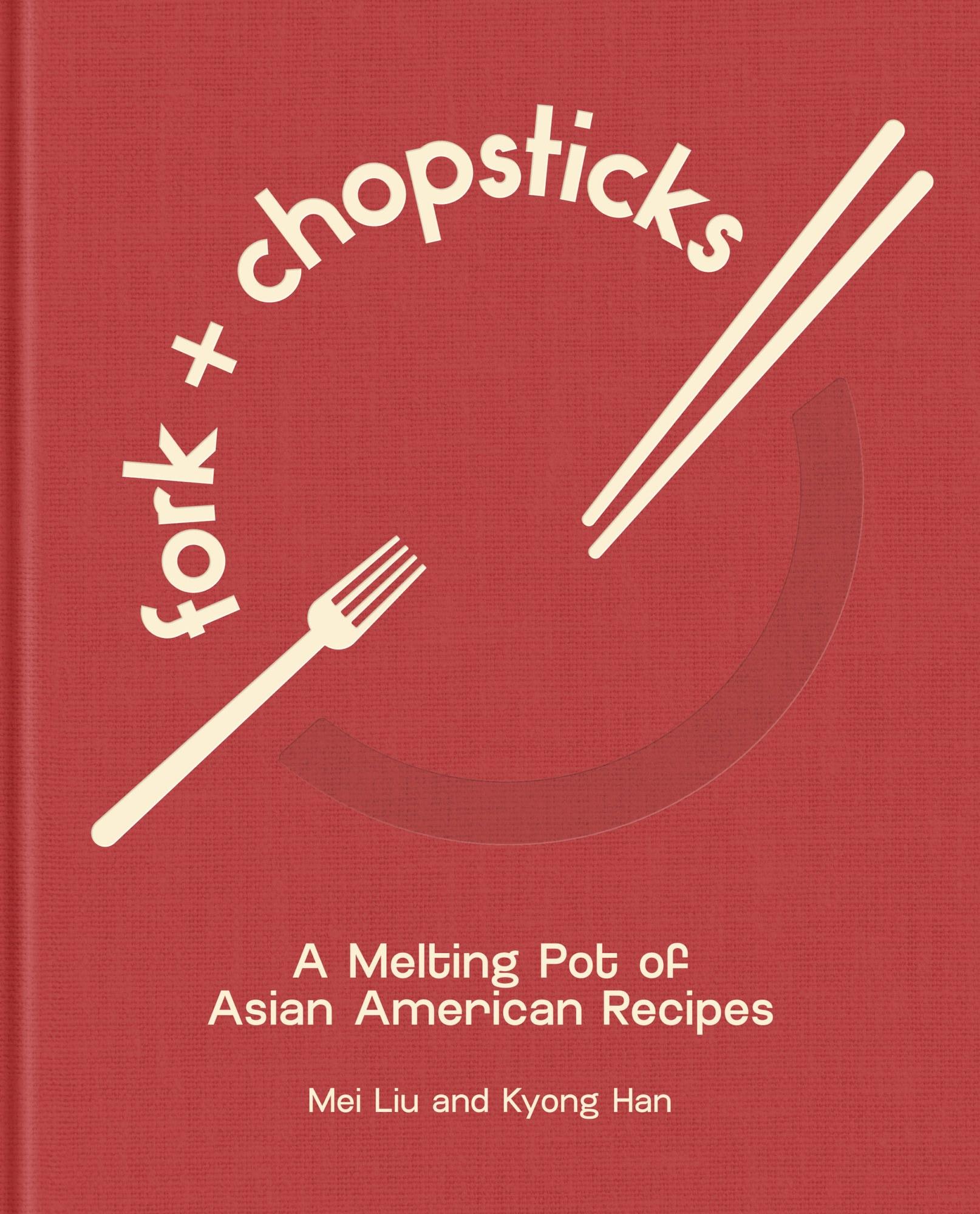
Photo by DK / Two Plaid Aprons. Licensed under Courtesy Two Plaid Aprons. Official cookbook cover. Resized for web.
The Two Plaid Aprons Cookbook Puts Kimchi in Carbonara and Sichuan Pepper on Steak au Poivre
In Fork & Chopsticks, Mei Liu and Kyong Han cook from Chinese, Korean, and Louisiana kitchens. Three recipes show where the seasoning or technique changes a familiar dish.
November 16, 2026
Mei Liu and Kyong Han’s debut cookbook, Fork & Chopsticks: A Melting Pot of Asian American Recipes, came out from DK on November 3. The hardcover is 256 pages and $38. They run the Two Plaid Aprons blog, and they cook from Chinese and Korean kitchens with Louisiana childhoods behind them. The recipes worth stopping for are the ones where a seasoning or a technique from one of those kitchens lands inside a plate you already know.
Liu grew up in her parents’ Chinese restaurant in Louisiana, JoySauce reported. Han, who is Korean and was also raised there, told the same outlet about grandparents who made stews, bone broths, and kimchi while his mother cooked fast dinners after work at the family’s dry cleaners. They met in culinary school, live in Dallas, and set the table with a fork beside the chopsticks. DK names three dishes that work that way: Sichuan Pepper Steak au Poivre, Kimchi Carbonara, and Roasted Rice Tiramisu.
Sichuan Pepper Steak au Poivre
Classic steak au poivre builds its crust and sauce on cracked black pepper. Here, Sichuan peppercorns do that work. Han called it his favorite recipe in the book, a playful take on the French dish. The move that matters is the butter. Sichuan pepper can numb the mouth. Cooking the peppercorns in butter, he told JoySauce, mellows that buzz and pulls the sauce together.
Kimchi Carbonara
Carbonara usually runs on cured pork, egg, hard cheese, and black pepper. Kimchi Carbonara folds fermented napa cabbage kimchi into that pasta. The Korean ferment brings acid, chile heat, and cabbage into a dish that otherwise stays rich and salty. JoySauce pointed to that carbonara as one of the book’s clearest blends. Han grew up with grandparents who made kimchi; the Italian egg-and-cheese method still makes the sauce.
Roasted Rice Tiramisu
Tiramisu usually tastes like espresso soaked into ladyfingers under mascarpone. Roasted Rice Tiramisu, also named by DK, shifts the aroma to roasted rice. Chinese and Japanese cooks toast grain for fragrance; here that smell sits where coffee usually does in an Italian dessert.
JoySauce also noted shrimp and grits in the book, the Southern plate beside the Asian ones. DK still lists dumplings and bibimbap among the classics. Start with the steak, the carbonara, and the tiramisu if you want to taste how the pepper, the kimchi, and the roasted rice change a familiar dish. The weeknight recipes fill out the rest.