
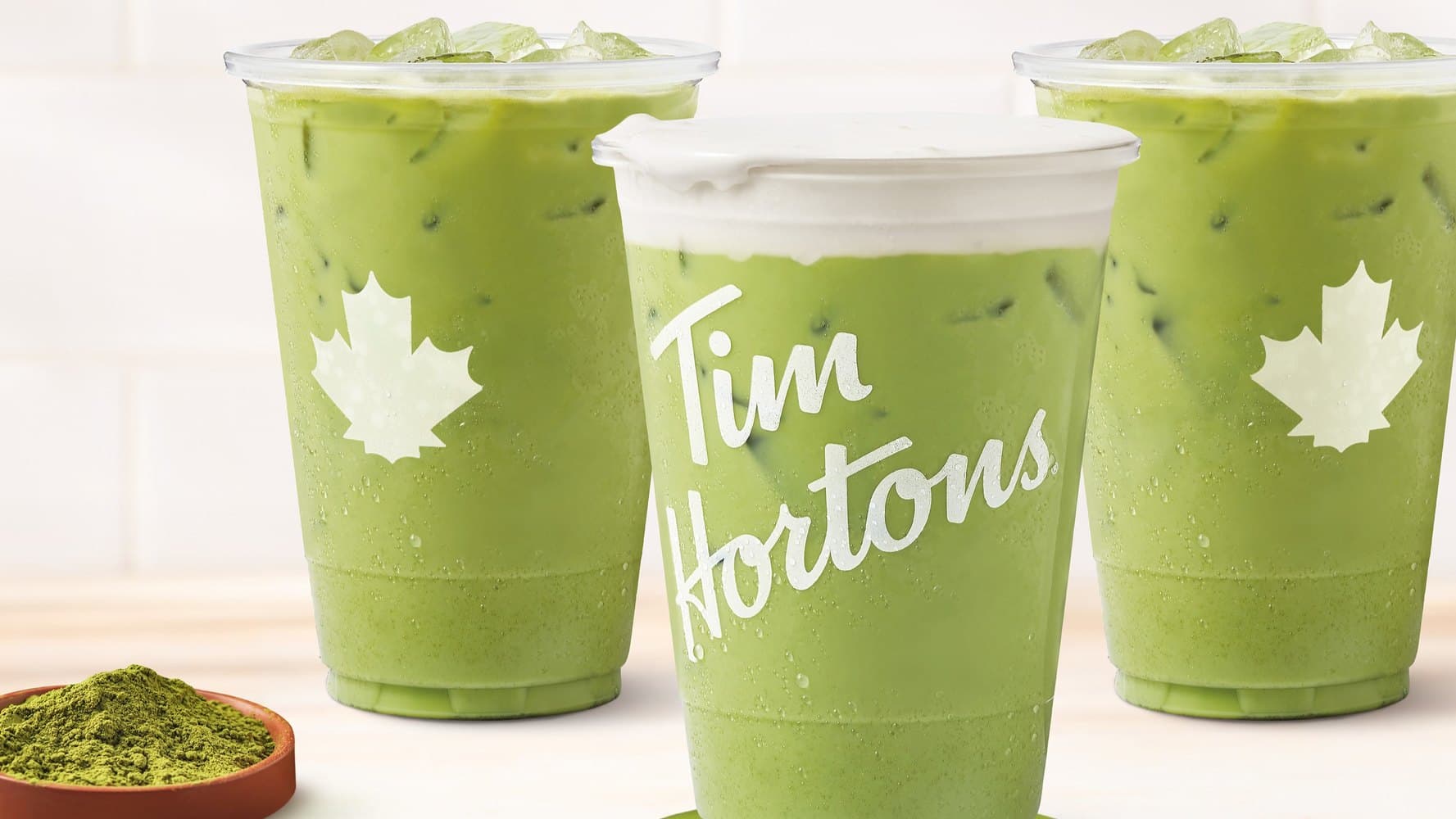
Photo by Tim Hortons. Licensed under Brand. Courtesy Tim Hortons / CNW Group; cropped and resized for web.
Why Canadian Fast-Food Menus Have More Flavor Than the U.S.
Matcha at Tim Hortons, butter chicken at Burger King, and Thai and Japanese limited menus at McDonald’s land more easily when South Asian, Chinese, and Filipino communities already set the palate.
September 3, 2026
Pull up to a Canadian Tim Hortons for a double-double and the board now has five matcha drinks made with 100 percent pure matcha tea. Vanilla iced with cold foam. Original and unsweetened iced. Hot vanilla and plain hot. The chain put the lineup on every Canadian menu on July 22, 2026, and priced the cups about like a specialty coffee.
Cross-border eaters have said for years that Canadian drive-thrus taste louder. Poutine usually gets the credit: fries, gravy, and cheese curds have sat on McDonald’s Canada menus nationwide since December 2013, a side American shops never got. Beside the coffee and the bun, Asian flavors keep showing up too, because a larger share of the country already drinks matcha, orders butter chicken, and treats chili and teriyaki as weeknight food.
A Canadian Big Mac is still a Big Mac. Tim Hortons shops in the United States sell matcha too. In May 2026, McDonald’s on both sides of the border rolled out Refreshers and Crafted Sodas, including drinks with popping pearls that borrow the chew of bubble tea. The permanent burger is familiar. Canadian boards simply put gravy, spice, and Asian texture next to it more often, and keep some of those ideas past a two-week stunt.
Drinks are the softest place to see it. Tim Hortons built its morning on coffee, then made powdered green tea a national alternative for people who want something else without leaving the drive-thru. In Toronto, Vancouver, and Calgary, bubble tea is ordinary afternoon fuel. A maple-leaf cup of matcha fits that habit more easily than it does on a quiet stretch of Ohio highway.
McDonald’s Canada made the same bet on texture. Its permanent cold-drink line includes a mango-pineapple Refresher with strawberry popping pearls and a blackberry-passionfruit soda finished with freeze-dried dragon fruit. The company said it was chasing the cold cups people already buy at bubble-tea shops. American McDonald’s launched a similar platform the same month. The pearls are shared now. They mainly show how ordinary Asian drink textures have become at a national speaker.
Sandwiches get more specific. In July 2023, Burger King Canada ran a Butter Chicken Crispy Chicken Sandwich and a Butter Chicken Poutine: fried chicken, butter-chicken sauce, pickled onions, cilantro. That is South Asian takeout comfort on a Whopper bun, and it only works where butter chicken already shares the app screen with pizza.
McDonald’s Canada has been testing the same idea for years. In 2010, Foodservice and Hospitality covered the national launch of McMini sandwiches, including a Spicy Thai version that put chili heat into a mini format American menus never really adopted. The 2018 World Taste Tour brought a Chinese Szechuan Burger with wonton chips and a Canadian take on Szechuan sauce. Later World Menu Heist campaigns pulled Japanese items onto Canadian boards, among them a teriyaki chicken sandwich and garlic-and-black-pepper McNuggets with black garlic sauce. Travel forums still swear Canadian shops keep more spicy chicken sandwiches in rotation. Either way, Thai, Szechuan, Japanese, and butter-chicken limited menus keep coming back.
The census helps explain why. Statistics Canada’s 2021 count put South Asians at 7.1 percent of the population, Chinese at 4.7 percent, Filipinos at 2.6 percent, Southeast Asians at 1.1 percent, Koreans at about 0.6 percent, and Japanese at 0.3 percent. Add those groups and you are looking at roughly one in six people. The 2020 U.S. Census counted people who identified as Asian alone at about 6 percent of the country. The categories are not identical. Canada’s census uses visible-minority labels; America’s race questions are built differently. Still, a national buyer in Canada is planning for more guests who already know matcha, chili oil, teriyaki, and butter chicken from home.
That shows up in the suburbs first. Mississauga, west of Toronto, and Surrey, south of Vancouver, are the kinds of cities where a butter-chicken limited sandwich has an easy early audience before it has to land in Regina. Popping pearls and dragon fruit read as ordinary there. Matcha can sit next to an Iced Capp without feeling like a souvenir.
American chains run their own Asian limited menus, from teriyaki sandwiches to chili-garlic sauces, and the shared 2026 drink platforms show both markets chasing bubble-tea traffic. Canadian McDonald’s still sells fries. Canadian Tim Hortons still sells the coffee that built the brand.
At the speaker, get the cold matcha or the limited sandwich when you see it. The permanent board will feed you either way. The rotating one is where the country’s taste keeps leaking onto the menu.