
How to Order at a Cantonese Dim Sum Hall
Cart service, ticket systems, and the dishes worth prioritizing on a first visit.
Updated July 22, 2026
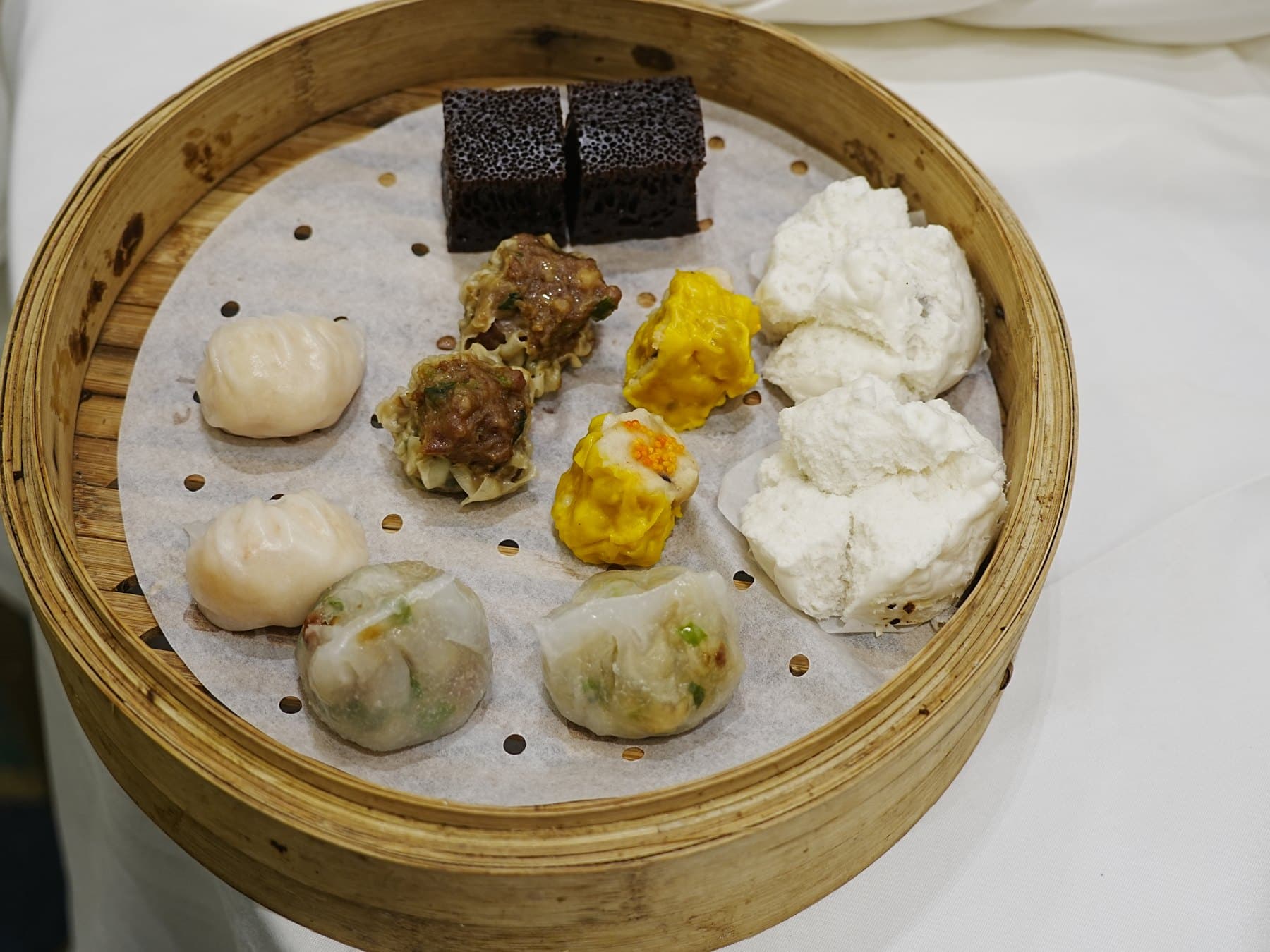
Photo by Peachyeung316. Licensed under CC BY-SA 4.0. Cropped and resized for web
A steamer lid lifts. Hot vapor hits the table. Someone nearby is already waving a cart over, and you are still deciding whether to point, wait, or look busy with the tea cups.
That pause is normal. Cantonese yum cha (飲茶, literally “drink tea”) is a shared meal of tea and dim sum, the small steamed, fried, and baked plates that fill the baskets. The food is only half the puzzle. The other half is the system: how the room takes your order, how the bill is tallied, and how to keep plates arriving hot instead of cold.
Once those mechanics click, a first visit gets simple. Sit down, choose tea, learn whether you are in a cart room, a paper-form room, or a QR room, then start with a short classic round and add more as you go.
Tea comes before the baskets
After you are seated, staff usually ask what tea you want for the table. That is not a side request. The meal is built around the pot. Pu-erh is a common default: earthy, good with richer plates. Jasmine is lighter and floral. Chrysanthemum is mild and often easy if you want something gentle. If you freeze, pu-erh is a safe start.
Many halls add a per-person tea charge and refill hot water through the meal. Pour for others before you fill your own cup. When someone pours for you, a quiet two-finger tap on the table is the usual thank-you in Cantonese rooms, a gesture that lets conversation keep moving. The popular Qing-emperor origin story is heritage lore more than settled history; the useful part is the habit itself.
If the pot runs dry and staff refill for you, leaving the lid ajar or offset is the classic silent signal for more hot water. Some tables now have insulated water jugs so you can top up yourselves. Either way, keep the tea in play.
Three ways rooms take orders
Cart service
Servers push trolleys of bamboo steamers and plates, often calling dishes in Cantonese as they pass. Make eye contact or raise a hand, ask what is under a lid if you need to, then point at what you want. They stamp or mark a card on your table. Cart rooms feel festive and visual. Popular items can sell out, and food has already been sitting on the cart, so wave early when you see something you came for.
Paper ticket or order form
You get a sheet (often with pictures) and a pencil. Tick quantities, hand the form to a server, and the kitchen cooks to order. This is now the common format in many Hong Kong and diaspora halls. It is calmer than carts and often fresher. The tradeoff is menu literacy: if characters overwhelm you, use the photos, ask staff, or translate a few names before you go.
QR codes and tablets
More rooms, in Hong Kong and abroad, put a code or tablet on the table. You scan, tap dishes, and send. It is fast when it works. It can also be confusing if the interface is tiny or in a language you do not read. Ask for a paper form if you need one. Plenty of kitchens still keep that option.
Order in waves, not all at once
Dim sum tastes best hot. For two people, start with roughly four to six plates, eat, then send a second round. For four, you can open a little wider, still leaving room to chase whatever disappeared first. Weekend late morning is peak crowd time in many cities. Earlier seats are calmer if you can manage them.
Sit closer to the kitchen path in a cart room if you care about first pick of fresh steamers. Decline anything you do not want. That is normal, not rude.
A first-visit round that covers the classics
You do not need twenty names. A short set teaches the textures that define Cantonese dim sum, and it works in Hong Kong, Guangdong, or a busy diaspora hall.
Start here
- Har gow: translucent shrimp dumplings. Thin wrapper, plump filling. Many diners use these to judge a kitchen.
- Siu mai: open-top pork and shrimp dumplings. Savory, reliable, easy to love.
- Char siu bao: barbecue pork buns, steamed for the soft classic or baked if the room offers both.
- Cheung fun: silky rice noodle rolls, often shrimp, beef, or pork, with sweet soy.
- Turnip cake (lo bak go): pan-fried radish cake, crisp edge, soft center.
- Egg tarts: flaky or shortcrust shells with custard. Save them for the end if you can.
If the table wants one denser plate, add lo mai gai, sticky rice steamed in a lotus leaf with meat and mushroom. If someone is curious about the divisive classic, chicken feet (fung zao) braised until gelatinous are a real dim sum staple, not a novelty dare. Order them when the room looks busy enough that turnover is high.
To start, we recommend har gow, siu mai, char siu bao, and cheung fun, then one fried or pan-fried plate and egg tarts. That is a complete first education without overfilling the lazy Susan.
A little etiquette that actually helps
Share from the middle. If there is a turntable, give older guests first reach when a new dish lands, and do not spin it while someone is serving themselves. Avoid planting chopsticks upright in rice or a bun. That silhouette reads like funeral incense in many Chinese households, so treat it as basic manners.
You do not need to perform every folk rule perfectly. Pouring tea, pacing the order, and eating steamers while they are hot will take you further than memorizing legends.
When you are ready for more
Look at what emptied first and order another steamer of that. Add spare ribs with black bean, a vegetable plate, or a baked pastry if the carts still have them. The second round is where a first visit turns into your own preferences.
Leave when the pots have been refilled, the table is a pleasant mess of empty baskets, and you know whether this kitchen’s har gow is worth a return. That is the whole skill: tea, system, a short classic round, then more of what you liked.