
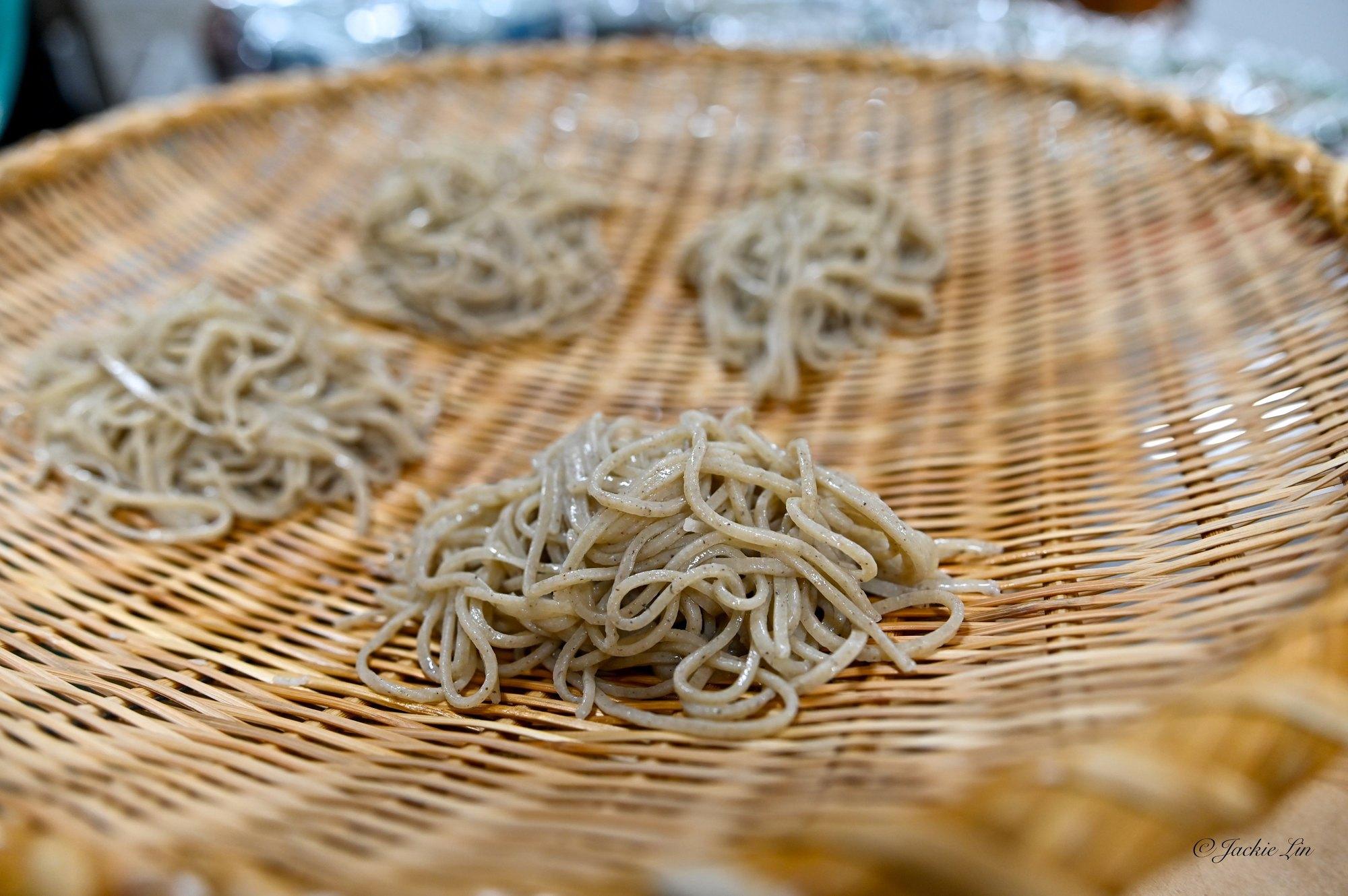
Photo by Jackie Lin. Licensed under Courtesy Osoba Ni-Hachi. Official press photograph from Osoba Ni-Hachi. Resized for web.
Toronto’s Osoba Ni-Hachi Will Serve Two Kinds of Soba. Here’s Why the Ratio Matters.
Jackie Lin’s Yorkville soba room opens for lunch in early December. Ni-hachi is the classic 80:20 blend; juwari is all buckwheat from Yamagata.
November 19, 2026
Jackie Lin already runs Shoushin, the one-star Edomae sushi counter on Yonge Street north of Lawrence. His next room is Osoba Ni-Hachi, a soba restaurant coming to Yorkville. Renée Suen reported the project for Toronto Life in August. By mid-November, Will Wong and Alo Japan had lunch pegged for early December and dinner for mid-December.
Ni-hachi means two-eight: twenty percent wheat flour to eighty percent buckwheat. That is the everyday soba ratio in Japan, and it is where the restaurant gets its name. The wheat’s gluten helps the dough hold when it is rolled, cut, and boiled. The room will also serve juwari, soba made entirely from buckwheat. Lin told Toronto Life the all-buckwheat noodle is made only for his restaurant, and that you cannot buy that version in Japan.
The noodles from Yamagata
The buckwheat is Dewakaori from Yamagata Prefecture. Will Wong’s mid-November report names Suzuki Seibunsho as the mill and Tsuji Soba as the maker that has shipped handmade soba across Japan since the 1990s. Toronto Life earlier described the noodles as frozen shipments made with Dewa Kaori, a fragrant cultivar the prefecture developed. They will not be rolled in Toronto.
Most coverage puts the room at 154 Cumberland Street. OpenTable still lists 158 and calls the restaurant Coming Soon. The street number is not locked until Lin’s team posts it.
Lunch, dinner, and booking
At lunch there will be four soba sets. Zaru, cold noodles with a dipping sauce, and kake, noodles in hot broth, stay on the menu year-round. Two more preparations rotate with the seasons, about four times a year. Dinner leans into sobamae: sake and small plates before soba closes the meal. Will Wong names soy sauce-braised kinki, miso-marinated wagyu, and chicken teriyaki among those plates. Toronto Life’s August piece also mentioned evening omakase beside à la carte.
The house tsuyu, per Toronto Life, starts with kaeshi aged three to six months and a dashi of kelp, bonito, shiitake, and dried mackerel flakes. Hours and menu prices have not been published. The official site, osoba28.ca, is still a coming-soon page. OpenTable says reservations will run through the restaurant’s own site, not OpenTable. Follow @osobanihachi on Instagram for the booking window.
Ni-hachi includes wheat. Juwari is pure buckwheat in the flour, but a kitchen that also boils the blended noodle is not automatically safe for people avoiding wheat. Ask the restaurant about preparation and cross-contact before you book for that reason.