
What Is an Izakaya, and How Do You Eat at One?
A stay-and-drink Japanese pub with shared small plates: what the word means, how the evening runs, and what to order first.
Updated July 24, 2026
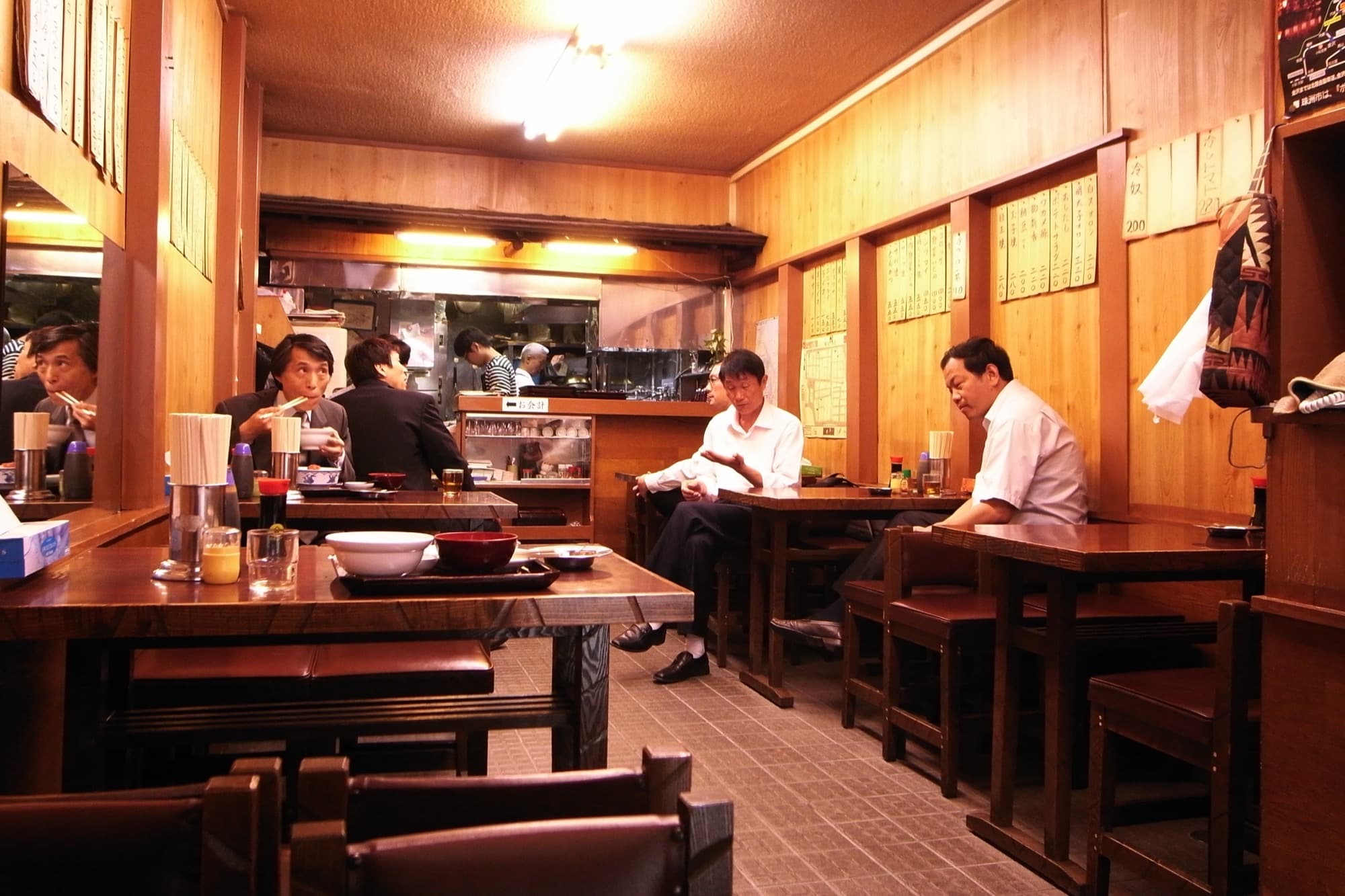
Photo by shuets udono. Licensed under CC BY-SA 2.0. Cropped and resized for web
A small plate lands before you have ordered food. Your draft beer is already on the way. That is the izakaya rhythm starting to show itself.
An izakaya (居酒屋) is a casual Japanese drinking restaurant: alcohol first, shared snacks and small plates throughout the evening, and no single “main course” that ends the night. Think of a pub with a real kitchen, or a Spanish tapas bar with beer mugs and charcoal skewers. The word breaks into i (to stay) and sakaya (sake shop). It grew from shops where people bought sake and drank it on the spot instead of carrying it home. By the Edo period, many of those rooms were serving simple food beside the cup. Historian Penelope Francks has pointed to urban izakaya as one sign that sake was becoming an everyday consumer pleasure, not only a ceremonial pour.
In conversation, people also say akachōchin, “red lantern,” for the paper lanterns that often mark a neighborhood pub. A red lantern is a useful clue on a Japanese street. It is not a guarantee. Read the menu board before you commit.
How the evening usually runs
You sit at a table, a counter, or sometimes on tatami. Some rooms ask you to leave shoes at the door. Staff bring an oshibori, a moist towel, and often ask for drinks before you have finished the food list. A classic first order is toriaezu nama: draft beer for now. It buys time while the table opens the menu. Non-drinkers can order oolong tea, soft drinks, or a non-alcoholic beer; the point is to join the toast, not to force alcohol.
In many independent izakaya in Japan, a small appetizer arrives without anyone ordering it. That is otoshi (お通し), called tsukidashi in much of Kansai. It is a seat charge served as food, often a few hundred yen per person. Chains frequently skip it. Abroad, the custom is less automatic. If a surprise plate appears in Tokyo, it is usually the house system, not a scam.
Wait until everyone’s drink is down before the first sip. Say kanpai, then drink. In a group, pour for others and let them pour for you; topping up your own glass is the lonely move when the table is sharing. Food is ordered in waves: a few dishes now, more when the table needs them. Plates arrive as the kitchen finishes them, not in a fixed appetizer-to-entrée march. When you are done, ask for the bill. In Japan, tipping is not the custom. Shared tables often split evenly because the food was shared.
A simple first-round order
- A drink for everyone (draft beer, highball, sake, shochu sour, or a non-alcoholic stand-in).
- One cold, fast plate: edamame, hiyayakko (chilled tofu), pickles, or sashimi if the fish looks lively.
- One hot share plate: karaage, gyoza, agedashi tofu, or a short yakitori set.
- Reorder once the first wave is gone. Add grilled fish, another skewer round, or a vegetable dish before anyone gets hungry again.
- Optional closer (shime): ochazuke, a small ramen, onigiri, or rice. Many tables skip it; it is a soft landing, not a rule.
What the menu is doing
Izakaya food is built to travel with drinks: salty, fatty, crisp, or bright enough to keep you ordering another round. Edamame and potato salad are easy openers. Karaage is soy-and-ginger marinated fried chicken with a light, shattering crust. Gyoza show up pan-fried more often than steamed. Sashimi or otsukuri is the clean fish plate without rice. Yakitori means charcoal-grilled chicken skewers; you usually choose shio (salt) or tare (sweet soy glaze). A dedicated yakitori-ya puts skewers at the center. A general izakaya may offer them beside a wider board of fried, simmered, and raw dishes.
Drinks matter as much as the food. Draft beer is the default starter. Whisky highballs (whisky and soda over ice) cut through fried and grilled plates. Shochu appears neat, with water or hot water, or as a citrus chuhai or lemon sour. Sake can be cold or warm depending on the bottle and the room. Nomihōdai, all-you-can-drink for a set window, shows up at chains and party bookings; read the time limit and what is included before you say yes.
Outside Japan, the plate logic is often the same even when the room feels more like a cocktail bar. Menus may run longer. Reservations may be wiser on weekends. Otoshi may never appear. You can still eat well by ordering like the format intends: small shared plates in rounds, not one entrée each.
When you are ready to leave
An izakaya night ends when the table slows down, not when a dessert course arrives. Some people close with that bowl of ochazuke or noodles. Others settle the bill after the last skewer. Either way, you have spent the evening the way the room was designed: staying with the drinks, feeding the table in pieces, and letting the kitchen keep the pace.
If the next booking on your calendar is a quiet sushi counter, that is a different product. Book it for fish and rice. Save the izakaya for the night you want conversation, a mug of beer, and one more plate on the way.