
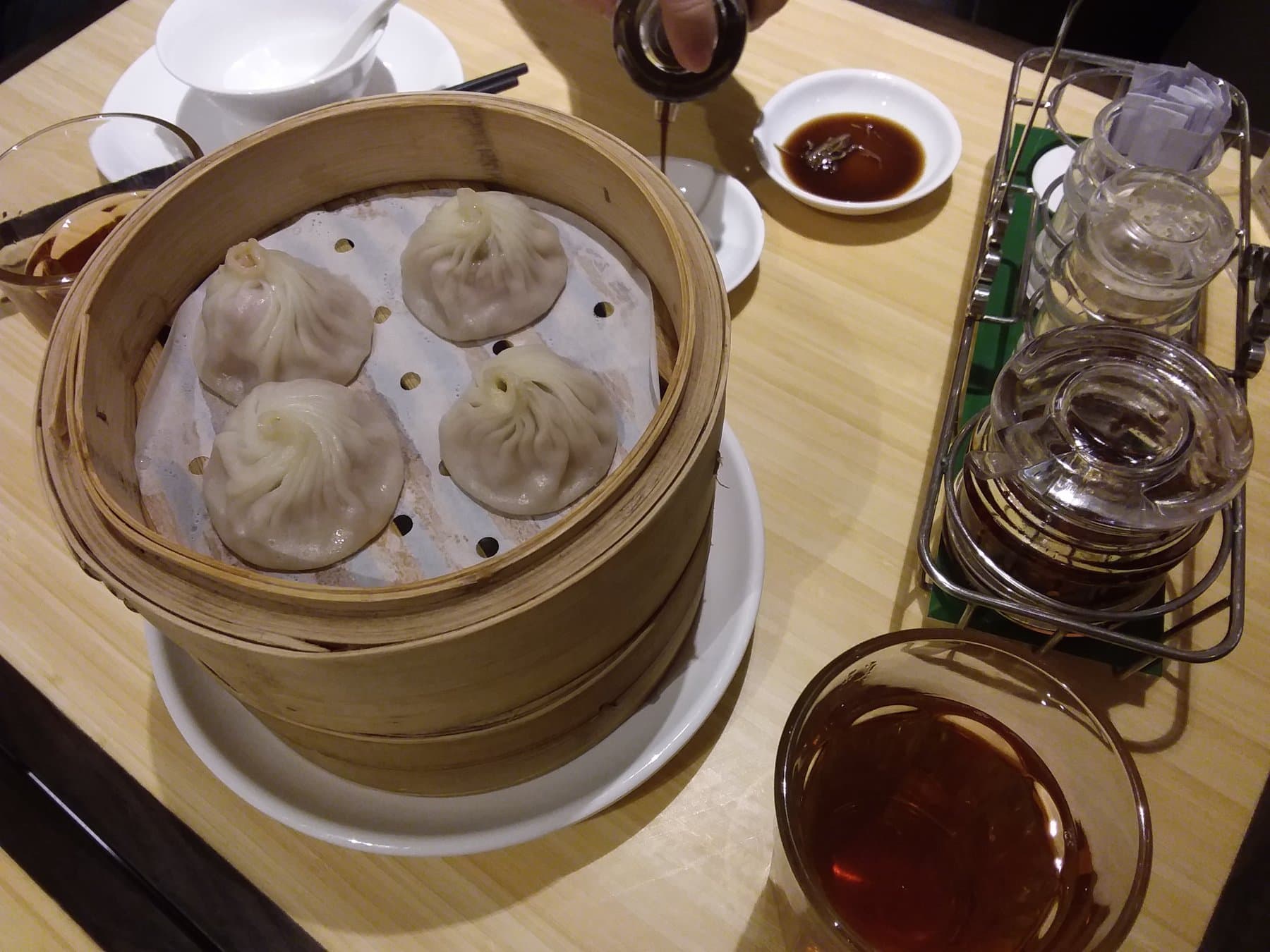
Photo by Anonymous Hong Kong Photographer 1. Licensed under CC BY-SA 4.0. Crystal Jade La Mian Xiao Long Bao, Times Square, Causeway Bay, August 2018; resized for web.
Crystal Jade Went Into Receivership. The Mall Kitchens Stayed Open.
Kroll took over the Singapore and Hong Kong holding companies today after five closures this year. About 13 restaurants remain. You can still order a steamer.
September 30, 2026
Crystal Jade, the Singapore Chinese restaurant group that put soup dumplings in a lot of mall food courts, put its Singapore and Hong Kong holding companies into receivership on Wednesday. Kroll, the restructuring firm, is now in charge of those parent companies. The restaurants themselves stayed open. Managers are still on the floor.
Receivership hands control of a company’s assets to an outsider, usually to steady the books or sort out a sale. The dining rooms kept seating guests. Kroll told The Straits Times the business is still running and Crystal Jade is staying in the restaurant business. The firm says it is reviewing the brands and will talk with shareholders about a restructuring when that is ready.
The map had already gotten smaller. Five Singapore outlets closed this year: Hillion Mall and Suntec City earlier on, Great World on September 1, then Hong Kong Kitchen shops at The Clementi Mall on September 15 and Jurong Point on September 18. The website now lists about 13 Singapore restaurants across six brands. In 2015 the group had 47 in Singapore and about 120 worldwide.
That is a hard cut for a chain that once felt like it lived on every other Orchard Road floor.
Crystal Jade started as one restaurant at the Cairnhill Hotel in 1991. Hong Kong businessman Ip Yiu Tung put about HK$10 million into it the next year when it was failing, then built the chain Singaporeans used for a reliable Chinese meal upstairs from the shops. The casual brand, Crystal Jade La Mian Xiao Long Bao, is where a lot of people in the region first ordered a steamer of soup dumplings next to a bowl of hand-pulled noodles.
When that format reached Hong Kong in 2001, the South China Morning Post wrote that rivals saw it as a reformer of Shanghainese and northern Chinese cooking in the city: smaller plates and less oil, in rooms that felt like a mall restaurant instead of an old banquet hall. Hong Kong Kitchen handled the Cantonese and café plates. Palace at Takashimaya and Golden Palace at Paragon took the banquet tables. Golden Palace held a Michelin star from 2016 through 2018.
Ip sold most of the company in 2014. L Capital Asia, then the Asian private-equity arm backed by LVMH, bought about 90 percent for a deal market sources put near US$100 million. Ip told The Straits Times he was marrying the company off. Standard Chartered Private Equity, later Affirma Capital, added US$52 million in 2015. L Capital later became part of L Catterton.
The Straits Times reported Wednesday that Affirma and L Capital Asia entities are still among the shareholders, and that the receivership is understood to help L Capital Asia exit. Kroll has not published the numbers behind the appointment.
Palace is upstairs at Takashimaya. Golden Palace is at Paragon. La Mian Xiao Long Bao and Hong Kong Kitchen are taking lunch in the malls that kept them. If you want xiao long bao this week, the steamer is on the menu.