
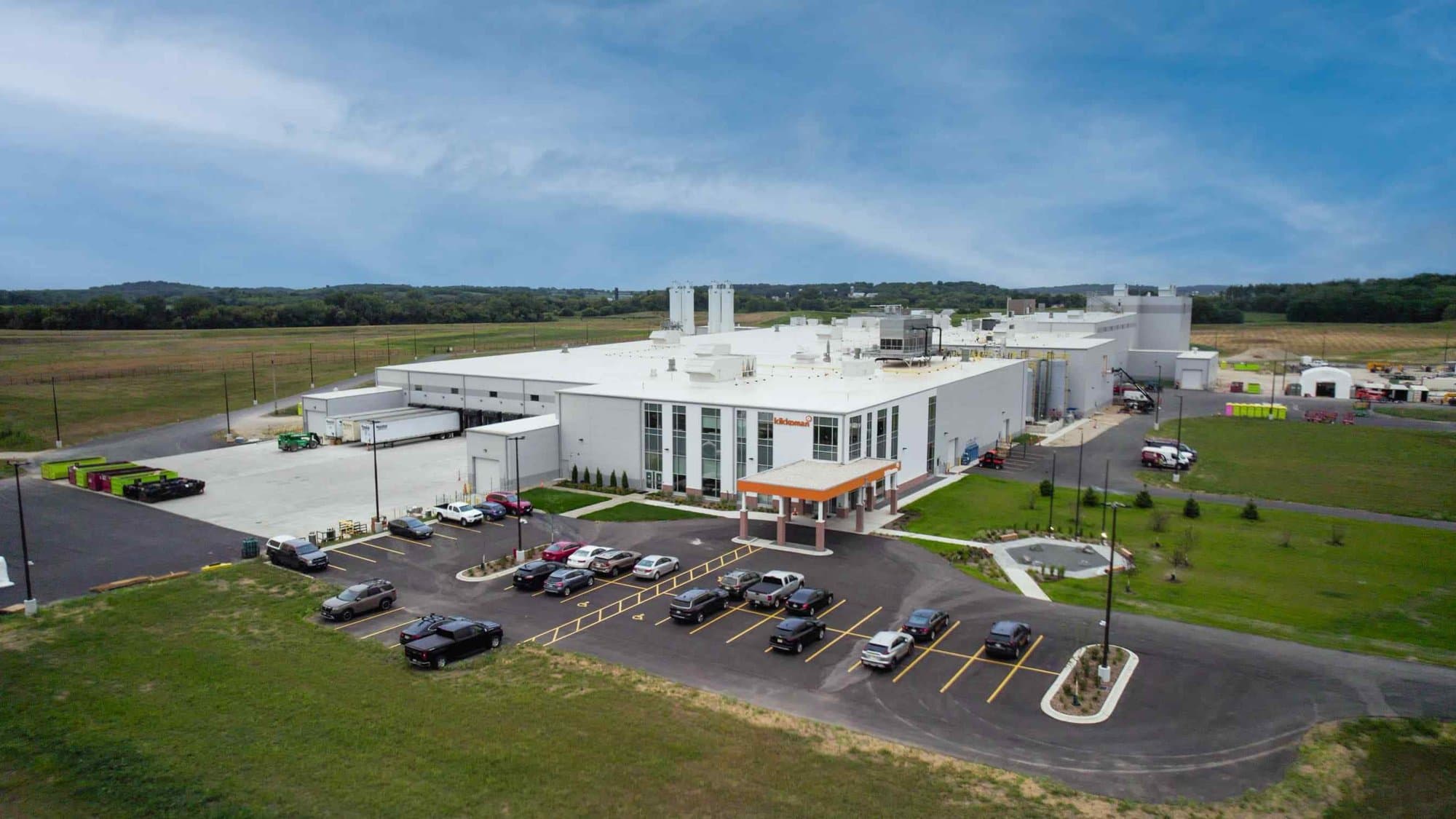
Photo by Kikkoman Corporation. Licensed under Press. Official plant image from the September 18, 2026 opening announcement; resized for web.
What Kikkoman’s Expanded U.S. Production Means for Asian Food
A $560 million brewery in Jefferson, Wisconsin, starts shipping in October. Soy sauce has been growing more than 6 percent a year. Fried rice is already everyday takeout.
September 24, 2026
The new Kikkoman plant in Jefferson, Wisconsin, is a white box on 100 acres, about 240,000 square feet, $560 million over ten years. The company cut the ribbon on September 18. Brewing started in May. Soy sauce, teriyaki, and other seasonings leave in October for grocery shelves, restaurant kitchens, and food factories.
Kikkoman has been brewing in this country since 1973, first in Walworth, about an hour away, then in Folsom, California. Jefferson is the third American plant and, the parent company says, the ninth soy sauce brewery it runs outside Japan. Yuzaburo Mogi, the longtime chairman, said Wisconsin still has the water and the suppliers. He said North American demand kept rising.
The company’s U.S. soy sauce business, it says, has grown more than 6 percent a year for a decade and holds the leading share of the American market. A plant this size is what a condiment company builds when the bottle is already in the cabinet.
Pew Research Center looked at 787,153 open U.S. restaurants in March 2023 and found Asian food in 12 percent of them, a little more than the 7 percent of the country that is Asian American. Chinese kitchens were 39 percent of those Asian restaurants, Japanese 28, Thai 11. Korean was 6. Indian and Vietnamese each took 7. Around seven in ten of the rooms, Pew said, served Chinese, Japanese, or Thai food.
Nearly half sat in five states: California, New York, Texas, New Jersey, and Washington. Chinese restaurants reached every state and 70 percent of counties. Japanese rooms reached 45 percent of counties, Thai 33 percent. The count is three years old. It is still the clearest map of who needs the bottle on a Tuesday. The American Asian restaurant, on paper, is still mostly a Chinese, Japanese, or Thai room. Korean and Vietnamese kitchens are spreading. They have not caught the storefronts yet.
DoorDash said customers placed more than 75,000 fried rice orders a day on the app in 2025. Uber Eats, in its 2024 list of the most-ordered items in the United States, put fried rice tenth, after burrito bowls, fries, chicken sandwiches, and pizza. Fried rice has sat in DoorDash’s national top ten in earlier years as well. The apps measure dishes, not cuisines, and they do not publish a ranking of Asian orders by city. The national lists are enough. Fried rice is sitting with pizza.
A December jump in potstickers and chow mein, the one DoorDash posted around Lunar New Year, looks huge on a chart. Holidays do that. The daily fried rice number is the one to keep.
The orders cluster where Pew already found the restaurants: California and New York first, then the large Sun Belt metros.
The grocery aisle is growing too. Circana, cited by the Seattle Times, found the “Asian/ethnic” aisle rising nearly four times faster than overall U.S. grocery sales from April 2023 to April 2024. CNBC, using Circana figures this May, put Asian grocery items at $1.57 billion in 2021 and more than $2.31 billion this year. Datassential, in a 2025 report, said a lot of that growth now sits in bottles, gochujang and other Korean pastes among the ones younger shoppers already know.
Restaurant operators, in the National Restaurant Association’s 2025 survey, expected Korean, Vietnamese, and Filipino flavors to keep rising. Those rooms are still a thin slice of Pew’s count. They show up faster on phones and in carts. Marzetti paid $400 million this year for Bachan’s, a Japanese barbecue sauce that did about $87 million in 2025 sales.
The Jefferson plant will brew more soy sauce and teriyaki in the United States for kitchens that already reach for them. October is when the new bottles move.