
How to Choose Chili Crisp
Read the oil, crunch, fermented ingredients, and spice before you choose a jar.
Updated July 18, 2026
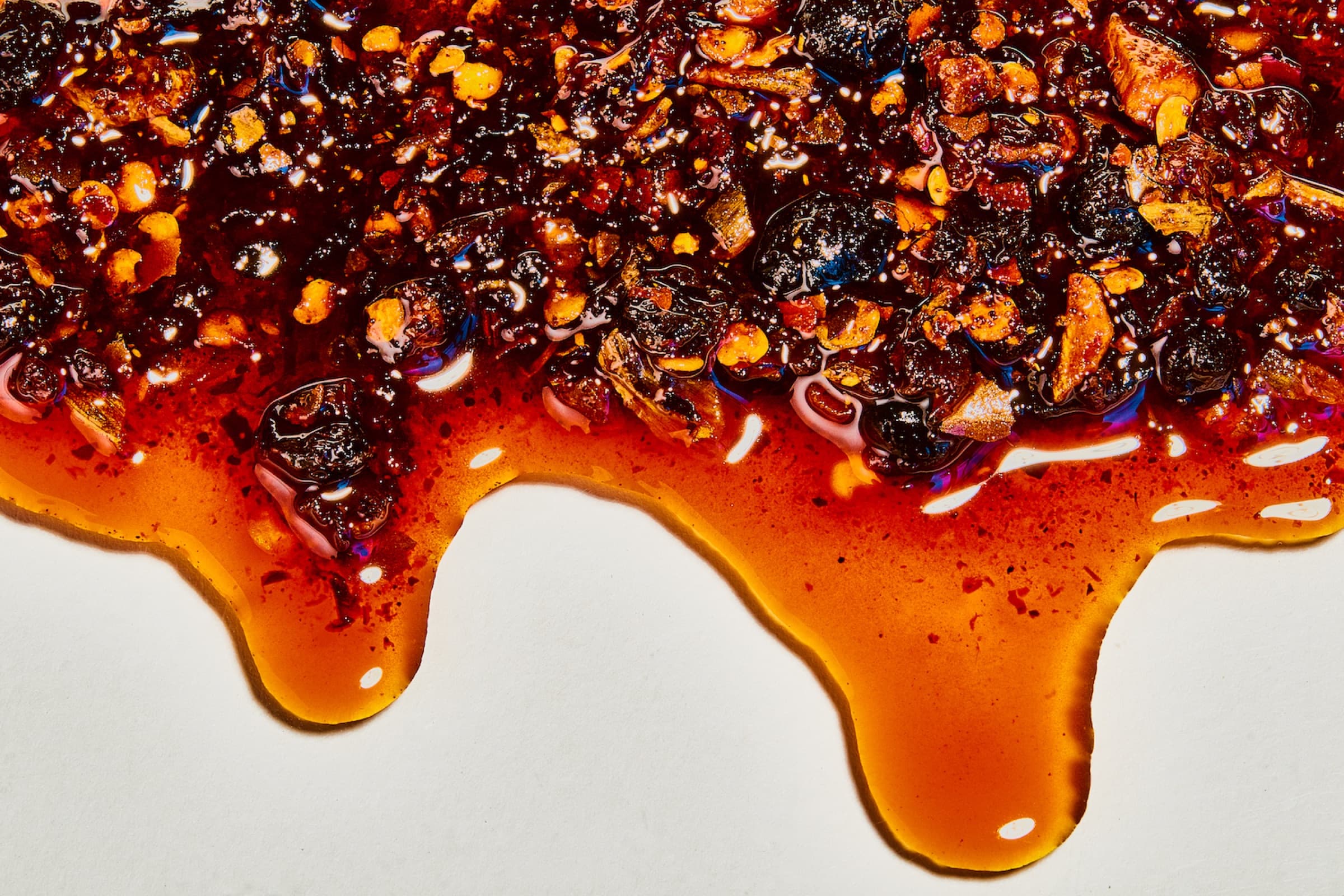
Photo by Fly By Jing. Licensed under Editorial use. Courtesy of Fly By Jing; resized for web
A shelf of chili crisp can look like twenty versions of the same red jar. Look closer and the differences are easy to spot. One is mostly fragrant oil. Another is packed with fried garlic. A third gets its savory pull from fermented black soybeans, while a fourth leans on sesame, peanuts, or the tingle of Sichuan pepper.
Those choices tell you more than “crisp” or “crunch” on the front. Read the first ingredients, look at the solids through the glass, and think about the foods you cook most. That is enough to find a jar you will actually finish.
A family of condiments
Chili crisp is a useful retail name, not one fixed Chinese recipe. China has many chile-oil traditions, from Sichuan red oils to Shaanxi youpo lazi and the chile-rich cooking of Guizhou and Hunan. Some oils are strained and aromatic. Others keep flakes, beans, peanuts, or fried alliums in the jar. The borders between oil, sauce, paste, and crisp are naturally loose.
Capsicum peppers arrived in China from the Americas during the late Ming period. By the eighteenth century, written records described chiles in sauces and savory oils. Textured chile condiments existed long before today’s jars, so it would be misleading to give one person credit for inventing the whole category.
Tao Huabi deserves a more precise kind of credit. Her company, Lao Gan Ma, began factory production in Guiyang in 1996 and helped make Guizhou-style chile condiments a mass-market staple in China and abroad. The familiar jar did not create every tradition behind chili crisp, but it changed the scale of the business.
Read the architecture
Oil
If oil leads the ingredient list, expect a fluid condiment. Neutral soybean, rapeseed, corn, or grapeseed oil leaves room for chile and aromatics. Sesame oil brings its own roasted flavor. Oil-forward jars are especially easy to toss with noodles, whisk into dressings, spoon into soup, or mix into a dipping sauce.
The crisp parts
Fried onion, shallot, and garlic make a jar brittle and sweet. Peanuts and sesame provide a denser, nuttier crunch. Large visible solids are a better promise of texture than the product name. If you mainly want contrast on eggs, tofu, rice, congee, or steamed vegetables, an allium-heavy jar is a good place to start.
Fermented ingredients
Fermented black soybean, also called douchi, adds concentrated saltiness and a soft, nubby chew. It is a fermented soybean, not the black bean common in American and Latin cooking. Some jars use whole soybeans instead, which can feel firmer and less intensely fermented. Bean-heavy crisps are useful when noodles, dumplings, braises, or plain rice need more savory depth.
Chile and spice
A dark red color does not reliably predict heat. Pepper variety and processing matter, so look for named chiles or a producer’s heat description if that is important to you. Sichuan pepper contributes a floral, citrusy tingle from compounds called sanshools. That numbing sensation is distinct from a chile’s capsaicin burn, and a tingly jar is not necessarily the hottest one.
Three lines to check
Before the jar goes in your cart
- First ingredients: these give the clearest clue to the balance of oil, chile, alliums, beans, nuts, and seeds
- Allergen statement: check for soy, sesame, peanuts, tree nuts, and wheat
- Storage direction: follow the instruction on the jar, since commercial formulas and processing methods differ
Formulas also change. S&B, for example, notes that older jars of its Crunchy Garlic with Chili Oil contain almonds while a newer formula does not. The current package in your hand should outrank an old article or product listing.
For a sense of how wide the category runs, Lao Gan Ma Spicy Chili Crisp combines oil and chile with onion and fermented soybean. Fly By Jing’s Original Sichuan Chili Crisp adds preserved black bean, alliums, mushroom, sesame oil, ginger, Sichuan pepper, and seaweed. S&B’s version is a mild, garlic-forward Japanese topping. Momofuku Chili Crunch combines several dried chiles with alliums, sesame, mushroom, seaweed, and yeast extract. These are useful examples of different constructions, not a ranking.
Choose for the food
For eggs, rice, tofu, congee, and steamed vegetables, look for plenty of fried garlic, onion, or shallot. For noodles, dumplings, and braised dishes, fermented beans bring a deeper savory note. Nut-and-seed-heavy jars work well with roasted vegetables and grilled meat, provided the allergens suit your table. Choose Sichuan pepper when you want tingle, and a looser, oilier style when you plan to mix rather than spoon.
Stir the jar when its label allows so oil and settled solids arrive together. A small spoonful can always be increased. Salt, sweetness, and heat vary enough that seasoning the dish first and adding crisp at the table is often the easiest approach.
To start, choose the texture you want most. A jar rich in fried alliums makes a lively topping, while one with fermented beans brings more depth. If you buy two, make the second different enough to earn its place.