
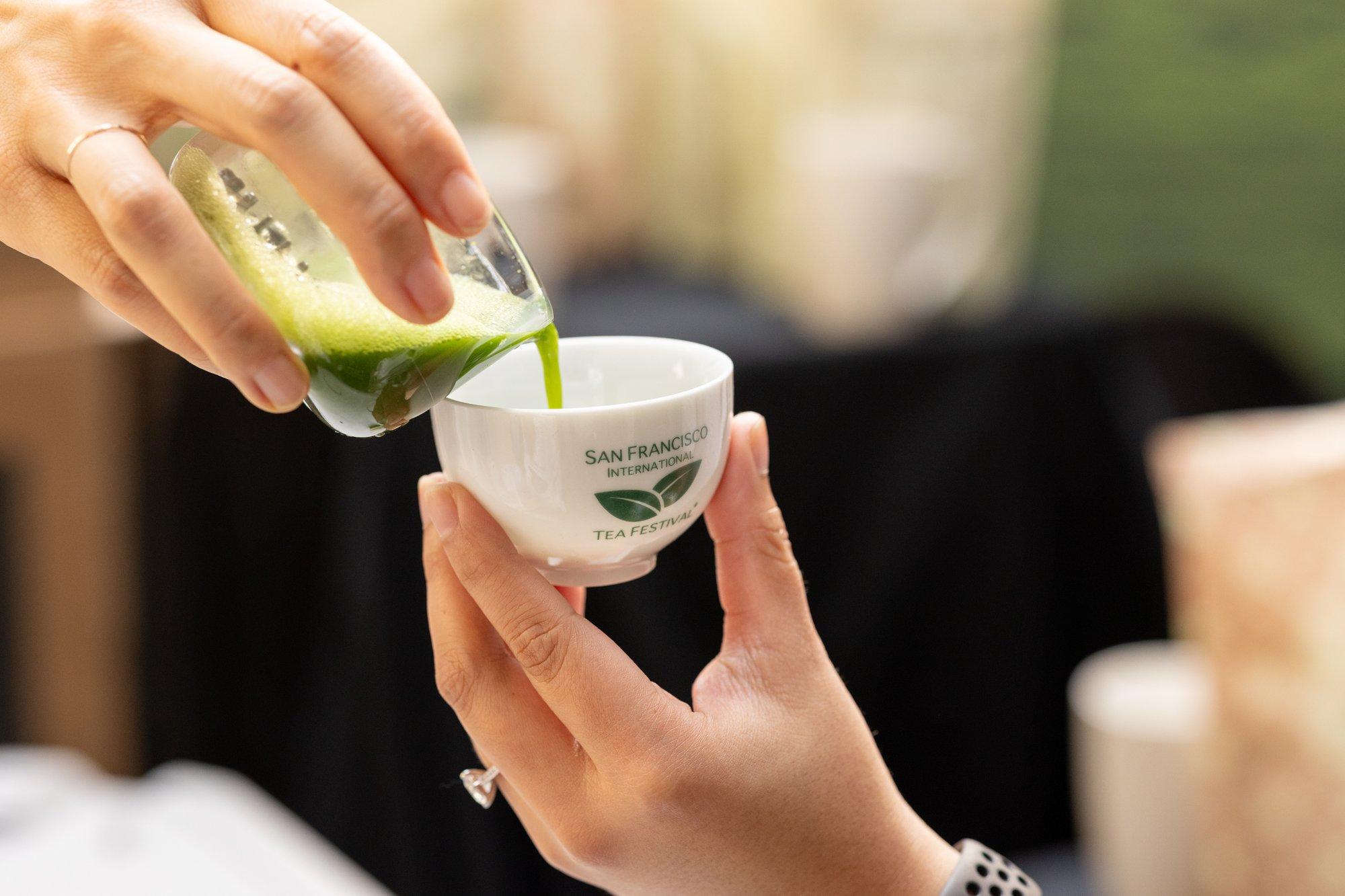
Photo by Alex Akamine. Licensed under Courtesy Ferry Building Marketplace. Festival photography from the Ferry Building Marketplace event page. Resized for web.
Three Teas to Try at San Francisco’s Ferry Building This Weekend
Nov. 14–15 at the Ferry Building: Sugimoto’s roasted Japanese hojicha, Silk & Jade’s Taiwanese oolong, and Bardo’s Chinese fermented tea. Questions for each table, and what to read before you buy a bag.
November 13, 2026
The Fall SF International Tea Festival takes over the Ferry Building’s Second Floor Grand Hall on November 14 and 15, from 11 a.m. to 5 p.m. each day. Early-entry tickets get you in at 10 a.m. General admission, according to the Ferry Building and SFITF listings, covers unlimited tastings and a porcelain cup to keep. The organizer’s site currently reads sold out, with the next festival set for May 8–9, 2027. Confirm your ticket, or any door plan, before you go.
More than thirty vendors are on the tea-market list. Three of them make a useful weekend route: Sugimoto for roasted Japanese tea, Silk & Jade for Taiwanese oolong, and Bardo for Chinese fermented leaf. Taste before you buy.
Sugimoto Tea Company: roasted Japanese
Sugimoto is a family company from Shizuoka, open since 1946 and known for deep-steamed green tea. Ask for hojicha, the roasted Japanese style that browns the leaf and softens the caffeine. Ask whether their roast is mostly stems (kukicha) or leaf, and what water temperature they use at home. The shop says their hojicha leans on early-harvest material instead of late-season bancha.
If you take a bag, check for Shizuoka or another clear Japanese origin, the word hojicha or ほうじ茶, and a pack date or lot number. Sugimoto’s retail pouches are often nitrogen-flushed foil. Through the window, look for brown, toasty leaf. Powder that looks like dust is a different product.
Silk & Jade: Taiwanese oolong
Silk & Jade, the Los Angeles tea house on the vendor list, builds its board around Taiwanese oolong. Joe and Nina source in Taiwan, with Joe’s mother, tea master Lily, helping place orders with boutique farms that still hand-pluck. Ask which mountain or cultivar is in the cup: Alishan, Dong Ding, Jin Xuan, or whatever else they are pouring. Ask how oxidized or roasted it is, and how many infusions a small pot should give you.
On a bag, Taiwan should show as the origin, with a cultivar or garden name in English or Chinese, and a harvest season if they print one. High-mountain leaves often look tightly rolled and green-gold. Darker Dong Ding styles run browner. Skip a bag that only says “Formosa oolong” with no place and no cultivar; this table can give you better detail than that.
Bardo Tea: Chinese fermented
Bardo Tea, from Portland, keeps a deep shelf of Chinese fermented tea: sheng and shu pu-erh, plus Liu Bao from Guangxi. Ask for something fermented, then get specific. Raw or ripe (sheng or shu)? Which year? Which region or factory? Liu Bao counts as heicha too, though it is not Yunnan pu-erh. If that is the pour, ask how it was aged.
On a cake or pouch, start with the year, then the mountain or factory, then whether the leaf is pressed or loose. Ask when it was pressed and how it has been stored before you pay.
The Grand Hall is at One Ferry Building. On Saturday, the farmers market downstairs is open if you want a break between pours. Hit those three tables while stock lasts.