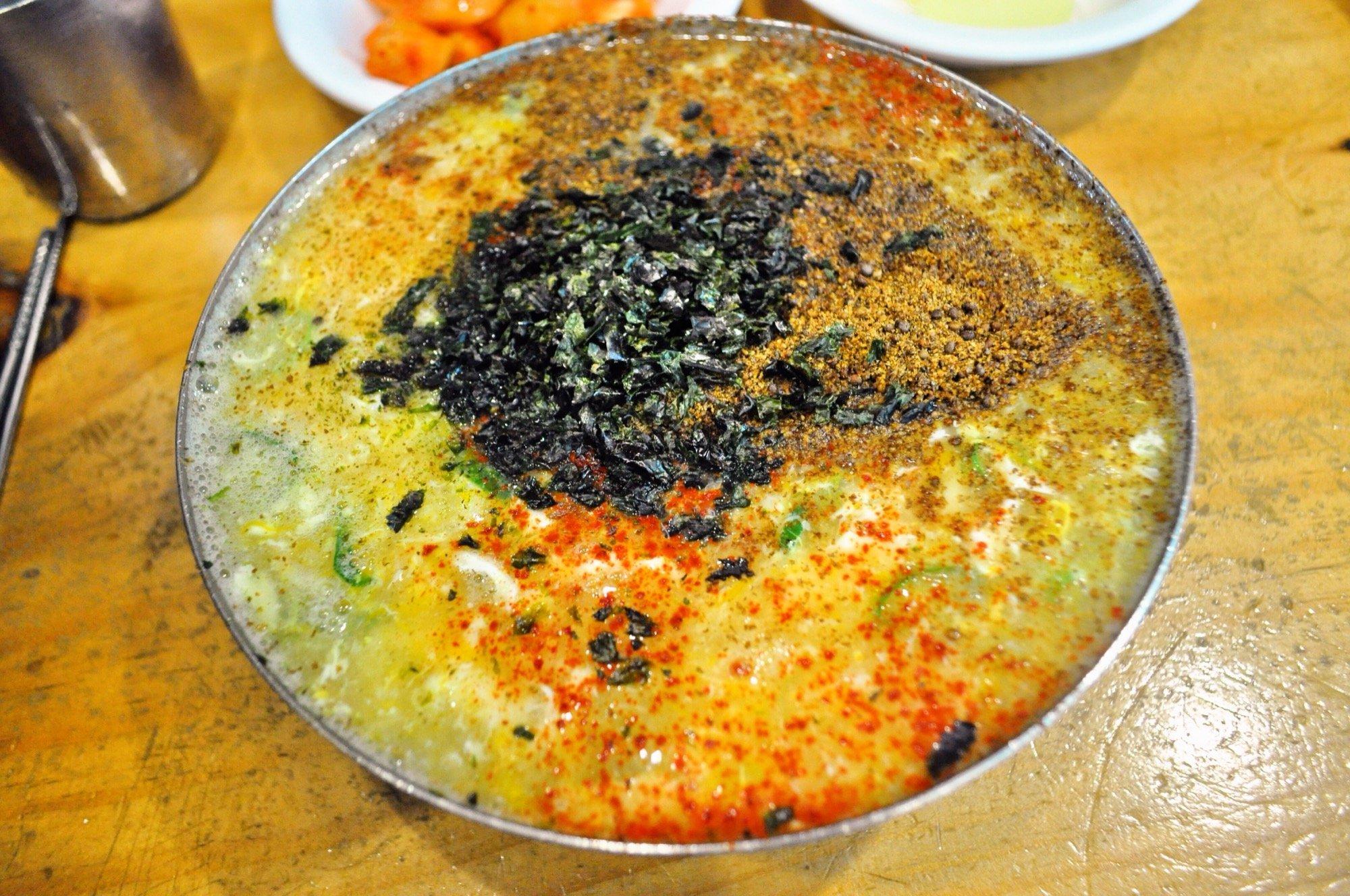
Photo by Tmannya. Licensed under CC BY-SA 4.0. Perilla kalguksu in a steel bowl. Resized for web.
Gyeongju’s K-Silk Road Festival Puts the Noodle Bowl on a Map
Noodle Festa closes today in Gyeongju. Three bowls from the booth list: kalguksu, pho, and udon, and what sets each one apart in the bowl.
November 15, 2026
The 2026 K-Silk Road Food Festival, Noodle Festa on the posters, closes today at Gyeongju APEC Memorial Park, around Baekgyeol Performance Hall and the Culture Center. Hours run 11 a.m. to 6 p.m. North Gyeongsang Province Cultural Tourism Corporation is the host. Grounds entry is free. You pay for the food.
CultureGB and WalkintoKorea name the booths in plain menu language: Korean kalguksu and janchi-guksu, Chinese jajangmyeon and jjamppong, Japanese udon, Vietnamese rice noodles, Filipino pancit bihon, Italian pasta. In Herald Business this week, corporation president Kim Nam-il said the festival and a follow-up conference would promote Silk Road food culture and the historical value of Silla. That conference is Monday at Keimyung University’s Haengso Museum, with the Silk Road Research Institute, under the title “Noodle Culture of the Silk Road and the Food Culture of Silla.” Keep that historical claim with the organizers. On the festival floor, the differences are plainer.
Kalguksu
The noodles are flat wheat ribbons with slightly uneven edges. The Encyclopedia of Korean Culture defines kalguksu as dough kneaded from wheat flour and cut thin with a knife. VisitKorea describes the same method: roll the dough, then slice it. The name joins kal (knife) and guksu (noodles). In the bowl, the strands usually sit in a hot broth built from anchovy, clam, or chicken stock. The knife cut shows up before anything else.
Pho
The festival’s Vietnamese rice-noodle listing is the bowl most people will call pho. LovingPho says bánh phở are cut from thin rice sheets into flat strands with a rectangular cross-section; many other rice noodles are round because they are extruded. Serious Eats’ Food Lab puts those noodles in a clear, intensely beefy broth with charred onion and ginger and warm spices rising off the surface. The dough is rice, so the strands look translucent next to wheat. The broth stays clear enough that the meat shows through.
Udon
Udon is the fat wheat noodle. Nippon.com describes it as thick and chewy, made from wheat flour, often served in a mild dashi broth as kake udon. Japan’s Highlighting Japan magazine puts Sanuki-style dough at wheat flour, salt, and water, rolled and cut into strands with angular edges. A strand of udon looks thicker than a kalguksu ribbon in the same spoon, and unlike pho it is wheat through and through.
If you are still in the park today, those three bowls cover the East Asian stretch of the booth list. The Silk Road argument continues Monday at Keimyung. The booths close at 6.