
How to Host a Temaki (Hand-Roll) Night
Warm sushi rice, crisp nori, and a chilled filling bar. Guests roll cones and eat them before the seaweed softens.
Updated July 28, 2026
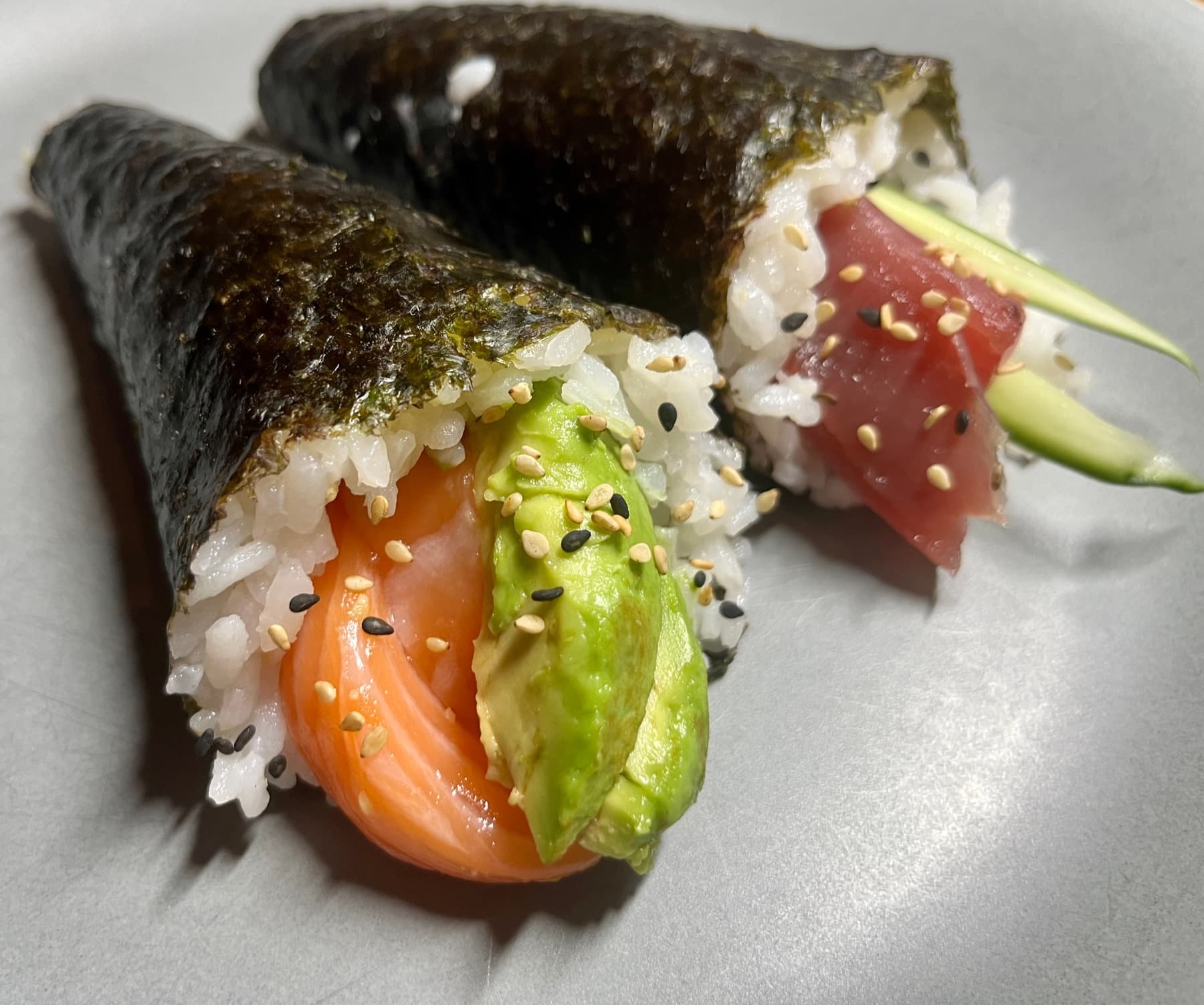
Photo by Benoît Prieur. Licensed under CC0. Resized for web
Someone is holding a half-sheet of nori like a tiny dark sail. A spoon of warm rice goes on one side. Cucumber sticks, a slice of fish, maybe avocado. Then the cone closes, and the roll is gone before the seaweed can go limp.
That is temaki night. Temaki (手巻き), also called temakizushi, means hand-rolled sushi: rice and fillings wrapped in roasted nori, usually into a cone, eaten with your hands. It is the sushi format Japanese households actually throw for friends, because nobody needs a bamboo mat or a chef’s knife show. You cook and season the rice. You set out fillings. Guests build the next bite themselves.
What kind of night this is
Think of it as cousin to a Vietnamese summer-roll party, with different wrappers and a hotter job on the rice. Dumpling night asks everyone to fold, then someone still has to cook in batches. Temaki asks everyone to roll, then eat. The nori stays crisp only for a short window, so the party moves in small loops: roll, bite, talk, roll again.
You do not need a sushi-bar spread. Two proteins, a couple of crunchy vegetables, and good rice will carry four to six people. Raw fish is lovely when you can source it thoughtfully. Cooked shrimp, sweet egg omelet (tamago), glazed eel from a Japanese market freezer case, cucumber, avocado, and pickled daikon (takuan) make a full table for mixed appetites.
The real host work is the rice
Sushi rice, or sumeshi, is short-grain Japanese rice seasoned with a warm mix of rice vinegar, sugar, and salt. Long-grain or jasmine rice will not cling the way you need. Bags labeled “sushi rice” are the easy grocery find; Koshihikari and similar short-grain brands work the same job.
Cook the rice as you usually would for Japanese white rice. While it is still hot, fold in the vinegar seasoning with a cutting motion so you coat the grains without mashing them. A common home ratio for about one and a half cups of uncooked rice is four tablespoons rice vinegar, two tablespoons sugar, and a teaspoon of salt, warmed just until the sugar dissolves. Bottled seasoned sushi vinegar is a fine shortcut if the bottle is meant for sushi. Aim for rice that feels close to body temperature when people start rolling, and keep the bowl covered with a damp (not dripping) cloth so the top does not crust over.
That warm, seasoned rice is what makes the night feel like sushi instead of a cold rice wrap. Cold fridge rice fights you. Over-vinegared rice tastes sharp. Get the rice friendly, and the rest of the table can be simple.
Build a filling bar, not a trophy case
Cut fillings into sticks or slender slices about three inches long so they sit cleanly on the rice. Put each thing in its own small dish or on a platter with clear lanes. Guests should be able to grab without excavating.
For vegetables, cucumber sticks, avocado slices, takuan, and a handful of shiso or radish sprouts if you can find them cover crunch, cream, pickle, and green. For proteins, choose a mix that matches your guests. Raw salmon or tuna from a fishmonger who sells fish for sashimi is the classic centerpiece. Boiled shrimp, tamago, smoked salmon, or unagi kabayaki (pre-glazed eel you warm gently) keep the night going when someone skips raw fish. You are hosting dinner, not proving a seafood résumé.
“Sushi-grade” is a shop label, not an official government grade. What you want is a fishmonger or Japanese market that sells fish meant to be eaten raw and can tell you how it was handled. Many wild fish sold for raw service have been commercially frozen to kill parasites at temperatures a home freezer does not reliably reach. Ask. Keep fish cold, slice close to serving time, and set platters over ice. Guests who are pregnant, immunocompromised, or simply wary should load up on cooked and vegetable rolls without apology. Leftover raw fish is a same-day refrigerator question, not tomorrow’s lunchbox plan.
Nori, soy, and one practice cone
Buy roasted nori sheets meant for sushi. Cut them in half for cone-style rolls, or in quarters for smaller taco-style folds that are easier for kids and first-timers. Keep cut sheets in the bag or a sealed container until people are ready; open air softens them.
Dry hands help. Place a half-sheet shiny side out (rough side toward the rice), spread a thin layer of rice on the left third if you are right-handed, lay fillings diagonally, and roll from the bottom left corner into a cone. A grain of rice on the far corner acts as glue. Demonstrate one. Then stop hosting and start eating.
Put out individual dishes of soy sauce, a little wasabi, and pickled ginger (gari). Fatty fish often wants less wasabi than lean fish. People can argue about that while they roll.
Table station checklist
- Covered bowl of warm seasoned sushi rice and a rice paddle
- Nori halves or quarters kept sealed until service
- Chilled protein platter (raw and/or cooked) set over ice
- Vegetable and pickle sticks in easy-grab dishes
- Individual plates plus small soy dishes for each guest
- Wasabi, pickled ginger, and extra napkins
- Damp towels for sticky fingers; trash bowl for nori scraps
Do not pre-roll a mountain
Temaki is happiest eaten within a minute or two of rolling. A tray of cones that sits through conversation turns into soft seaweed and weepy rice. Show the fold once, then let people make and eat as they go. Leftover dry nori stays in the cupboard. Leftover cooked fillings become tomorrow’s rice bowl. Leftover raw fish goes back on ice and into the fridge promptly.
You will know the format landed when the rice bowl stays busy and the host is sitting down with a cone of their own. Keep the fillings cold between waves if the evening runs long. The night succeeds when the rice is ready, the nori is still crisp, and nobody is waiting for a plated sushi board that was perfect twenty minutes ago.