
A Field Guide to East Asia’s Cold Noodles—and Which One to Eat in a Heat Wave
Icy broth, spicy gochujang, nutty sesame, sharp vinegar, or a clean buckwheat dip: match the bowl to the craving when the kitchen feels too hot to boil much more than noodles.
Updated August 6, 2026
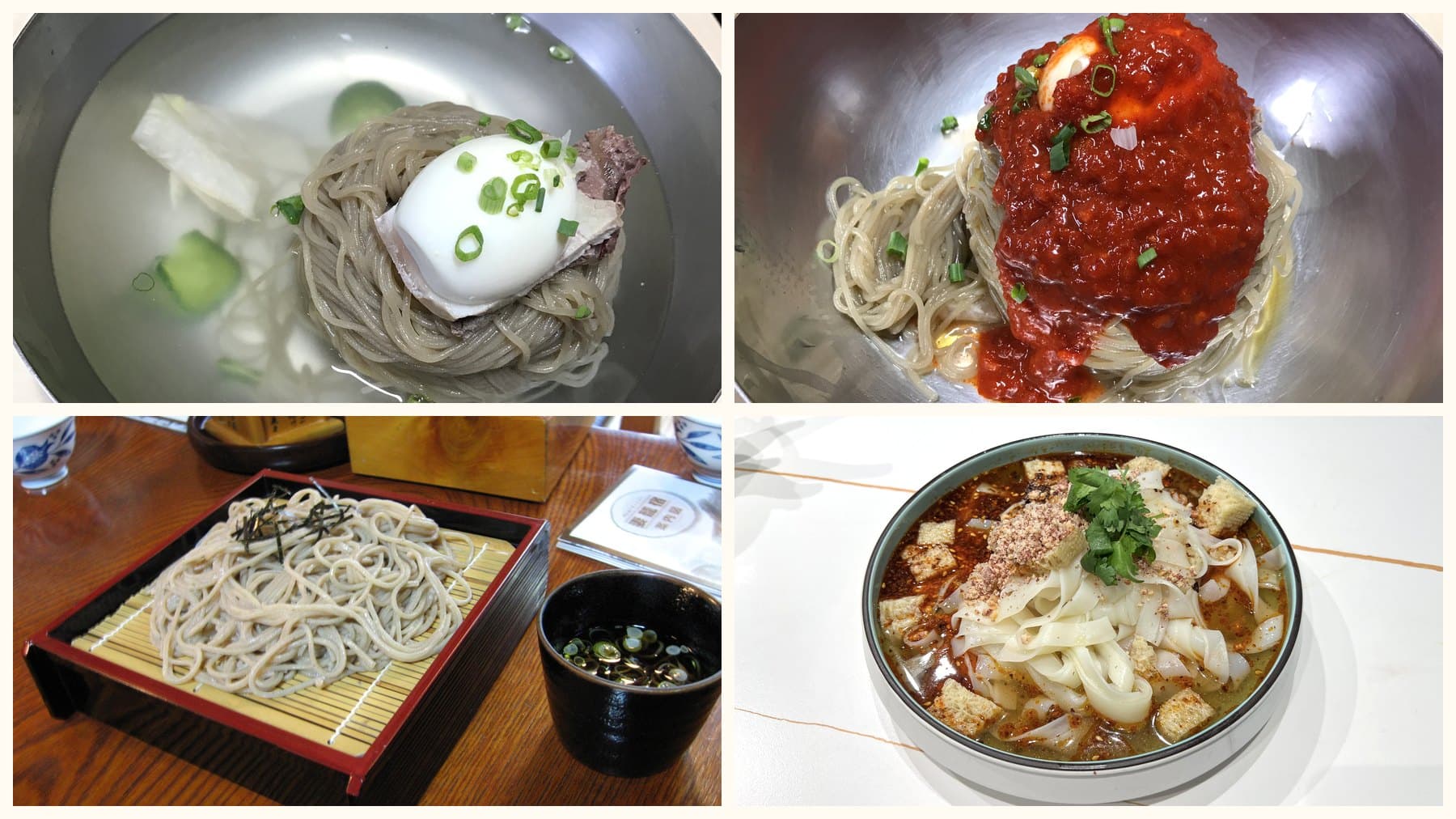
Photo by chomjong; spinachdip; N509FZ. Licensed under CC BY 2.0 / CC BY-SA 2.0 / CC BY-SA 4.0. Composite: mul and bibim naengmyeon (chomjong, CC BY 2.0); zaru soba (spinachdip, CC BY-SA 2.0); Shihezi-style liangpi (N509FZ, CC BY-SA 4.0). Resized and cropped for web.
When the air turns sticky, East Asia’s cold noodle map is less a list of countries than a set of moods. Some bowls arrive swimming in ice. Others arrive dry and red. Some ask you to dip. Some lean on sesame paste, black vinegar, or a clean soy-dashi cup. The useful question on a heat-wave night is not which cuisine “wins,” but which texture and temperature you want in the first bite.
This guide groups familiar summer bowls by that experience, then notes how the noodles, sauces, and garnishes usually differ, and which versions stay realistic on a home stove.
Icy and refreshing
Start here when you want the bowl itself to cool you down.
Mul naengmyeon is the Korean classic of cold buckwheat or starch noodles in a chilled, lightly tangy broth, often served in a metal bowl that holds the chill. Pyongyang-style versions are famous for a clean beef-and-radish broth with a soft vinegar-mustard finish at the table. Cucumber, pear or pickled radish, and half a hard-boiled egg are common toppings. The noodles can be springy and a little resistant; scissors at the table are normal, not a joke.
Japanese somen is the thinner, quieter cousin of that iced feeling. Ultra-fine wheat noodles go into ice water, then into a light mentsuyu dip with scallion, grated ginger, and sometimes myoga. On especially hot days, some households and inns still serve nagashi somen, sending the noodles down a bamboo chute of cold water. Even without the theater, a bowl of ice and a small cup of dipping sauce is enough.
Spicy
Choose spice when you want heat that still reads as cooling because the noodles are cold.
Bibim naengmyeon skips the big broth and coats chewy noodles in a gochujang-forward sauce, sweet-tart and often finished with more vinegar or mustard. Hamhung-style starch noodles are especially springy; the red sauce is the point. Bibim guksu is the quicker home relative: thin wheat somyeon tossed with a similar spicy-sweet paste, cucumber, and egg. It delivers the spicy cold-noodle mood with supermarket noodles and a short boil.
Chinese liangpi can land in this lane when chili oil leads. Wide steamed “cold skin” sheets get garlic, cucumber, sometimes wheat gluten, and a slick of chili that sits on top of vinegar and soy. The spice is oil-based rather than gochujang-sweet, so the burn feels different even when both bowls look red.
Nutty
Reach for nutty when you want richness without a heavy hot soup.
Taiwanese liang mian and Chinese cold sesame noodles live here. Thin wheat noodles get a sauce built on toasted sesame paste or a peanut-sesame blend (majiang), loosened with soy, vinegar, sugar, and a little chili oil. Cucumber sticks, shredded chicken, and scallion show up often; some Taiwanese breakfast shops keep a mayo-tinged or sweeter house style. The bowl should taste roasted and creamy, not merely salty.
Zaru soba belongs in the nutty column for a different reason. Buckwheat itself smells toasty. Chilled soba on a bamboo tray, with nori on top and a concentrated mentsuyu dip on the side, is savory and clean rather than paste-thick, but the grain aroma is what people mean when they call it nutty. Dip lightly so the noodles stay cool.
Vinegary and subtly savory
These bowls wake the palate without relying on chili heat.
Liangpi’s best versions usually balance chili with Chinese black vinegar and raw garlic. The vinegar is fragrant and a little malty; it cuts the starch sheets and the chili oil so the dish does not taste only spicy. A good bowl should smell sharp before it burns.
Hiyashi chūka is Japan’s chilled ramen salad: springy alkaline noodles under neat piles of egg, cucumber, ham or crab stick, tomato, and sometimes chashu. The tare is often soy-vinegar and a little sugar, or a sesame dressing. It is colorful, gently tart, and built for ramen shops in summer when steam feels wrong.
For subtle savory, stay with zaru or mori soba and a well-made tsuyu, or with a restrained mul naengmyeon where the broth, not the toppings, does the talking. Wasabi, scallion, and a squeeze of citrus on the soba side; vinegar and mustard on the Korean side. Small additions, not a loud sauce.
Chewy, on purpose
Texture can be the craving. Hamhung-leaning naengmyeon made with sweet potato or other starches snaps back against the teeth. Liangpi’s wide sheets are soft-chewy and slippery, closer to a steamed starch ribbon than to Italian pasta. Thin wheat somyeon and somen cook fast and stay delicate; buckwheat soba sits in between, with a pleasant resistance when it is not overcooked. If you want a workout for the jaw, order starch naengmyeon or liangpi. If you want something that slips down easily after a long day, choose somen or bibim guksu.
Noodles, sauces, and garnishes at a glance
What usually changes from bowl to bowl
- Noodle base: buckwheat or starch (naengmyeon), thin wheat (somen, somyeon, many liang mian), alkaline ramen (hiyashi chūka), steamed wheat or rice starch sheets (liangpi).
- Sauce logic: icy broth (mul); gochujang paste (bibim); mentsuyu dip (zaru/somen); sesame-peanut majiang (liang mian); chili oil plus black vinegar (liangpi); soy-vinegar or sesame tare (hiyashi).
- Garnish habits: egg and pickled radish or pear on naengmyeon; nori and scallion with soba; cucumber almost everywhere; colorful toppings arranged on hiyashi; gluten cubes and cilantro often on liangpi.
- Serving temperature: ice in the broth or under the noodles matters as much as seasoning for mul and somen.
Which versions are easiest at home
On a weeknight, three bowls stay friendly. Bibim guksu needs little more than boiled thin noodles, a gochujang-soy-vinegar-sugar sauce, cucumber, and an egg. Somen is even shorter: boil, shock in ice water, mix a quick dip from concentrated mentsuyu or soy, mirin, and dashi. Taiwanese-style sesame cold noodles come together from pantry jars if you keep sesame paste, soy, vinegar, and chili oil on the shelf.
Hiyashi chūka is only a little more work: cook ramen or chukamen, chill them well, and arrange whatever toppings you already have. Store-bought tare or a simple soy-vinegar mix is fine.
Mul naengmyeon is harder from scratch because the broth wants time and chill, but grocery kits with noodles and liquid concentrate are common in Korean markets and make a credible bowl. Scratch liangpi, with its washed starch batter and steaming step, is a weekend project; many cooks buy ready sheets or visit a Shaanxi or northwest Chinese shop when they want that texture without the sink full of bowls.
To start, we recommend matching the craving first (icy, spicy, nutty, or sharp), then picking the easiest bowl in that lane. In a heat wave, somen or bibim guksu will get dinner on the table before the kitchen heats up again. Save restaurant mul naengmyeon or a careful liangpi for the night you want the full texture show.