
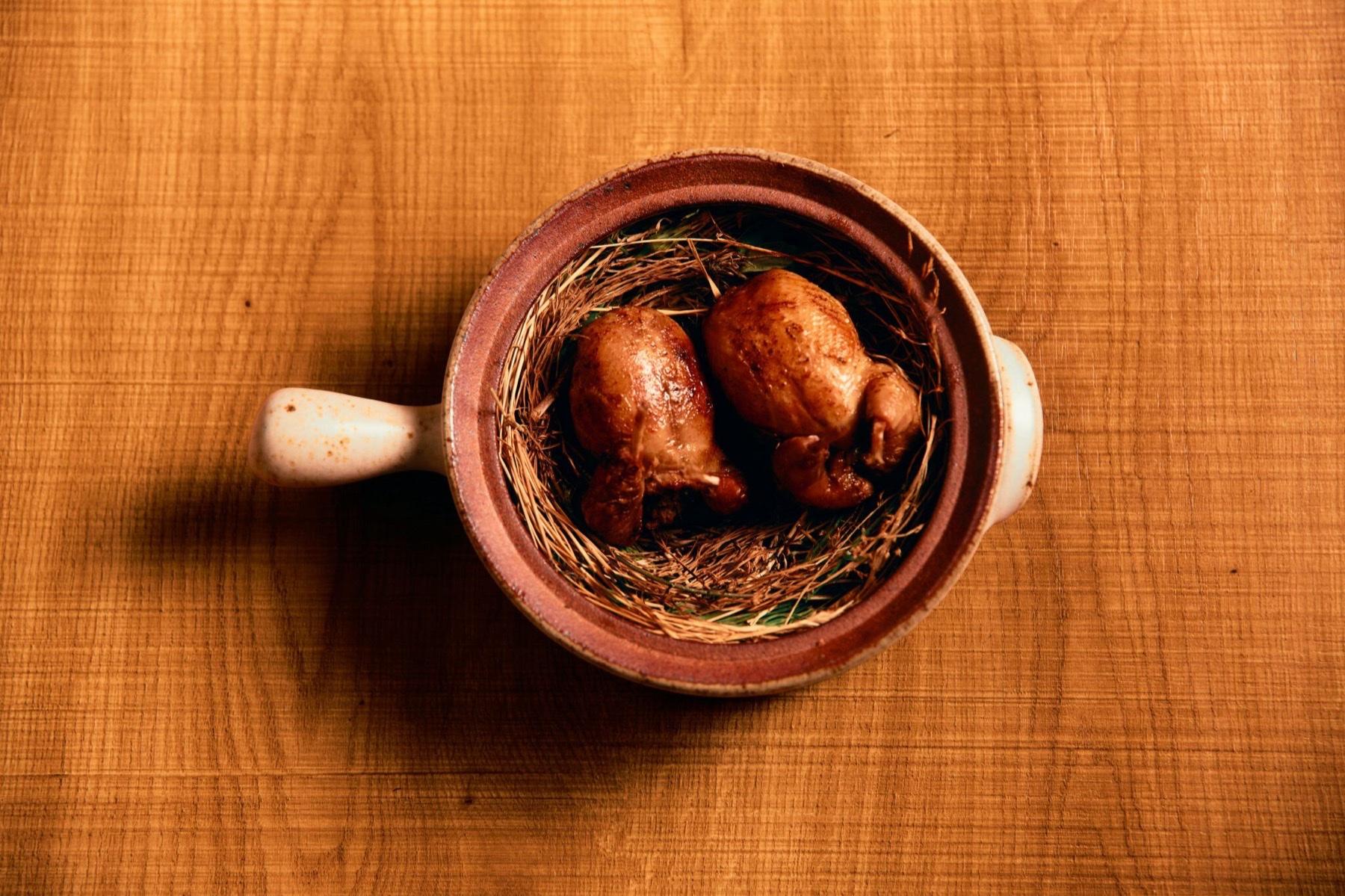
Photo by David Karuhije. Licensed under Courtesy Haisan. Quail with hawthorn demi-glace press photo for Haisan. Resized for web.
Three Dishes That Make Haisan’s Menu Chinese Pacific Northwest
At Vancouver’s new Commercial Drive tasting menu, BC mussels meet fermented black bean, crab becomes congee, and quail takes a hawthorn glaze.
November 11, 2026
Haisan opened on October 14 at 2892 Commercial Drive with one dinner on offer: sixteen courses over about three hours, billed as Chinese Pacific Northwest. The tasting menu is $180 a guest. Wine pairing is $85. Tea pairing is $40. Steven Che, the chef who also runs Just Pizza on Kingsway, built the room for thirty seats and hosts service with his team.
Che told Scout Magazine the cooking is “one point of view,” meant for families who already know Chinese food and Pacific Northwest food as parts of the same city. Look at the sample menu, or at what Dished Vancouver ate at the end of October. Local shellfish, crab, and quail keep meeting Chinese techniques with names.
Mussels and fermented black bean
Course six on the sample menu is mussel, burnt honey, and fermented black bean. That black bean is douchi, the salted, fermented soybean Cantonese kitchens use with clams and mussels. Cooks rinse and mash the beans, fry them with garlic and ginger in a hot wok, then toss the shellfish through so the sauce clings and the meat stays tender. Eileen Yin-Fei Lo wrote a mussel version into her Cantonese cooking. In Hong Kong, the clam cousin has been dai pai dong food for decades.
Che told VITA Daily he lightened the fermented black bean sauce at Haisan and added compressed celery for crunch. Burnt honey softens the salt. Foodie Scribbles, writing about his earlier pop-ups, noted Salt Spring Island mussels and a finish of foraged bull kelp oil. Suppliers can change with the week. The plate still puts BC shellfish next to a Cantonese black bean sauce, with honey and seaweed around the edges.
Crab and congee
Later comes crab congee. Congee, or zhou, is rice cooked past separate grains into a spoonable porridge. Chaoshan kitchens simmer crab into a soupy pot. Cantonese tables often go thicker and creamier. In both cases the rice has to break down until a spoon can lift it with the crab.
On Dished Vancouver’s late-October visit, the congee came with dill gel and Red Fife miso. Red Fife is Canada’s oldest named bread wheat, first grown in Ontario in the 1840s and brought back by heritage bakers. Che’s earlier pop-ups, again per Foodie Scribbles, used Dungeness crab and a miso made from Red Fife sourdough. Dill fits the coast. The miso is a Japanese ferment on Canadian wheat, sitting in Chinese rice porridge.
Quail, hawthorn, and maltose
The savory close is quail with hawthorn. Before opening, Che showed Scout Magazine how the bird is nearly deboned, stuffed with pork, shiitake, and chestnut, then sauced from the bones with hawthorn, the tart fruit Chinese kids know as Haw Flakes. Daily Hive published a press photo of the plated quail with a hawthorn demi-glace. Stuffing poultry with pork and mushrooms is ordinary Chinese banquet work. Hawthorn, or shan zha, is what cooks reduce when a rich sauce needs acid.
VITA Daily caught a later change: a maltose glaze with fermented black beans, Chinese marinated olives, and mixed peppers. Maltose is the thick barley sugar Cantonese roast shops brush onto duck for that lacquered mahogany skin. Che uses it on quail now that the kitchen breaks down more than seventy birds a week, up from eighteen for a whole pop-up run.
Book on Tock. The room seats thirty. Dinner runs Wednesday through Sunday, with the last seating at 8:30 p.m., and new dates usually open on the fifteenth. Flag allergies when you reserve; the kitchen builds the menu ahead. For how Che got here, and the ceramics he throws for the table, read Steven Che Throws the Plates for His Own Tasting Menu.