
SGV Bakery Crawl: What to Order
Chinese and Taiwanese bakery cases decoded: sweet buns, savory pastries, and what travels well.
Updated July 22, 2026
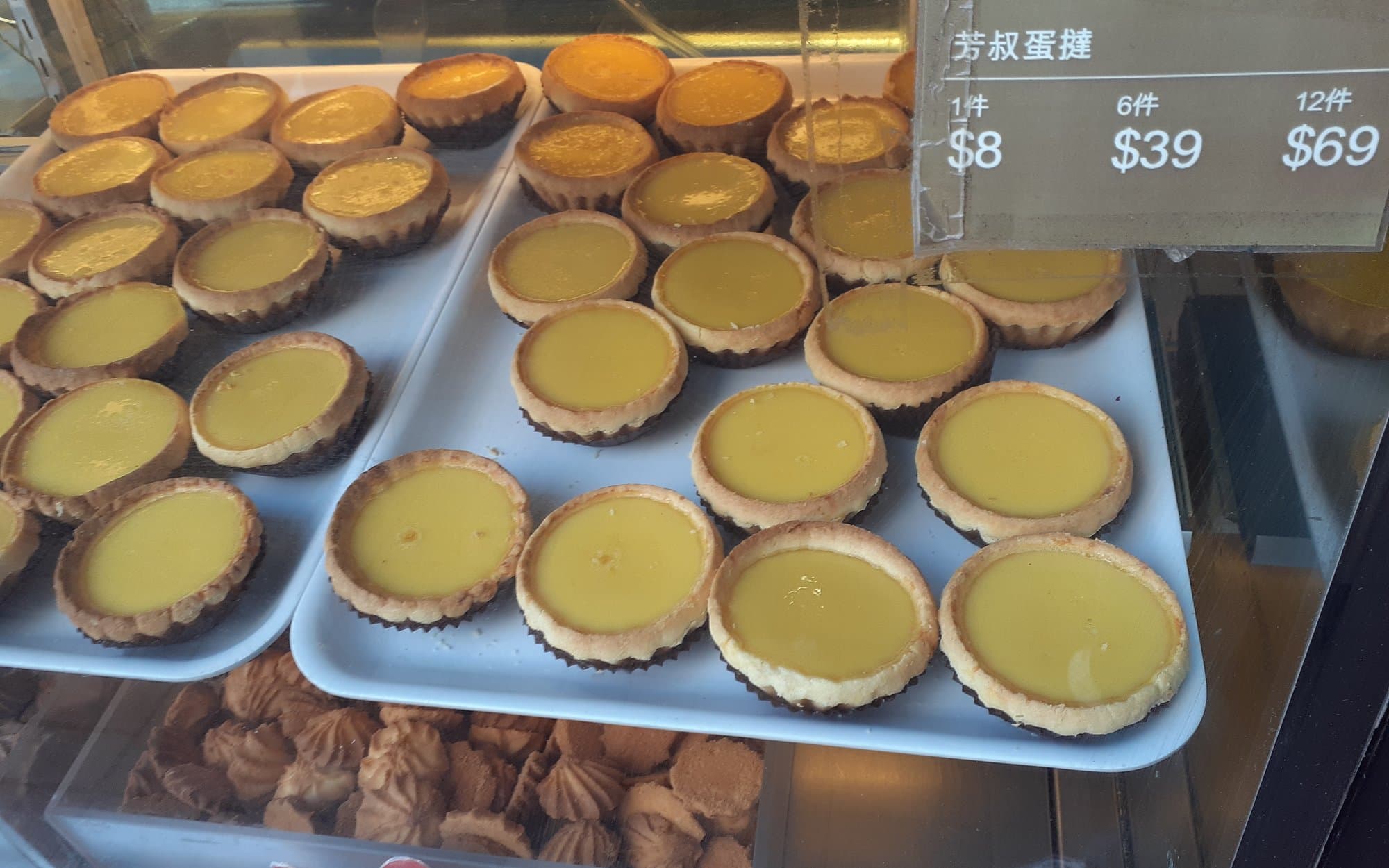
Photo by Borm Laimkoo. Licensed under CC BY-SA 4.0. Cropped and resized for web
The case is already warm. Pineapple buns sit in one tray, egg tarts in another, curry buns further down, and a cream cake is sweating under the light. Someone ahead of you is filling a tray without looking lost.
San Gabriel Valley bakeries, Hong Kong–style and Taiwanese-leaning alike, reward that kind of calm. You do not need a ranked crawl. You need a way to read the case, fill a small tray, and know what belongs in your mouth this afternoon versus tomorrow’s snack bag.
Tray, tongs, then the case
Most self-serve rooms work the same way. Pick up a tray and tongs near the door, often with a sheet of parchment. Slide the case open, lift what you want with the tongs, close the door, and pay at the counter. Do not use your hands. If staff are serving from behind glass instead, point and wait; that is normal too.
Morning still gives you the widest selection. Egg tarts and the popular sweet buns sell down through lunch. If a tray looks sparse and dry, skip it and choose something that still looks soft or glossy.
Two accents in the same corridor
Hong Kong–style cases lean on soft, slightly sweet milk bread, crackled pineapple bun tops, coconut cocktail buns, baked barbecue pork, and egg tarts. Taiwanese-leaning shops often push fluffier buns, green onion bread, red bean and taro fillings, and boxed pineapple cakes that are a different pastry entirely from pineapple buns.
Plenty of SGV shops mix both vocabularies. Chains such as 85°C Bakery Cafe, which began in Taiwan and spread through Southern California after its first U.S. store opened in Irvine, put drinks beside the trays. Older Hong Kong–style rooms may be takeout-only, with the whole visit lasting five minutes. Either way, shop by category, not by the longest line.
Sweet classics worth knowing by sight
Start here
- Pineapple bun (bolo bao): soft bun under a sugary, crackled top. No pineapple inside. The name is about the look. Hong Kong lists the making technique among its culinary heritage crafts.
- Cocktail bun (gai mei bao): longish bun with a buttery shredded-coconut filling. A mid-century Hong Kong classic.
- Egg tart (dan tat): bright custard in a shortcrust or flaky shell. Smooth yellow top for the Hong Kong style; caramelized spots usually mean a Portuguese or Macau-leaning tart.
- Cream or custard buns: soft rolls with a sweet filling. Easy first buy if labels are thin.
- Red bean or taro buns: common in Taiwanese-leaning cases; denser, dessert-leaning sweetness.
If you see a pineapple bun split with a thick slab of butter, that is closer to cha chaan teng service than a grab-and-go bag. In the case, plain bolo bao is the everyday version. Filled pineapple buns (custard, coconut, barbecue pork) are common too; look at the cut side or the label before you commit.
Savory trays for a real lunch
Baked char siu bao, the glazed golden barbecue pork bun, is the savory centerpiece of many Hong Kong–style cases. Curry beef buns, hot dog buns on soft sweet-savory dough, and green onion bread fill out a lunch tray without needing a restaurant.
Ask for a warm-up if the shop offers it and the bun looks better hot. Mayo-topped or heavily sauced pieces travel poorly; eat those first.
What to eat soon, what can wait
Egg tarts, cream-filled buns, soft pineapple buns, and whipped cream cakes want the same day, ideally within a few hours. Drier cookies, sealed pineapple cakes, and some plain loaves forgive a short car ride better.
To start, we recommend one pineapple bun, one egg tart, one savory bun you can name by looking at it, and one wild-card sweet. That is a complete first education without a dozen items going stale in the back seat.
Leave when the bag is still warm and you already know whether this kitchen’s tart custard or crackled top is worth a return. The crawl is the case, not a scavenger hunt across the whole valley.