
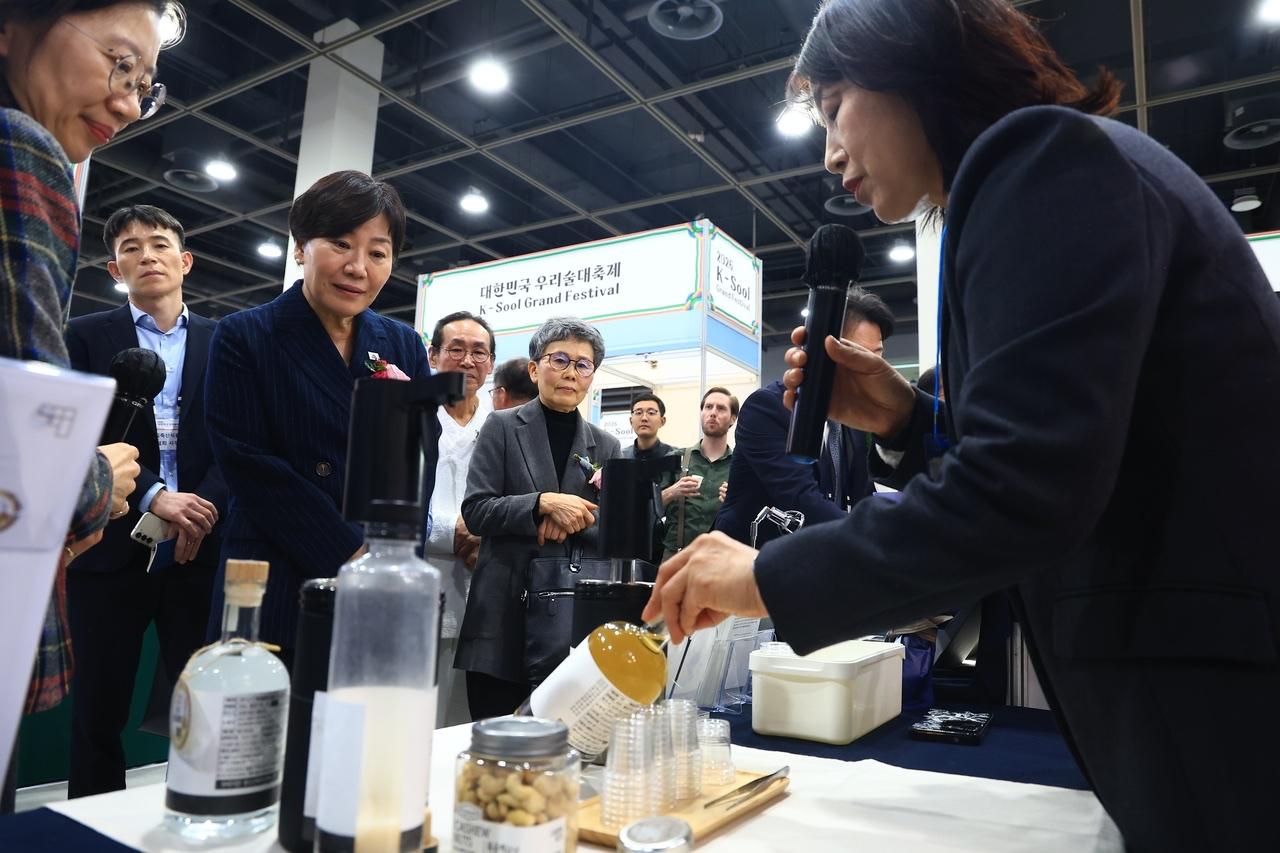
Photo by Agriculture Ministry. Licensed under Courtesy Korea Herald. Agriculture Ministry photo from the K-Sool Grand Festival at aT Center, Yangjae, Nov. 13, 2026. Published by The Korea Herald. Resized for web.
Korea Brought More Than 140 Breweries to One Festival. Start Your Own Tasting With Three Different Bottles
Last weekend’s K-Sool Festival put 142 producers in one Yangjae hall. Start at home with a cloudy makgeolli, a clear yakju, and a distilled soju from this year’s award winners.
November 18, 2026
Last weekend, Seoul’s aT Center in Yangjae turned into a liquor hall. The Korea Herald counted a record 142 producers at the 2026 K-Sool Grand Festival, up from 120 a year earlier. The Ministry of Agriculture, Food and Rural Affairs and aT ran the sixteenth edition from November 13 to 15. People moved booth to booth tasting, buying bottles, and lining up for makgeolli classes. The ministry expected about 30,000 visitors.
On opening day the ministry also handed out this year’s Korean traditional liquor awards: eighteen drinks in all. You do not need the weekend pass to meet the range that filled the room. Three grand-prize bottles will do it: a cloudy makgeolli, a clear yakju, and a distilled soju. Pour them in that order, and read the glass before the label.
Cloudy: Sanjeonghosu Dongjeongchun Makgeolli
Sulbinneun Jeongane, a brewery in Pocheon, Gyeonggi Province, took the low-alcohol takju grand prize with Sanjeonghosu Dongjeongchun Makgeolli. Takju is the legal category for unfiltered cloudy rice wine; makgeolli is the everyday name. The ministry’s awards sheet lists the bottle at 6 percent, 720 milliliters, made with local rice and nuruk, the grain fermentation starter. The brewery ferments twice and keeps the mash thick. The name nods to Dongjeongchun, a Joseon-era liquor the house has been remaking since 2015. The awards note calls out fruit aroma and sweetness.
In the glass it looks like fresh milk. Shake gently before you pour; the rice solids settle. On the back label, look for takju or makgeolli, and keep unpasteurized bottles in the fridge. Serve it cold with pajeon or bossam. The oil from the pancake or the pork wants that soft, cloudy pour beside it.
Clear: Dam Gold
Naeoldarm, in Seongnam, took the yakju and cheongju grand prize with Dam Gold. Yakju is filtered clear rice wine; cheongju is its close cousin. The awards sheet puts Dam Gold at 12 percent in 500 milliliters. It ferments from Gyeonggi rice for five weeks, then ages for ten. The brewery uses a golden-liquor method, hwanggeumju, that leaves the bottle a pale straw color. The ministry calls the taste dry and clean, with a little acidity. JoongAng Cooking has paired Dam Gold with hoe, yukhoe, and hot pot. Founder An Dam-yoon told Economy Chosun she wants a table wine that is not sweet, so it can sit with the meal the whole way through.
In the glass it is transparent and gold-tinged, never milky. The label should say yakju. Chill it like a dry white and pour a small glass next to raw fish or seasoned beef. Hoe or yukhoe is enough to feel what that brightness does between bites.
Clear and strong: Ido 42
Joeunsool Sejong, in Cheongju, North Chungcheong Province, took the distilled-spirits grand prize with Ido 42. The awards sheet lists organic Cheongju rice, fermented and aged, then distilled under low heat and reduced pressure. The bottle is 42 percent alcohol in 375 milliliters; KOJU also sells a 750-milliliter size. The ministry praises a clean finish for that strength, with a quiet note of rice and nuruk. KOJU suggests fatty pork or spicy seafood beside it.
In the glass it looks like water. On the label, look for distilled soju, and rice near the top of the ingredient list. Everyday green-bottle soju often starts with diluted refined spirit instead. Pour a small cup with samgyeopsal. A short cold pour cuts the fat on the grill.
How to run the flight
Set three small cups. Pour the makgeolli first, then Dam Gold, then less of the Ido 42. Keep the cloudy bottle and the yakju cold until you pour. Leave the distilled bottle cool, or chill it briefly if you prefer. Match each glass to one plate: pancake or boiled pork with the makgeolli, raw fish or yukhoe with the yakju, grilled belly with the soju.