
Korean BBQ Night at Home
Grill setup, banchan logic, and the grocery run that makes the evening work.
Updated July 19, 2026
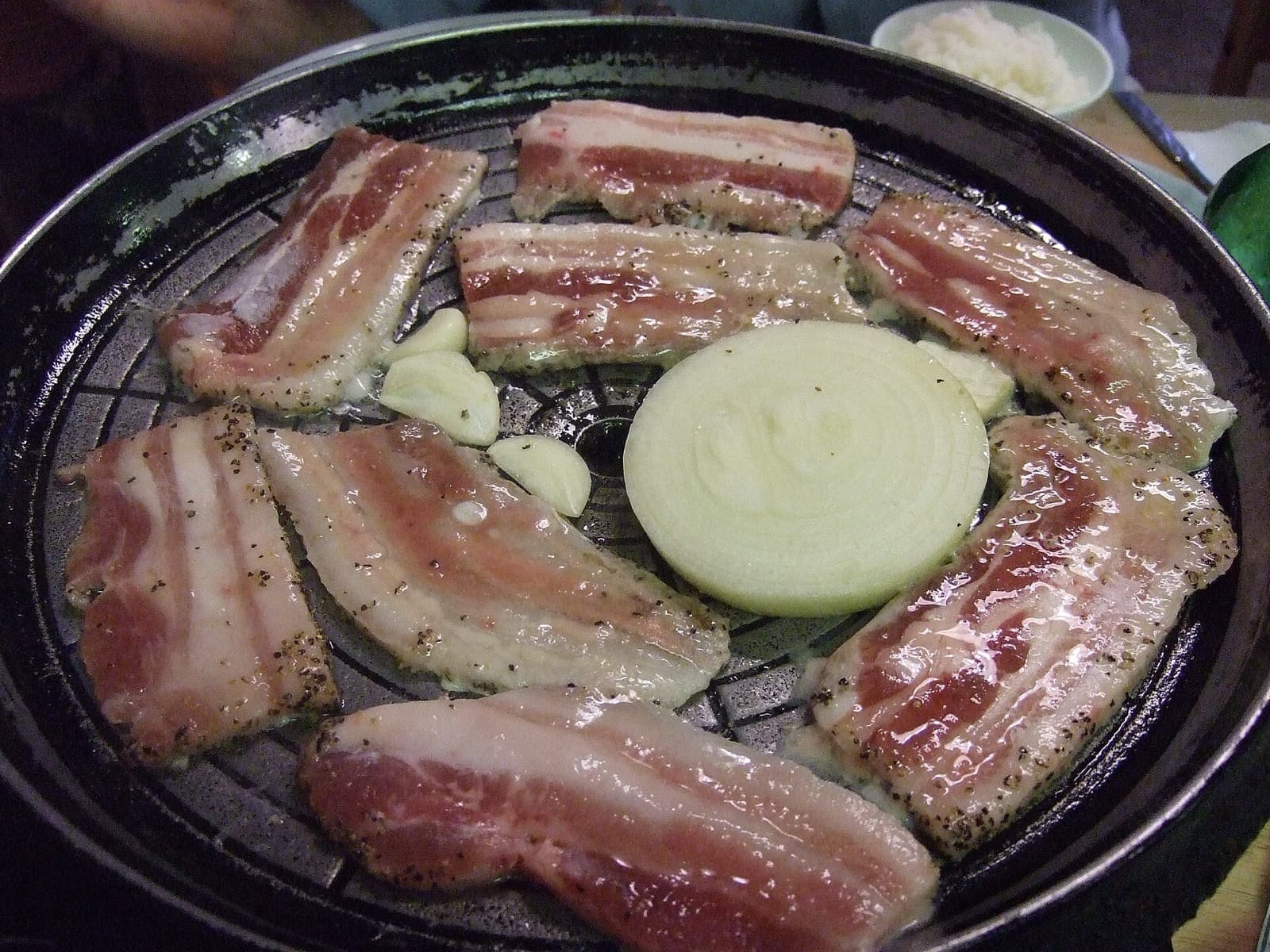
Photo by hellochris. Licensed under CC BY 2.0. Resized for web
Home Korean BBQ is not a smaller version of a restaurant with industrial exhaust. It works when you decide the heat source and smoke plan first, buy meat that is already sliced for the grill, put four strong banchan on the table, and agree who is flipping while everyone else builds wraps.
You do not need twelve side dishes. You need a clean setup, good meat, lettuce and perilla within reach, and a pace that keeps the grill from turning into a traffic jam.
Choose the heat, then build the table around it
Put the grill in the center so everyone can reach it. A portable butane burner with a sloped grill pan is the usual restaurant-like home setup: responsive heat, easy to place, and familiar to anyone who has cooked at a Korean table. Check the stove’s manual for indoor use, keep clearances honest, and open windows plus a range hood or fan before the first slice hits the pan. Building rules and leases sometimes restrict open flames; if yours does, or if smoke detectors are twitchy, use an electric tabletop grill with a real drip tray instead.
Charcoal belongs outdoors. U.S. CDC and CPSC guidance is blunt: never burn charcoal indoors, in garages, or in tents. Restaurant sootbul flavor is wonderful. It is not worth carbon monoxide risk in a living room.
Set each place with chopsticks, a rice bowl, and small dishes for ssamjang and sesame oil dip. Put tongs and kitchen scissors by the grill. Arrange banchan in a ring that leaves the heat alone, and keep raw meat on chilled plates that you refresh rather than leaving a warm pile out for the whole night.
Minimum kit
- Tabletop heat source (butane + grill pan, or electric with a drip tray)
- Tongs and kitchen scissors for turning and cutting cooked meat
- Small bowls for ssamjang and sesame oil with salt
- Lettuce and perilla washed and dried, ready for wraps
- A ventilation plan running before anything hits the grill
A short meat list beats a crowded platter
Pick two or three cuts, not seven. A reliable first table is one unmarinated option and one marinated option. Samgyeopsal (pork belly) and chadolbaegi (paper-thin brisket) go on plain and cook fast. Galbi or bulgogi bring the soy-sweet marinade. LA galbi, the thin flanken cut that Korean American cooks popularized in Los Angeles, is what many U.S. grocery cases sell as Korean short ribs; it cooks quickly and takes marinade well.
Home guides commonly plan about half a pound of meat per person, closer to three-quarters if the table is hungry, and more by weight for bone-in ribs. Korean groceries often sell meat already sliced for barbecue, and many carry pre-marinated galbi and bulgogi. That is a practical buy, not a shortcut you have to apologize for.
Grill unmarinated meat first. Sugar in marinades browns and blackens the pan; once the plate is sticky, everything after it tastes more burnt than grilled. Cut cooked pieces with scissors into bite-size strips on the grill, keep batches small, and give one person clear responsibility for the tongs so four people are not fighting over the same slice.
Banchan: four dishes with jobs
Banchan are there to cut fat, add crunch, and refill the table between grill rounds. Kimchi is nearly non-negotiable; sourer cabbage kimchi also fries beautifully in pork fat later if you want a mid-meal treat. Add pickled radish or kkakdugi for sharp sweetness, one namul such as seasoned bean sprouts or spinach, and a fresh pa muchim (scallion salad) tossed just before serving so it stays crisp. Buy the fermented and pickled sides at a Korean grocery if you want. Make the scallion salad at home; store-bought versions rarely stay lively.
Rice matters. Short-grain rice gives wraps and leftover meat somewhere to land. Lettuce (sangchu) and perilla leaves (kkaennip) are the wrap pair: lettuce for structure, perilla for a minty, herbal edge. Many tables stack a perilla leaf on lettuce, add meat, a dab of sauce, garlic or chili if people want it, then eat the wrap in one bite.
Two sauces, then stop shopping for more
Ssamjang is the wrap sauce: usually doenjang with gochujang, sesame oil, garlic, and a little sweetness. Tubbed versions from the Korean aisle are fine; mixing your own takes a few minutes if you already keep the pastes. Gireumjang is sesame oil with salt, often black pepper, for dipping unseasoned pork belly or brisket when you want the meat itself up front.
Gochujang shows up in ssamjang and in some spicy marinated pork. Knowing how sweet, salty, or grain-forward your tub tastes helps you balance the bowl without guessing.
Grocery run and timing
A day or two ahead, marinate galbi or bulgogi in the refrigerator (never on the counter), buy banchan you will not make, and confirm butane canisters or that the electric grill actually works. The day of, wash greens, mix ssamjang, cook rice, and plate meat cold until it is about to hit the heat. Start the ventilation before guests sit down.
If you want a restaurant-style close, keep a naengmyeon kit in the freezer. Cold noodles after grilled meat are a common finish in Korea. They are optional at home, but they reset a rich table better than another round of pork.
Keep raw meat chilled, cook pork and beef thoroughly enough for your comfort and for food-safety guidance on intact cuts, and refrigerate leftovers within two hours. The evening succeeds when the grill stays manageable, the wraps keep coming, and the host gets to eat. Ventilation first, meat second, banchan third, and a clear hand on the tongs: that is the whole plan.