
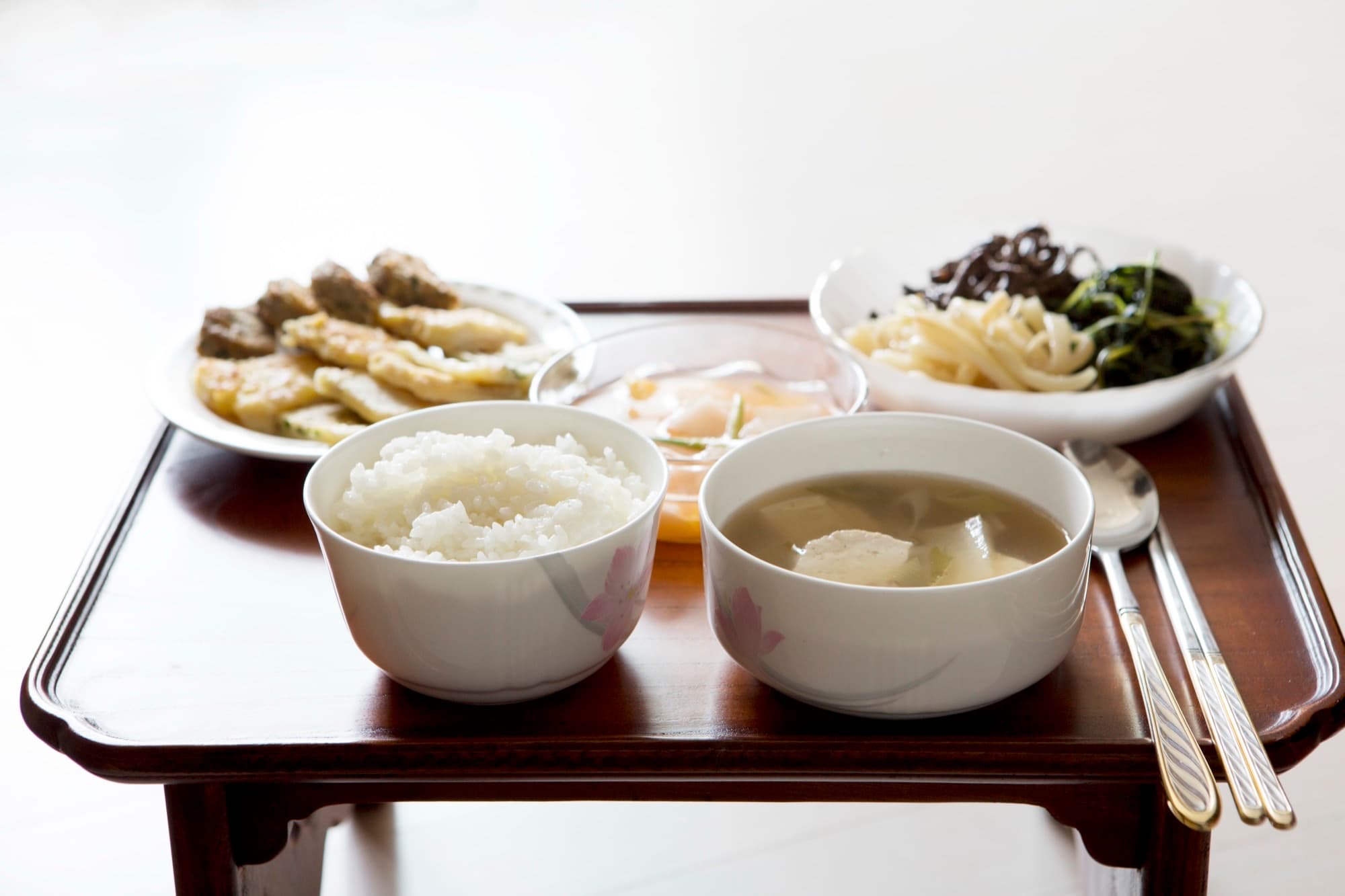
Photo by National Institute of Korean Language. Licensed under CC BY-SA 2.0 KR. Cropped and resized for web
There Isn’t One Healthiest East Asian Diet. Researchers Keep Describing the Same Pattern.
Japanese, Korean, and Chinese traditional plates keep pointing to the same shape: vegetables, soy, fish, and tea. Salt is the catch that travels with them.
September 20, 2026
Search for the healthiest East Asian diet and the answers arrive like contestants. Japan. Okinawa. Korea. Sometimes a purple sweet potato treated like a miracle crop. Nutrition papers rarely play that game.
Across Japanese, Korean, and Chinese traditional patterns, the same shape keeps showing up: plenty of vegetables, soy foods, fish when the coast allows it, tea instead of sweet drinks, and only a little red meat. Researchers have started calling culturally adapted versions of that idea an Asian Mediterranean diet, or MediterrAsian eating. The label is recent. The table it describes has been set for a long time.
A 2024 review in the Journal of Asian Pacific Society of Cardiology traced how Mediterranean heart-health principles get rewritten for Asian kitchens. The traditional Japanese pattern often called the 1975-type diet sits close to that map: vegetables, fruit, fish, soy, green tea, and less meat than a modern Western plate. In 2022, a meta-analysis of prospective Japanese cohorts found that people who stuck closer to a Japanese-style diet had lower cardiovascular mortality, with a pooled risk ratio of 0.83. Fish and green tea looked helpful in the same literature. Salt pulled the other way.
Korea tells a related story at the rice bowl. Traditional hansik, the everyday Korean meal built around multigrain rice, vegetables, fruits, nuts, and fermented sides, has been linked in cohort work to lower metabolic-syndrome risk and steadier body composition. Feeding studies of Korean traditional diets have improved markers in people already managing blood pressure or type 2 diabetes. Kimchi gets the press. The vegetables around the rice do most of the quiet work.
Chinese pattern research lands nearby. A systematic review of dietary patterns in Chinese populations found that combinations heavy in whole grains, fresh vegetables, soy, fish, mushrooms, and nuts tracked with better cardiovascular and metabolic outcomes than animal-food or Westernized patterns. In Shanghai cohorts, people who scored higher on Chinese dietary guidelines lived longer when vegetables, fruit, legumes, and fish were part of ordinary eating. Soy returns often in women’s heart-disease studies from China, though the strength of the finding depends on who was studied and whether they already had disease.
Put the three literatures side by side and a grocery list emerges more clearly than any national ranking: the same family of plates, written in different kitchens.
That shared list is why “Asian Mediterranean” keeps turning up in clinical nutrition. Mediterranean eating is already written into guidance for metabolic dysfunction-associated steatotic liver disease, the fatty-liver condition now common across Asia. Olive oil and feta do not land easily in every Asian pantry, so researchers keep the principles and change the ingredients.
In April 2026, BMC Nutrition published a four-week Asian Mediterranean Diet menu and asked thirty patients with that liver condition whether the dishes tasted good enough to eat. Twelve of fourteen scored as acceptable. Texture mattered most. The study did not measure whether the menu helped the liver. A year earlier, a secondary analysis of a MediterrAsian trial in Chinese women with fatty liver tied higher Mediterranean-style adherence to better liver-fat and lipid markers. Clinics are still proving the medical payoffs. The shopping list already looks like dinner: vegetables, legumes, fish, nuts, unsaturated oils, fruit.
Oldways, the nonprofit behind the Mediterranean Diet Pyramid, has made a similar case with an Asian Heritage Diet Pyramid since 1995, refreshed in 2018: plant foods at the base, seafood often, meat and sweets less often, tea and water as everyday drinks. A 2024 Advances in Nutrition perspective set Asian, Latin American, and African heritage diets beside the Mediterranean as cultural models of healthy eating, each on its own terms.
At home, that can stay simple. Fill most of the plate with vegetables and a grain. Keep tofu, tempeh, edamame, or miso in rotation. Eat fish when you can. Drink tea. Let meat be a supporting plate instead of the whole night.
Then mind the salt. Soy sauce, miso, kimchi, pickles, and salted seafood are how many East Asian kitchens get their savor, and how sodium climbs. Japanese cohort analyses that praise the overall pattern still flag high salt as a stroke and heart risk. Korean traditional-diet groups often report higher sodium alongside higher vegetable intake. Chinese guideline studies treat salt limits as part of the same healthy score that rewards vegetables and soy. The plate can look protective while the bottle works against you.
Keep the fermented flavors. Ease up on the pour. Dilute dipping sauces. Taste before you add another splash. When a dish can take umami from kombu or a light stock, you may not need another ladle of soy.
Okinawa is the reminder that fame and the plate can drift apart. Mid-century traditional eating there leaned on sweet potato, vegetables, soy, and modest calories, and older cohorts became a longevity legend. By the early 2000s, Okinawan men’s life-expectancy ranking among Japanese prefectures had fallen sharply in what local coverage called “shock 26.” Peer-reviewed demography since then has split the island into generations: those raised on the older pattern, and those raised amid postwar Westernized food, cars, and higher obesity and diabetes burdens.
So cook toward the vegetables, soy, fish, and tea. Japanese, Korean, and Chinese traditional tables already know that pattern. Asian Mediterranean research is still translating it for clinics, and salt can still get in the way. You can eat that way tonight without crowning a cuisine.