
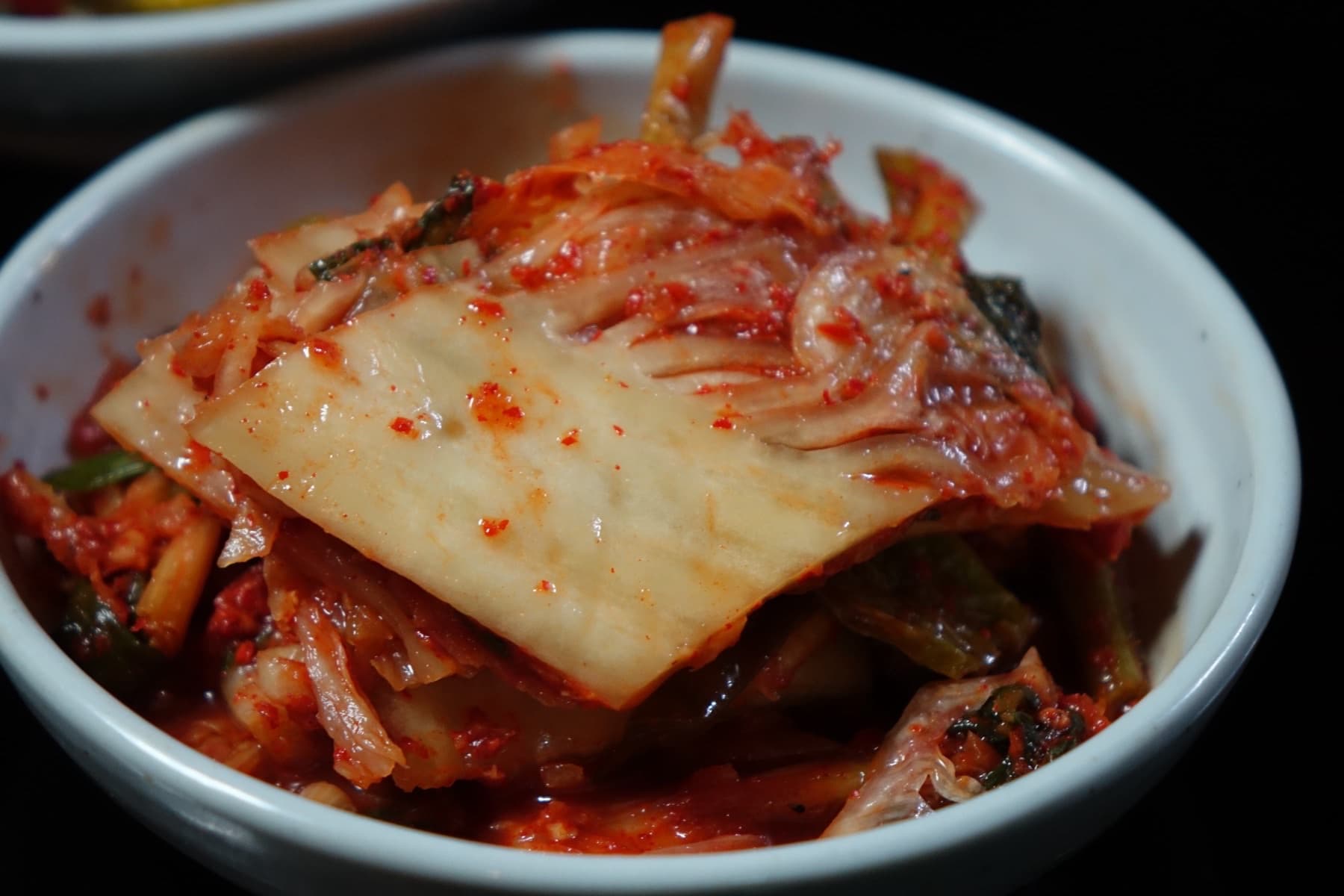
Photo by 최광모. Licensed under CC BY-SA 4.0. Baechu kimchi. Resized and cropped for web.
Kimchi Hit the Mainstream Aisle. Regional Jars Are Next.
A November 2 report finds CJ and Daesang kimchi at Costco and Whole Foods, while Korean grocers import Bonghwa, Suncheon, and Andong producers. The cold case now holds both a steady jar and a place name.
November 3, 2026
On November 2, ChosunBiz walked Los Angeles grocery cases and found kimchi where it used to be scarce. At Erewhon in Beverly Hills, it sat near olives and sauerkraut. The next day, Costco and Whole Foods carried jars from Korea’s big food companies, CJ and Daesang. Trader Joe’s had a private-label tub. Ralphs put kimchi in an Asian corner with tteokbokki. Jubu Kwon, who has cooked in Los Angeles for more than ten years, told the paper she no longer has to drive to Koreatown just to buy Korean-style kimchi.
Korea’s kimchi exports hit about $163.6 million in 2024 and $164.4 million in 2025, according to government trade figures cited by ChosunBiz and later ministry reports. Destinations crossed 100 countries in 2025 for the first time. CJ, Pulmuone, and Daesang still move most of that volume. While those brands fill the supermarket aisle, Korean grocers are stocking town names.
ChosunBiz says Asian markets that once kept a short list of big-brand Korean kimchi are now bringing in producers tied to towns and co-ops, in part to look different from Costco and Whole Foods. At Zion Market, the reporter found chonggak kimchi from Bonghwa in North Gyeongsang and pogi kimchi from Suncheon in South Jeolla. Chonggak is ponytail radish kimchi: small firm radishes with the greens still on. Pogi is whole-head napa cabbage kimchi, salted and seasoned in quarters, not the pre-cut shreds most supermarket tubs use. At Hannam Chain, Andong’s Poongsan kimchi was on the shelf. Jung Young-eun, a shopper at Zion, told ChosunBiz she used to make kimjang herself in the United States, then tried a new NongHyup kimchi. She liked the deeper flavor, even if the jar had already moved a little further along.
That is how kimchi behaves. It keeps changing after it is packed. If a company wants the same bite in Minneapolis and Miami, it builds for steadiness. Jongga, Daesang’s lead kimchi brand, opened a large plant in City of Industry, California, in 2022. It sources cabbage, radish, and green onions in the United States, and says the shorter trip keeps the product fresher. The brand’s U.S. FAQ puts the trade-off plainly: kimchi made in Korea travels longer and often reaches the shelf more fermented. About half the kimchi in U.S. supermarket cases is produced in the United States, ChosunBiz reports. About half is labeled Product of Korea.
Place names on those lids still point somewhere specific. Heritage guides and food-ministry explainers describe Korea by climate and seasoning. Jeolla styles lean on seafood pastes and heat that hold in warmer weather. Gyeongsang jars run salty and spicy, with less liquid. Seoul and Gyeonggi lean cleaner. Chungcheong often seasons lighter, with more salt than a thick load of jeotgal. A Bonghwa chonggak or Suncheon pogi tub is selling that geography, next to the familiar red paste.
Mass-market kimchi made the supermarket aisle ordinary. Regional imports are what Korean markets are stocking so the cold case does not stop there. The chain jar stays reliable. The town jar may taste a little further along by the time it lands.