
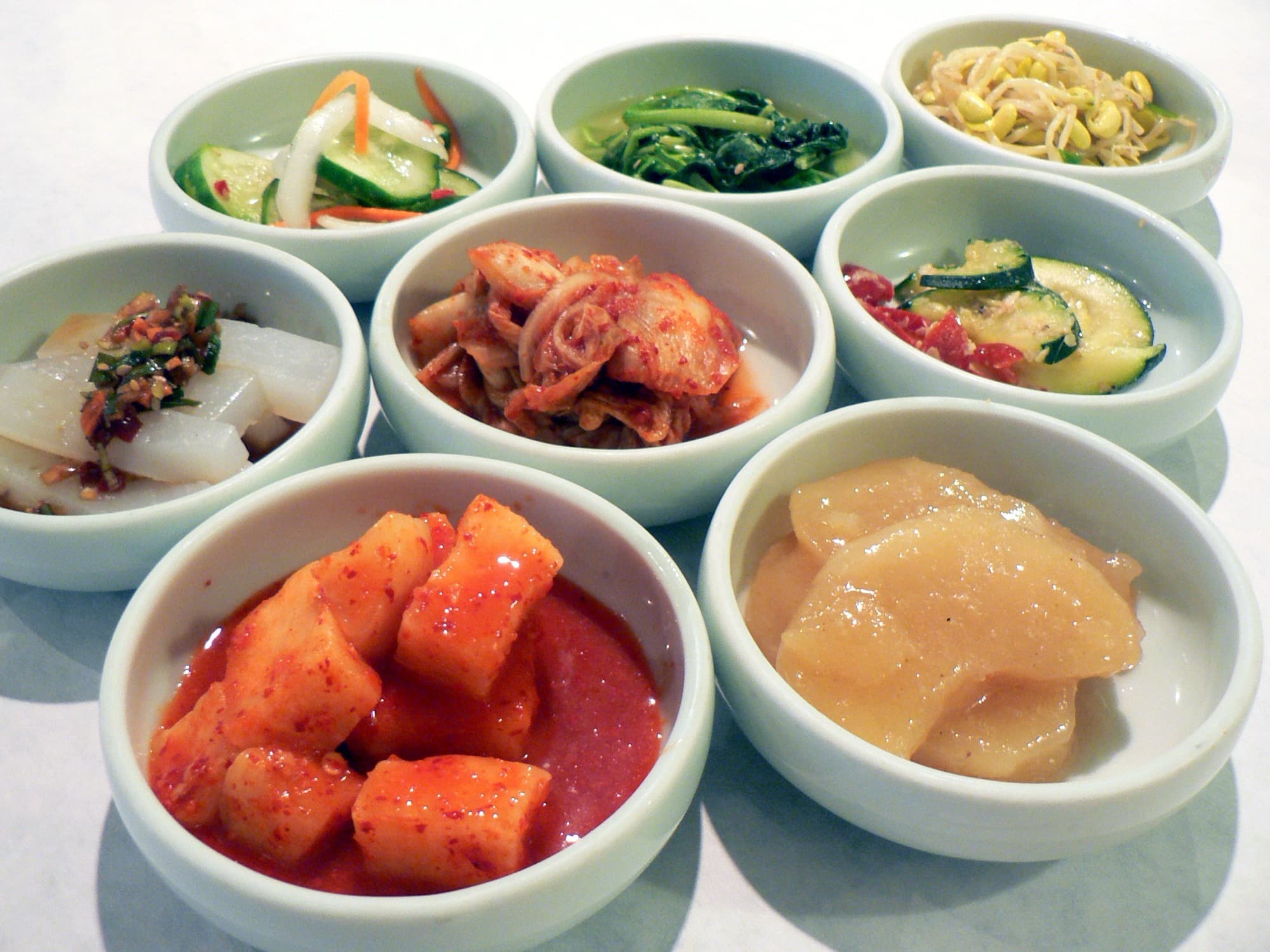
Photo by stuart spivack. Licensed under CC BY-SA 2.0. Resized for web
Why the Korean Table Comes With Banchan
Those small shared plates are rice food and hospitality, not free extras you ignore until the meat arrives.
July 25, 2026
Order grilled meat or a bubbling jjigae and the table fills before the main event lands. Spinach with sesame oil. Bean sprouts. Cubed radish kimchi. Something braised and glossy. Something crunchy and cold. In English they get called side dishes, which makes them sound optional. In Korean they are banchan: literally rice food, the plates that make a bowl of bap worth eating.
That is the first piece of logic. Rice is the quiet center. Banchan is how flavor, texture, and season arrive around it. Soup helps the rice go down. Jang, the fermented pastes and sauces, seasons the whole system. The little bowls are not appetizers you clear so the real food can start. They are the meal’s working parts.
Rice food, not garnish
A basic bansang sets rice and soup for each person, then shares kimchi, stews, and banchan down the middle. Formality once had a count. Tables could be described as three-cheop, five-cheop, seven-cheop, and so on, with twelve-cheop associated with court dining. Kimchi usually sat outside that count because it was assumed. Jeolla Province still has a reputation for packing the table until bowls stack.
The categories are techniques more than a fixed menu. Namul is seasoned vegetables. Bokkeum is stir-fried. Jorim is braised. Jeon is pan-fried. Kimchi and other ferments hold the sharp edge. Popular food histories often link Korea’s vegetable density to Buddhist influence in the Three Kingdoms period, when meat restrictions pushed court and common kitchens toward plant cooking. Treat that as a useful lineage story, not a single sealed cause. What is clearer on the modern table is balance: hot against cool, soft against crisp, chile against sesame.
Fermentation underneath the bowls
Banchan runs on jang and on kimchi even when the bowls look mild. Doenjang, ganjang, and gochujang are the fermented soybean sauces that season vegetables, braises, and dips. UNESCO inscribed kimjang, the communal making and sharing of kimchi, in 2013. In 2024 it added knowledge and practices related to jang making, recognizing household and community traditions of preparing and aging those pastes. The heritage listings are not about plating etiquette. They explain why a Korean table can taste deep without every dish being meat.
Kimchi itself is banchan and more than banchan. Many households will not call a meal complete without it. It is also the bridge between seasonal labor and everyday eating: cabbage put up in late autumn so winter tables stay loud. The small refill bowls at a restaurant are the quick public face of that longer kitchen work.
Hospitality has a bill
Unlimited refills are the part travelers remember. Ask for more kkakdugi and another bowl appears. That generosity is often explained through jeong, a word that gathers affection, care, and social warmth. It is also a business custom. The cost is usually buried in the price of the main dishes, which is why Korean restaurant math can look cheap until labor and produce bills catch up.
Korea has already tried to rewrite the custom. In 1983, ahead of international sporting events, an Order Menu System pushed restaurants to charge for sides beyond basic pastes and sauces, partly to cut waste and improve hygiene. Diners resisted. A 1987 revision allowed up to eight free sides, which largely returned the old expectation. Today some restaurants still refill freely. Others charge for banchan, limit rounds, or treat premium plates as à la carte. Neither approach is fake Korean food. One protects a hospitality script. The other names the work of chopping, seasoning, and washing dozens of small bowls.
For a diner, the useful read is simple. Share the center of the table. Eat the mild bowls between rich bites. Ask for a refill of what you actually finish. Leave the untouched plate alone so the kitchen is not cooking for the trash. Banchan looks like abundance. It is also a system for making rice communal, seasonal, and kind without asking one grilled platter to do all the talking.