
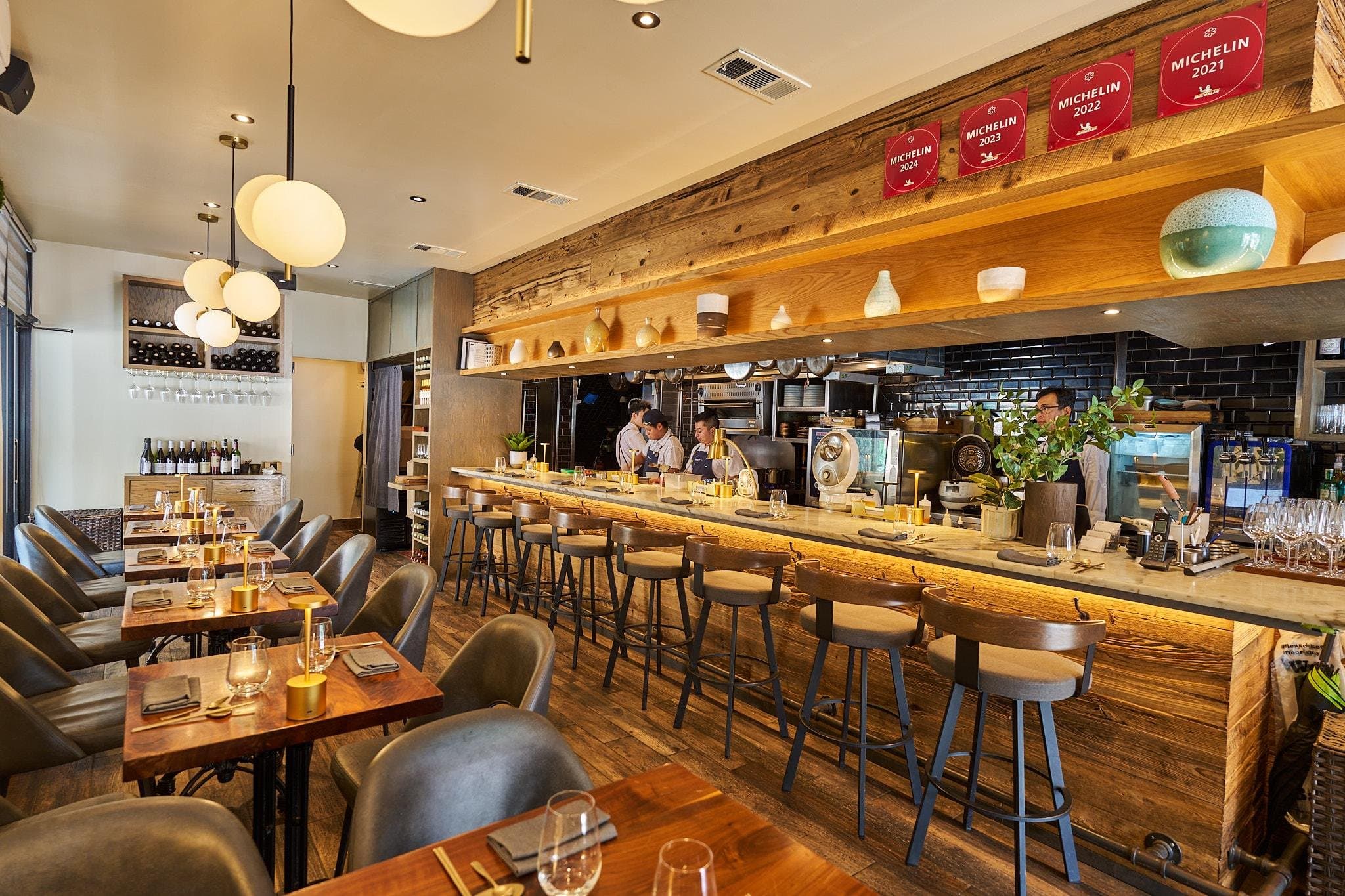
Photo by Dan Ahn. Licensed under Brand. Courtesy Kochi; resized for web.
Jongga’s Michelin-Starred Kimchi Collaboration Reaches Its Final Month
Kochi in New York has been serving a Jongga-kimchi bibimbap through August. The year-long run shows how a packaged brand can enter fine dining without only buying sponsorship visibility.
August 13, 2026
August is the last month Kochi, the Michelin-starred Korean tasting room on Tenth Avenue in Hell’s Kitchen, has promised to serve its Jongga Kimchi Bibimbap. Daesang’s kimchi brand Jongga announced the dish a year earlier as a collaboration, not a pop-up sticker on the door: Kochi’s signature bibimbap finished with finely chopped Jongga Mat Kimchi, on the menu from September 2025 through August 2026.
What matters is what the deal asked the kitchen to do. Packaged-food brands often buy visibility at restaurants with logo nights and gift bags. Here the jar is treated as pantry. The plate still has to taste like Kochi.
Kochi opened in late 2019 as chef Sungchul Shim’s first solo project. The name means skewer, and the tasting menu still moves Korean flavors through an intimate open kitchen, with grilling and composed bites rather than a banchan table dumped all at once. Shim’s résumé runs through kitchens such as Le Bernardin, Per Se, and Neta. The room earned one Michelin star in 2021 and has kept it.
Independent diners who have written about the Jongga course describe more than a spoon of cabbage on rice: bluefin tuna, a sweet-savory kimchi marmalade, seaweed rice, and the option to add sea urchin or langoustine. The brand’s own language is simpler, Mat Kimchi chopped fine on the house bibimbap, but the kitchen’s version still makes the case. A supermarket ferment can sit inside a starred progression when the cook builds a dish around it instead of pasting a logo beside it.
Daesang said the Kochi partnership also included joint product development using Jongga kimchi. As of the announcement, that was a forward-looking claim, not a shipped jar. The wider program shows the range of brand-restaurant deals Jongga is testing. In New York, Rokstar Chicken, a Korean fried-chicken mini-chain, ran kimchi sandwiches and fries on a shorter calendar. In San Francisco, a separate project with Corey Lee, the chef behind three-Michelin-star Benu and the Korean barbecue room San Ho Won, produced San Ho Won Kimchi for H Mart shelves and for the house table at San Ho Won. One path puts the jar on a tasting menu. Another turns the chef collaboration into something you can buy and refrigerate at home.
Packaged kimchi is still not a restaurant’s own kimjang. What the year does show is a packaged-food company treating fine dining as a place to prove how the jar cooks, not only as a billboard. For readers who already keep Jongga in the fridge, August was always the end of the bibimbap run. The year still leaves a clear picture. Credibility in a Michelin room comes from a place on the plate and time in the kitchen, not a sponsored night that leaves the menu unchanged.