
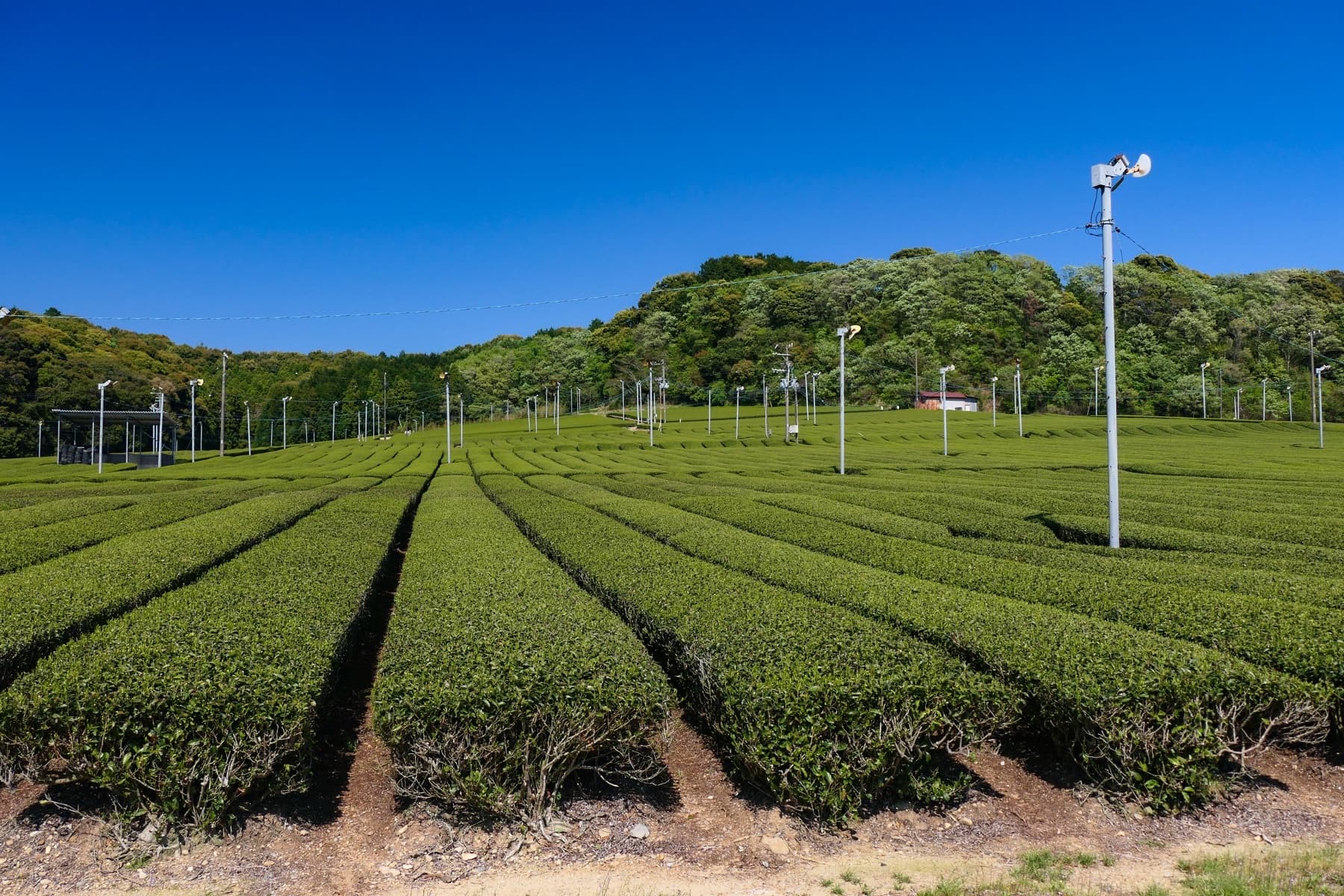
Photo by MaedaAkihiko. Licensed under CC BY-SA 4.0. Tea plantation in Fukuroi, Shizuoka. Resized and cropped for web.
Matcha’s Success Is Squeezing Japan’s Other Teas
Ippodo’s October–November revisions say growers shifted toward matcha while gyokuro, sencha, and bancha fell. The Kyoto house is cutting its bancha bags from 100 grams to 80.
November 3, 2026
In September, Ippodo Tea wrote to customers about changes coming in October and November. The Kyoto house, founded in 1717, said the 2026 harvest was largely set, and that prices and pack sizes would have to follow. President Masakazu Watanabe was clear about why. Matcha production rose. Gyokuro, sencha, and bancha fell, and bancha looks like the worst of the squeeze. From November 1, Ippodo’s everyday bancha packs drop from 100 grams to 80. That line includes hojicha, genmaicha, and Wakayanagi, the brisk leaf the shop pairs with meals.
Those teas can come from the same bushes. If you shade the field and dry the leaf without rolling it, you get tencha, which becomes matcha once it is ground. Shade the plants and steep the leaf whole, and you are closer to gyokuro. Leave them in the sun, pick the young buds for sencha, or let the leaves grow out for bancha, which becomes roasted hojicha and rice-blended genmaicha. When tencha pays more, a grower can point the same hillside toward powder.
Ippodo says world interest in matcha jumped from around 2024, and that new plantings need about five years before a first harvest. Supply could not catch 2025’s demand. By the end of spring and summer trading in 2026, matcha volume was higher again and still expensive. Gyokuro, sencha, and bancha were scarcer, so their prices rose too. Watanabe’s note adds one more point. Even with gyokuro nearing matcha on price, the house expects growers to keep choosing matcha for the yield and the efficiency of making it.
At the Uji tea market in Kyoto, Asahi Shimbun reported that first- and second-flush trading finished July 31 at about 12.94 billion yen, up roughly 30 percent from a year that was already a record. The average unit price was 13,614 yen per kilogram. Machine-harvested first-flush tencha averaged 17,250 yen per kilogram, up about 20 percent and the highest since those records began in 1996. Asahi also wrote that the tencha rush cut output of rolled teas such as sencha, gyokuro, and kabusecha, while demand for those teas stayed strong enough to lift their prices. Chotaro Horii, chairman of the Kyoto Prefectural Tea Chamber of Commerce and Industry, told Asahi he worried Japanese drinkers might buy less tea as every category got dearer.
Omakase Matcha’s mid-June reading of Kyoto trading prices shows the two-year climb. Tencha was near 17,797 yen per kilogram, about 3.3 times its 2024 level. Gyokuro sat around 14,249. Sencha around 6,657. Bancha around 2,850, roughly 4.2 times 2024. Next to powder, bancha still looks inexpensive. Measured against its own recent past, it rose the most. Yamamasa Koyamaen, another Kyoto house, said in its 2026 price notice that leaf once headed for gyokuro and sencha was being pulled into matcha, which tightened green-tea supply and pushed those prices up as well.
At home in Japan, the preferred cup is still leaf. Cross Marketing’s April 2025 survey of 1,100 adults found sencha chosen by about 70 percent of Japanese tea drinkers. Hojicha was near 37 percent, genmaicha near 22. Matcha landed at about 9 percent, last among the nine types on the list. Ippodo felt that everyday category tighten in February, when it warned of shortages, discontinued larger bancha bags, and limited purchases so more customers could still get some. November’s smaller pack follows the same thinking: keep the quality, and stretch what leaf is left.
Cafe demand still helps explain why powder feels scarce. Ippodo’s revisions show what that demand crowds out on the same fields: sencha with dinner, a shaded leaf cup, and the roasted bancha kitchens treat as ordinary. Matcha can keep selling at a premium. Everyday leaf tea is arriving in the smaller bag.