
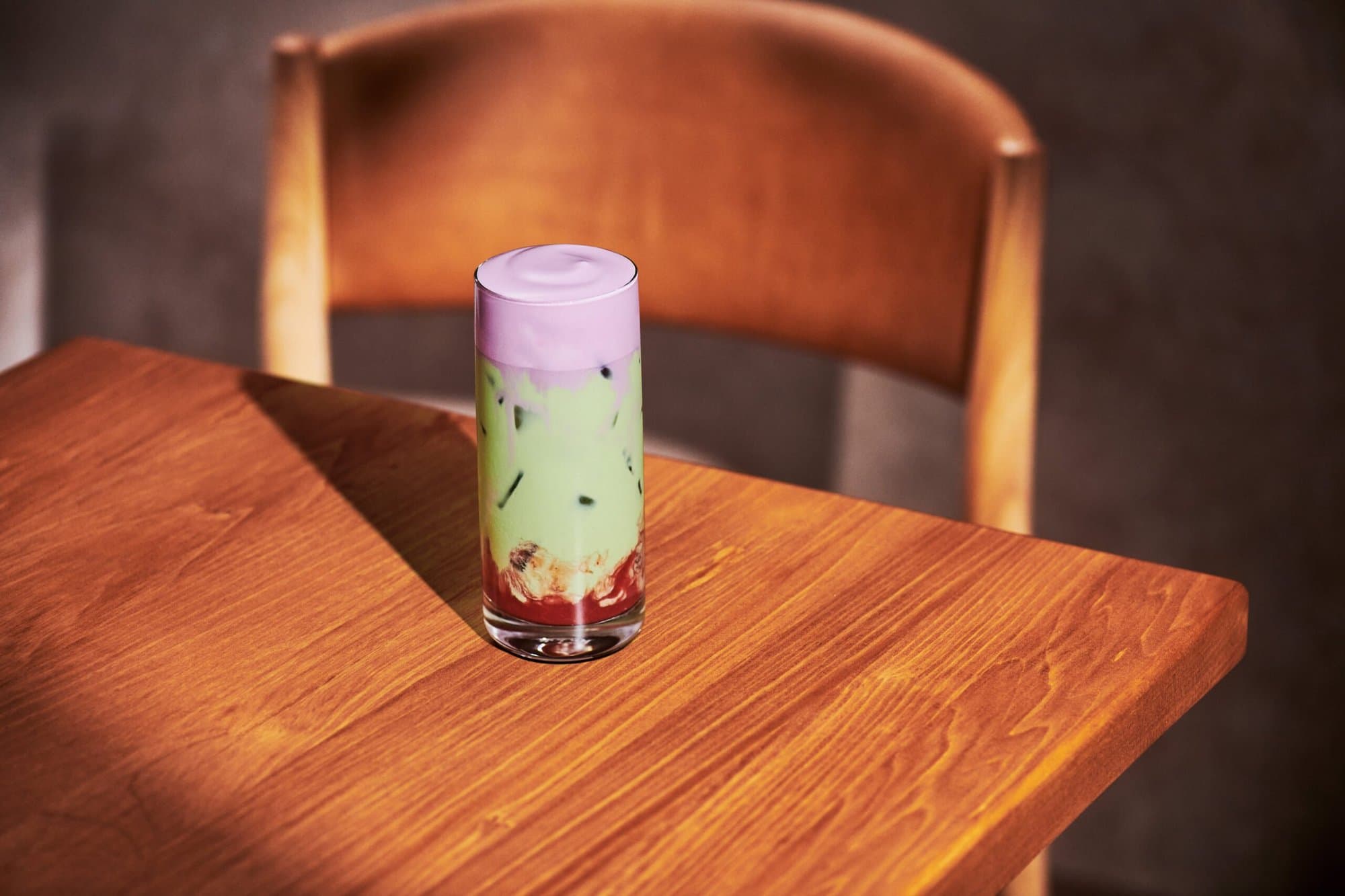
Photo by Starbucks. Licensed under Editorial use. Courtesy of Starbucks; resized for web. From the February 2026 Iced Double Berry Matcha launch materials.
Matcha After the Boom
Cafe drinks made Japanese shade-grown powder everyday. Now the leaf behind the latte is running short.
July 23, 2026
The glass looks like summer: green matcha over ice, a ribbon of strawberry at the bottom, a soft berry foam on top. That is Starbucks’s Iced Double Berry Matcha, a permanent menu drink as of February 2026. It is also a clear picture of where matcha lives now. For a lot of people, the powder is no longer only a whisk and a quiet bowl. It is a cafe habit you can customize, fruit, foam, and all.
That popularity is good news for anyone who fell in love with the color and the calm caffeine. It is also why the Japanese leaf behind the powder is under real pressure.
How the latte became the on-ramp
Starbucks put a Green Tea Latte on the menu in 2006. For many North American drinkers, that was the first matcha that felt easy: milky, sweet if you wanted it, available on the way to work. The company says matcha has since grown into a multimillion-dollar beverage category, with tea revenue up more than 70 percent across company-operated U.S. coffeehouses over recent fiscal years.
The menu kept opening up. In January 2025, Starbucks switched to unsweetened matcha powder so sweetness could be adjusted with syrup instead of baked into the powder. Starbucks reported nearly a 40 percent increase in matcha beverage sales after that change. By February 2026, its year-round matcha lineup had roughly tripled since 2023, including protein builds and fruit-forward drinks like Iced Double Berry Matcha and Iced Banana Bread Matcha.
Starbucks describes its powder as shade-grown, milled green tea chosen for a deep blue-green color and floral, sweet umami notes. Cafe matcha is still a blended drink, not a tea-room bowl. That does not make it lesser. It is the place millions of people learned the word matcha at all.
What the leaf actually is
In Japanese industry language, matcha starts as tencha: tea leaves grown under shade for weeks, steamed, dried without the rolling used for sencha, then finely ground. Shade pushes chlorophyll and L-theanine, which is why good matcha looks vivid and tastes rounder than ordinary green tea powder.
“Ceremonial grade” and “culinary grade” are handy English shopping labels. They are not official Japanese legal grades stamped by a national board. Clearer sellers name harvest season, region, and shade-grown tencha. Vague “ceremonial” stamps alone do less work than that transparency.
Why shelves feel tight in 2026
Japan’s Ministry of Finance figures, reported by The Japan Times, show green tea exports in fiscal 2025 at 13,125 tons, up 42 percent, with value more than doubling to ¥84.7 billion. Powdered green tea, including matcha, made up about 70 percent of that export volume.
The leaf bottleneck is tencha. Asahi Shimbun reported that Japan’s tencha production in 2024 was 5,336 tons, with Kyoto at 1,068 tons and Kagoshima as the main volume region. Uji still carries brand power, which is why Kyoto auctions have been fierce. At the May 13, 2026 opening auction for machine-harvested first-flush tencha at JA Zen-Noh Kyoto’s Uji market, the average price hit 13,972 yen per kilogram, about 1.7 times the prior year. Fiscal 2025’s first-flush average there had already reached 14,144 yen, up from 5,402 yen the year before.
Farmers have been expanding tencha for several years, and some fields are shifting away from sencha. New shaded plantings and processing lines still take time, money, and skilled labor. Aging growers and hillside farms make a fast catch-up unlikely. The boom is bigger than any one cafe chain. Starbucks is one loud chapter in a worldwide appetite for the powder.
The boom made matcha familiar. The shortage is what everyone, cafes included, is negotiating now.