
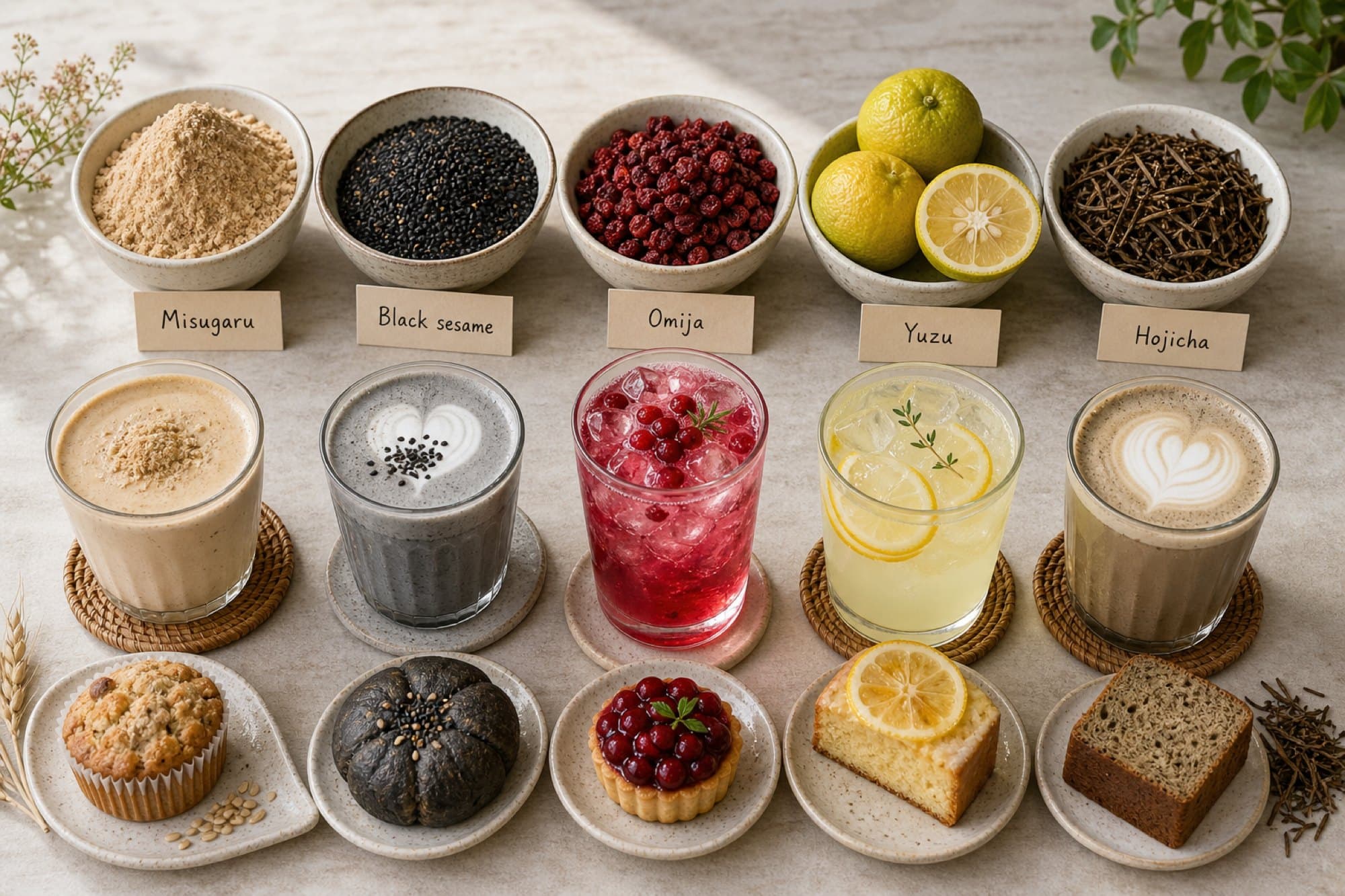
Photo by East Table. Licensed under Editorial still life. Editorial still life created for this article; resized for web.
Black Sesame, Misugaru and Omija Are Building a New Café Pantry
Roasted grain powder, dark sesame paste, five-flavor berries, yuzu preserve, and hojicha are showing up in lattes and bakery cases. What each one is, and how to keep its character when you cook with it at home.
August 7, 2026
Order a specialty latte in a Korean or Japanese café these days and the board can read like a pantry tour: misugaru foam, black sesame swirl, omija sparkler, yuja lemonade, hojicha instead of another matcha. Highland Park’s new Mokja put several of those flavors on one menu this week. The same names keep turning up in bakeries and coffee shops far from Koreatown or Japantown.
None of them belong to the latte era. They are older East Asian ingredients that cafés are translating into cups and pastry cases. Knowing what each one is, and how kitchens used it before the foam art, makes it easier to tell when a drink still tastes like the thing on the label.
Misugaru: roasted grain, already cooked for you
Misugaru (also spelled misutgaru) is Korean multigrain powder made from grains and legumes that have been steamed or roasted, dried, and ground. There is no single required blend. Household and commercial jars may include rice, barley, soybeans, oats, millet, or other seeds. Stirred into water or milk, often with honey, it becomes a thick drink that does most of its cooking before it ever hits the glass.
In temple cooking, related powders are sometimes called seonsik, a dense mix prepared for long meditation. In everyday kitchens, misugaru has long been summer refreshment and a quick breakfast. Korean café chains often sell it as a latte or as an ogok (five-grain) drink. At home, start with an unsweetened bag from a Korean grocer, shake two spoonfuls with cold milk and ice, and sweeten to taste. You want toasted cereal and nuts, not vanilla syrup with brown dust on top. If a café version tastes only sweet and beige, the grain got flattened.
Black sesame: color with a roasted backbone
Black sesame is the same species as white sesame, Sesamum indicum, one of the world’s oldest oilseed crops, with deep roots in Africa and South Asia and a long life in Chinese, Korean, and Japanese cooking. What cafés are chasing is usually the paste or finely ground powder: seeds roasted and milled until they turn into a dark, fragrant spread. In China that paste fills tangyuan and sweet soups. In Japan, kuro neri goma flavors ice cream, sweets, and drinks. In Korea it shows up in porridges, bakery goods, and café menus as heukimja.
The current boom is partly visual. A grey-black latte photographs well. The flavor still has to earn the photo: nutty, a little bitter, aromatic from the roast. Buy unsweetened paste when you can, then control the sugar yourself. Stir a spoon into warm milk, swirl it through cookie dough, or fold it into ice cream base. Whole seeds give crunch; toasted sesame oil gives aroma for finishing savory dishes. A drink that tastes only like charcoal sugar has borrowed the color and left the seed behind.
Omija: five flavors in one berry
Omija is the Korean name for Schisandra chinensis berries, often called five-flavor fruit because a sip can read sweet, sour, bitter, salty, and pungent at once. Dried berries make omija-cha, a traditional tea that turns the water a vivid magenta. Cold-steeping is a common home method; some cooks warn that a hard boil can push the drink toward harsh sourness. Fresh berries can be packed with sugar into a cheong-style syrup for punches and ades. Korean traditional medicine has long prized the berry; those uses belong to heritage practice, not medical advice from a café menu.
Cafés turn omija into sparklers and iced teas by cooking dried berries into syrup, then cutting that syrup with sparkling water or soda, the way Mokja’s opening menu described its omija sparkler. At home, soak a small handful of dried berries in cold water overnight, strain, sweeten lightly with honey, and chill. You should still taste that layered, slightly medicinal brightness. If the cup is only red and sugary, the berry never made it into the glass.
Yuzu and yuja: one citrus, two kitchen habits
Yuzu and yuja are names for the same fragrant citrus, Citrus junos, cultivated for centuries in Japan and Korea after earlier life in China. The fruit is rarely eaten out of hand. Japan leans on zest and juice: ponzu, yuzu kosho (chili and salt with peel), a thin strip of rind on soup, and the winter-solstice bath called yuzu-yu. Korea leans hard on yuja-cheong, a spoonable preserve of sliced fruit packed with sugar or honey, stirred into hot water as yuja-cha or into cold sparkling water as an ade.
That difference matters on a café menu. A “yuzu lemonade” made from bottled juice tastes bright and sharp. One built on yuja-cheong tastes rounder and sweeter, because the preserve already carries peel oils and sugar. Both belong on the board; they just cook differently. In a Korean market, look for jars labeled yuja-cha or yuja-cheong in the tea aisle. Stir a spoon into hot water for a winter cup, or into soda over ice for something closer to a café ade. Keep seeds out of homemade jars; they turn the syrup bitter.
Hojicha: green tea after the roast
Hojicha is Japanese green tea roasted until the leaves turn reddish brown. The roast builds caramel, toast, and nutty notes and softens the grassy bitterness people associate with sencha or matcha. Origin stories place the style in Kyoto around the 1920s, when merchants roasted leftover or lower-grade leaves and stems (often bancha or kukicha) into something newly fragrant and saleable. Exact founding lore varies; the processing idea stays put: take green tea, apply dry heat, chase aroma over verdant punch.
Cafés love hojicha powder for lattes and bakery because it behaves like a cocoa cousin: warm, brown, friendly with milk. It usually carries less caffeine than matcha, partly because later-harvest leaves and stems start lower, which is why Japanese households have long poured it as an evening tea. Whisk a teaspoon of powder with a little hot water, then add steamed or cold milk. Steep loose leaves if you want a cleaner cup without dairy. When matcha menus feel loud or scarce, hojicha is the quieter lane. It should taste roasted, not like brown sugar syrup pretending to be tea.
Keeping the flavor intact
The cups worth ordering still taste like the old processing. Misugaru still tastes like roasted grain. Black sesame still tastes like toasted seed. Omija still argues with itself across five flavors. Yuzu still smells like peel oils, whether from juice or cheong. Hojicha still smells like a tea shop roasting leaves. Milk, ice, espresso, and pastry dough are fine partners. They should not replace the ingredient.
What goes wrong is usually color and sweetness alone: beige powder that is mostly sugar, black latte dyed without sesame, pink soda with no schisandra, “yuzu” that is lemon plus aroma oil, “hojicha” that is caramel syrup. At home, buy the pantry form close to its source, taste it plain once, then decide how much sugar and dairy it can carry. That is how these flavors stay themselves on a café board and in a kitchen cupboard.