
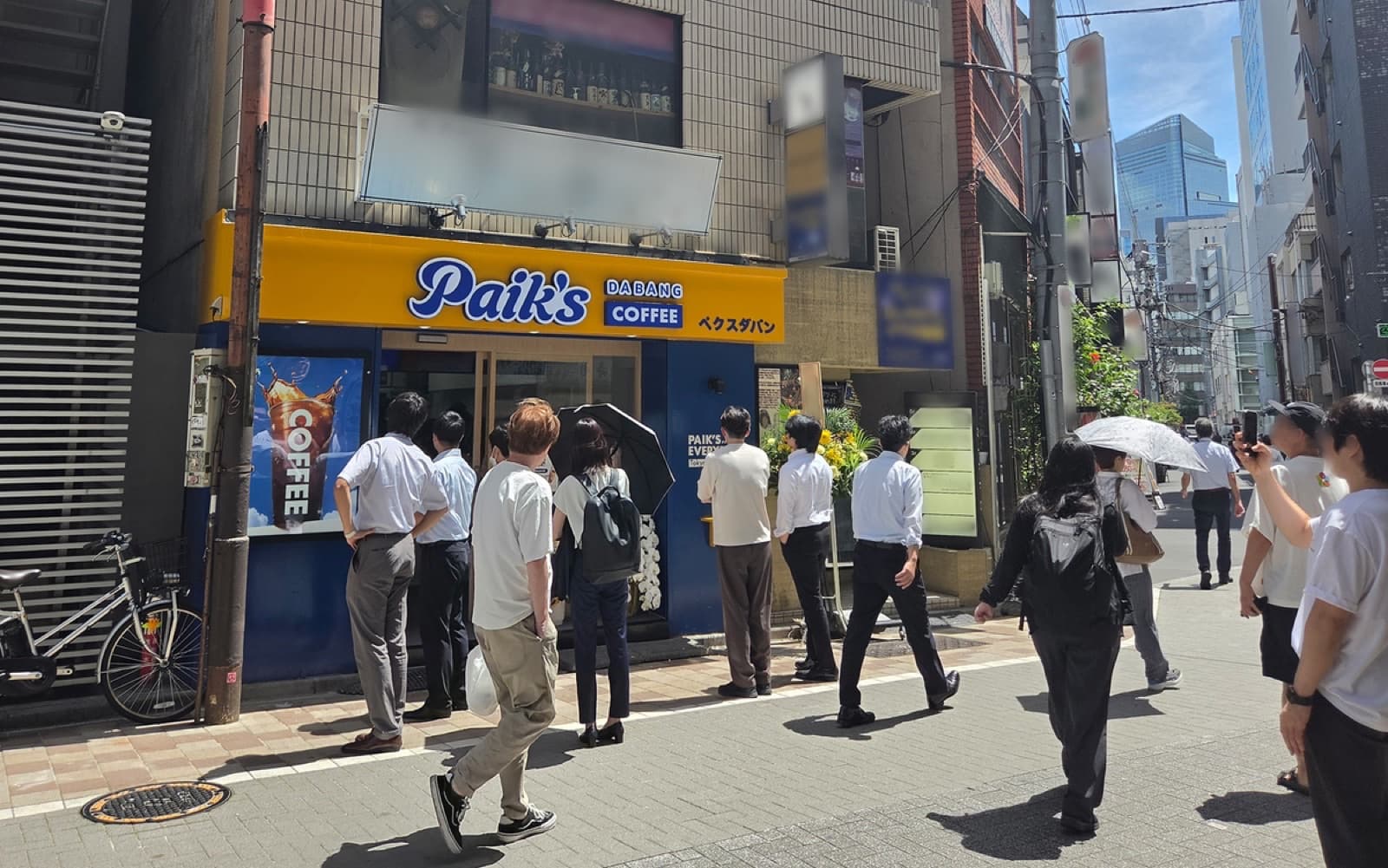
Photo by The Born Korea. Licensed under Press. Courtesy The Born Korea via Korean press coverage of Tokyo Paik’s Coffee openings; cropped and resized for web.
Paik Jong-won’s Shares Fell by Half. Cheap Coffee Is What’s Still Growing.
The Born Korea’s Kospi stock is about 57 percent below its IPO price, and domestic restaurants slipped under 3,000 shops. Paik’s Coffee is the brand still adding doors, including Tokyo shops selling more than 1,000 cups a day.
October 5, 2026
Outside a yellow Paik’s Coffee in Tokyo’s Shimbashi district, office workers line up for takeout cups before the lunch rush. The shop opened in August. The company that owns it says the Shimbashi counter, and a second one in nearby Kanda, each sold more than a thousand drinks on ordinary weekdays.
That line is the rare bright spot in Paik Jong-won’s business right now. Paik, also spelled Baek Jong-won, is the celebrity restaurateur Korean television made unavoidable, and the Netflix judge a lot of American viewers met in Culinary Class Wars. His company, The Born Korea, listed on the Kospi in November 2024. Less than two years later, the stock that priced near 34,000 won, about $25, closed on October 1 at 14,440 won, about $11. That is a 57 percent drop from the IPO. The market value of the whole franchise group is now around $160 million.
The map inside Korea is shrinking with the price. Domestic restaurant brands peaked at 3,080 shops in 2024. By June they were down to 2,993. A late-September count from the company’s own brand pages put the total near 2,930. For a group that spent years proving it could stamp the same kitchen into another strip mall, that is the first clear retreat under 3,000 doors.
Money followed the closed doors. Sales fell 22 percent last year, to about $265 million. An operating profit flipped into an operating loss of roughly $17 million. Herald Business, citing the company, said The Born Korea paid about $32 million in mutual-growth subsidies to franchisees to keep stores alive. First-half sales this year were still down nearly 12 percent. Headquarters is still writing checks. This month it is covering the full cost of lunchbox discounts at an affiliate brand so some meals start around $3.60, and franchisees do not pay for the promo.
Paik’s empire was never one restaurant. It was a folder of formats you could franchise: Hong Kong Banjum for jajangmyeon and the red seafood soup called jjamppong; Saemaul Sikdang for charcoal pork and a pork-kimchi stew the menu times at seven minutes; Hanshin Pocha for soju and fried snacks after work. About twenty-five brands sit under The Born Korea name. Several of the bigger ones are losing shops at once. Saemaul dropped from 68 to 59 between year-end and June. Hong Kong Banjum went from 277 to 264. Paik Boy Pizza, which had expanded hard, fell from 227 to 205. The company has not launched a new restaurant brand since Hong Kong Bunsik in 2023. It says the job now is to make the existing ones healthier.
Cheap coffee is doing the work the dining rooms no longer can. Paik’s Coffee rose from 1,821 shops at the end of last year to 1,841 by midyear, the only major brand still adding doors while the restaurants contracted. Korean reporters keep pointing at the same reason diners already feel in their wallets. When a full meal gets expensive, a large iced Americano still feels like something you can afford every day.
So the company is taking that cup abroad. The Tokyo shops are company-run tests in salaryman neighborhoods, with a local lab for menus and training. Americano there costs about 250 yen. Matcha and kinako drinks sit next to the Korean staples, without Paik’s cartoon face on the sign. Last month The Born Korea signed a ten-year master franchise for Taiwan, aiming for a first shop in early 2027, ten stores in year one, and more than 150 within five years. In August it also signed a restaurant memorandum with Canada’s Sunray Group to convert a Markham dining room, and it keeps pushing sauce bottles into North American kitchens as a quieter export than a full storefront.
Paik’s face sold a lot of those Korean doors. The share price tells a colder story. The business that made him a household name is closing restaurants at home and asking a budget coffee chain, plus a few foreign cities, to grow instead. In Shimbashi, the line still forms. In Korea, the count keeps falling.