
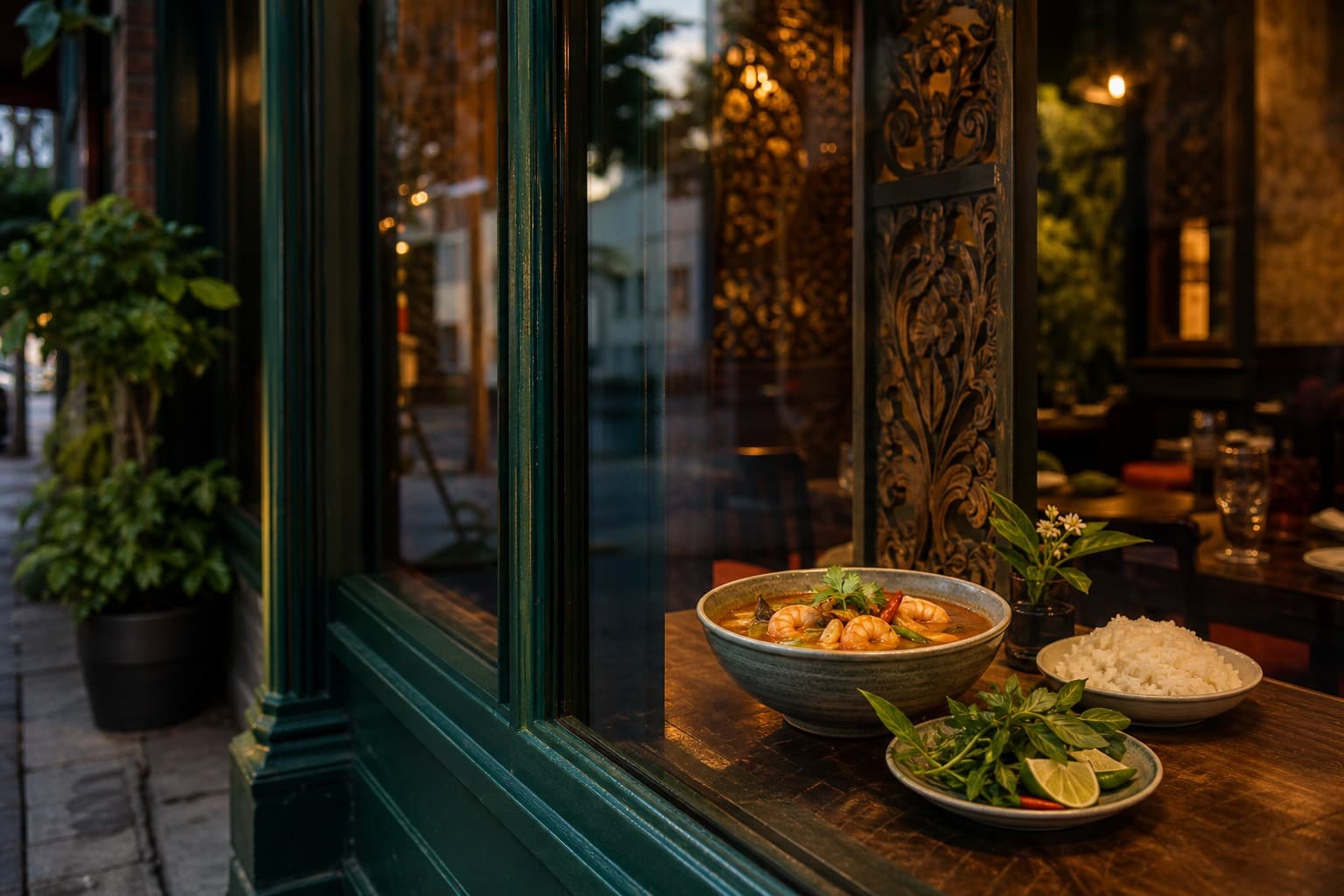
Photo by East Table. Licensed under Editorial. AI-generated editorial photograph; resized for web.
Why Thai Restaurants Are Everywhere: Thailand Built Them Into Soft Power
Since 2002, Bangkok has backed overseas Thai restaurants with loans, chef standards, and Thai SELECT certification. The pad Thai on the corner is partly diplomacy.
September 8, 2026
Walk almost any midsize city and you will find a Thai restaurant before you find a lot of other Asian cuisines. Pad Thai and tom yum sit on strip-mall corners and downtown side streets from Omaha to Osaka. It can look like organic taste alone.
Since 2002, the Thai government has treated those overseas kitchens as soft power and as a way to sell Thai food abroad. Thai investors could borrow to open restaurants. Chefs could train and sit for national skill tests before working abroad. A restaurant could earn Thai SELECT, the state authenticity seal. Herbs, rice, and coconut milk moved into the supply chain behind the menu. As of May 2026, the Department of International Trade Promotion counted 1,419 Thai SELECT restaurants in 70 countries. The wider overseas Thai restaurant map is much larger. The same department put the total near 17,500 in late 2023.
The policy has a name that stuck. Under the Thaksin Shinawatra government, Thailand launched Global Thai and the related Kitchen of the World campaign to multiply Thai restaurants abroad and raise demand for Thai food products. The Economist’s coverage of that push helped popularize the word gastrodiplomacy: using national cuisine as public diplomacy. Paul Rockower, a public-diplomacy writer who helped define the idea for other countries watching, calls Thailand an early case of branding a nation through the dinner table.
The goal was practical. More Thai restaurants abroad meant more people tasting Thai food. From there, Thai ingredients and tourism pitches had a warmer reception. Southeast Asia Globe later reported that Thailand’s food exports had roughly doubled since the early 2000s under the Kitchen of the World umbrella. Restaurants became one of the easiest places to meet Thai rice, coconut milk, and packaged goods outside Thailand.
You can still see the tools. The Export-Import Bank of Thailand lists loans for Thai nationals or Thai-majority companies that want to open restaurants overseas, with ownership and experience rules attached. The Ministry of Commerce’s Thai SELECT program, run with trade offices abroad, certifies restaurants that keep a mostly Thai menu and can show Thai cooking standards. Certification is free and lasts for years before renewal. The Ministry of Labour’s Department of Skill Development still runs national skill exams for Thai cuisine chefs working abroad. In 2002, the Public Health Ministry even published A Manual for Thai Chefs Going Abroad.
Thai SELECT is the sticker a diner might notice. The tiers have shifted over time, and in 2025 the program refreshed its look around an Orchid Star of Honor mark. Overseas applicants usually need about six months of operation, a majority-Thai menu, and a Thai or Thai-trained head chef. Trade offices can visit without warning. In July 2026, the trade-promotion department brought SELECT restaurateurs from several regions to Thailand for culinary training and business matching at THAIFEX, the big Bangkok food trade fair, so overseas kitchens could reconnect with Thai manufacturers.
Bangkok does not own the pad Thai on your block. Immigrant families and local investors built most of those rooms, and diners who like fish sauce and lime keep them open. Many Thai restaurants never apply for SELECT. Many soften the heat or sweeten a curry for the neighborhood. Thai culinary educators have argued for years over how much overseas Thai food should bend, and what that bending does to the country’s culinary image.
Still, the state tipped the odds. Accounts of Global Thai often put overseas Thai restaurants around 5,500 at the start and near 15,000 to 17,000 two decades later, with the United States alone holding thousands of them. That growth matches a government that kept writing loans and hanging seals while it trained cooks for work abroad. Malaysia later tried a Kitchen program. Taiwan spent on dim sum diplomacy. Japan put food into Cool Japan. Thailand’s version had already been running for years.
On a quiet commercial street, a Thai restaurant can look like one lease and one family. Sometimes a Thai investor borrowed through the export-import bank. Sometimes a cook carries a Ministry of Labour certificate. Sometimes a window sticker says Thai SELECT. Lemongrass and jasmine rice may have arrived as export strategy as much as grocery stock.
Hot-and-sour soup already travels on its own merits. Bangkok decided the global map of Thai restaurants was worth funding and certifying anyway.