
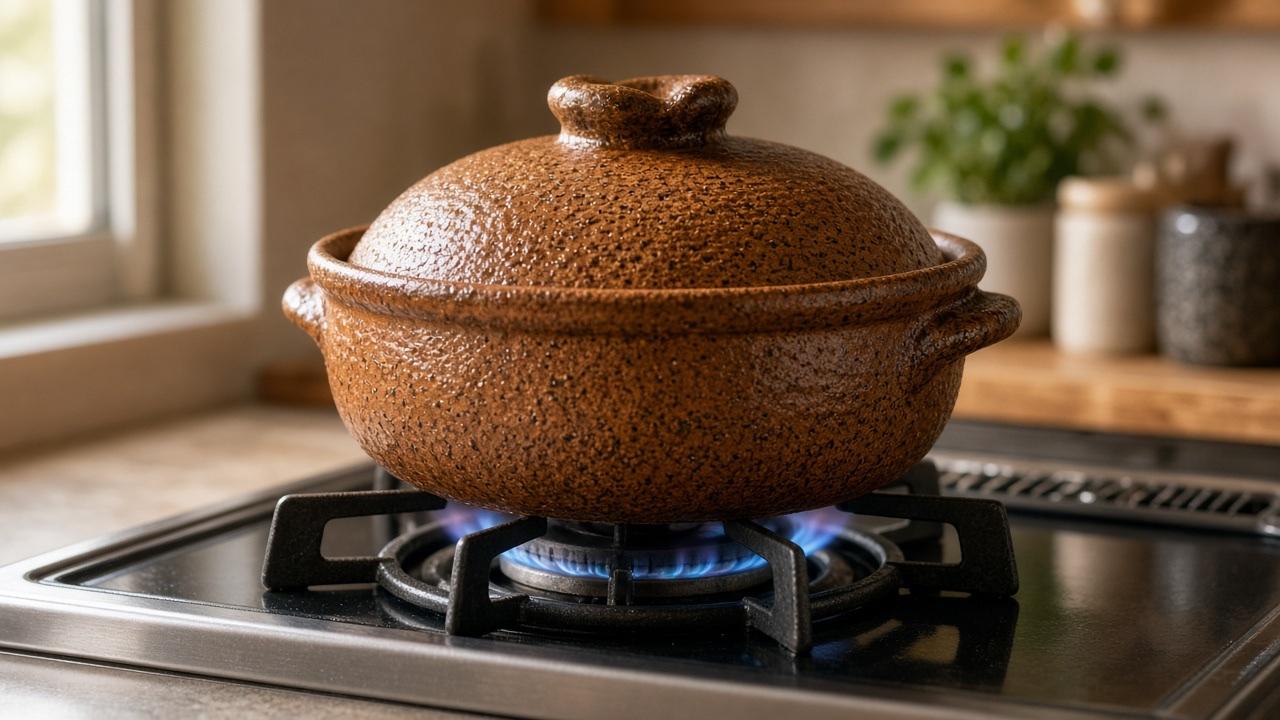
Photo by East Table. Licensed under Editorial. AI-generated editorial illustration of a donabe on a gas burner; no people or brand logos.
Before You Buy a Donabe, Check Your Stove
LAist’s holiday guide pairs Simply Donabe with TOIRO’s classic pots. Choose a rice cooker, steamer, or hot-pot vessel for the meals you cook, then check whether your stove can heat it.
November 18, 2026
Holiday shoppers are finding Japanese clay pots on gift lists again. On November 12, LAist’s food gift guide paired Naoko Takei Moore’s Simply Donabe cookbook with a classic all-purpose donabe from her West Hollywood shop, TOIRO, in amber Ame-Yu or white Shiro-Yu. The same write-up put the stove rule in plain language: those pots work on gas, not electric or induction. A week earlier, The New York Times’ Wirecutter holiday guide put TOIRO’s Kamado-san double-lid rice cooker under “Perfect Rice.”
A donabe is an earthenware pot made for open flame. The useful purchase matches the dinners you already cook and the heat source sitting in your kitchen. TOIRO’s Iga-yaki pots, handmade by Nagatani-en in Mie Prefecture, carry the same care note on the rice cooker, the steamer, and the classic pots: ideal for a gas stovetop, not suitable for electric or induction. They can go in the oven, usually up to 500°F or 250°C. They do not belong in the microwave. Pick the shape for the meal first, then confirm the burner.
Rice: Kamado-san
Kamado-san is TOIRO’s double-lid rice cooker, and Nagatani-en has treated it as a house bestseller since 2000. The bottom runs about 1.5 times thicker than a regular donabe. An inner lid and outer lid help keep the pot from boiling over, and the clay keeps cooking through a rest after you shut off the flame. TOIRO sells sizes for one, two, or three rice cups of uncooked rice. The three-cup pot covers about four to six servings. Leave the inner lid off and the same pot can handle soup, stew, or hot pot.
A Simply Donabe Edition Kamado-san, glazed with Naoko for the new cookbook, cooks the same way. TOIRO’s site had it sold out, with a spring 2027 restock note. Wirecutter praised how soaked grains cook once the heat is set. The glaze does not loosen the stove rule. TOIRO’s product page still says gas only. Induction kitchens that want stove-top rice can look at TOIRO’s HARIO YUKIHIRA IH rice pot, a stainless pot rated for gas and induction, up to three rice cups. It is metal, not clay. Nagatani-en’s FAQ draws a harder line on clay induction pots: its IH donabe line is built for cooktops marketed in Japan, must not be heated dry, and is not recommended for rice, because the water can run out late in the cook and crack the pot.
Steaming: Mushi Nabe
Mushi Nabe is the steamer in the same Iga line. A grate sits over water in the base. TOIRO’s basic method fills the pot about 70 percent with water, brings it to a boil over medium-high or high heat with the grate and lid on, then loads the food and steams it through. Fat from fish and meat drips through the grate. Vegetables keep a firmer bite. Take the grate out and the pot becomes a classic vessel for hot pot or braising. Tayo Donabe uses the same steamer-plus-classic setup in a rounder shape, and TOIRO says Tayo can be heated empty for a quick sauté or roast.
If the pot is coming to the table, you need a second flame. TOIRO’s steamer pages call for a portable gas burner for tabletop cooking. Electric-stove cooks who still want clay can use the same route. TOIRO lists an Iwatani Cassette Feu EcoPremium butane stove for $108, which puts an open flame under the pot on kitchens where the built-in cooktop cannot.
Hot pot and everyday: classic Ame-Yu and Shiro-Yu
The classic-style donabe is the pot LAist set next to Simply Donabe. TOIRO calls Ame-Yu and Shiro-Yu the everyday vessels for nabemono at the table, including shabu-shabu and yosenabe, plus stews and braises. On the product pages, the shop says almost every household in Japan keeps at least one. Sizes run small for one person, medium for two to four, and large for three to five. The large pot holds about 2.85 quarts. These classics can be heated while empty. They still follow TOIRO’s gas-only care sheet, and they go in the oven to the same 500°F ceiling.
Simply Donabe, published by Quadrille in February 2026, covers hot pot, rice, soups, stews, and the occasional oven bake. LAist priced the cookbook at $40 and the classic donabe at $220 in three sizes. Moore called the classic “a great starter donabe and also something to cherish for many years.” Even a starter pot has to sit on heat the maker allows.
Match the pot to the kitchen
On a gas range, choose by meal. Kamado-san fits a rice-first kitchen. Mushi Nabe fits steam nights, with hot pot available once the grate comes out. Ame-Yu or Shiro-Yu fit tables that run on nabe, stew, and braise more than on steamed rice. Season any of those pots before the first real dinner. Nagatani-en and TOIRO both require a rice-porridge medome so starch seals the porous clay.
On electric glass or induction, read the maker’s page for the exact pot in the cart. TOIRO’s Iga clay wants gas or a portable butane burner. Nagatani-en’s Japan-market IH clay is a different product, with its own limits and the rice warning. A stainless IH rice pot can cover weekday rice when clay is the wrong tool. Check the stove manual and the pot page together, then buy the one that can heat the dinner you already make.