
A Beginner’s Guide to Shopping at H Mart
How Korean grocery aisles are organized, what to put in a first cart, and how to read soy sauce, gochujang, and date labels without buying the whole snack wall.
Updated August 19, 2026
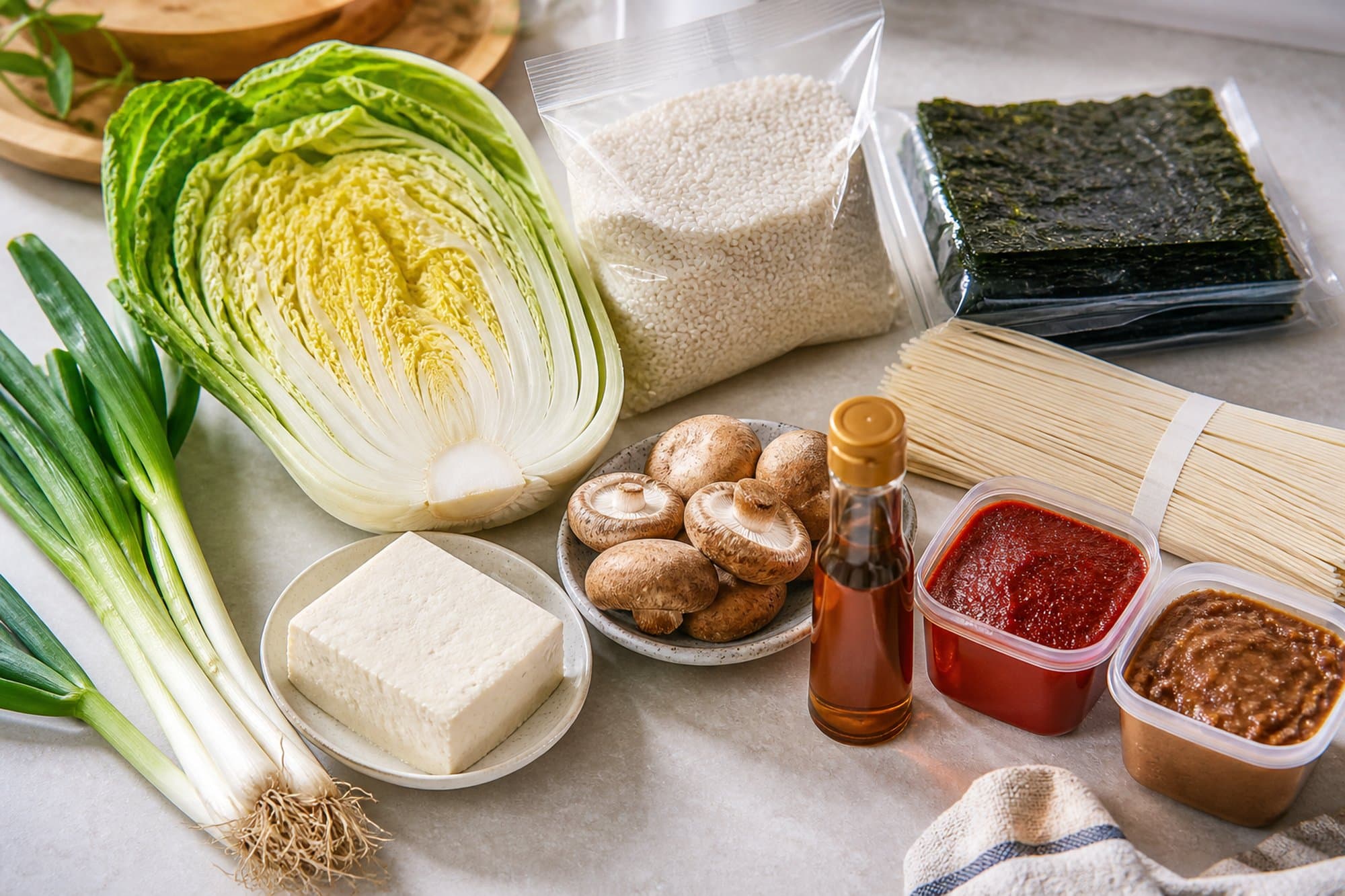
Photo by East Table. Licensed under Editorial. Generated still life without brand marks; resized for web.
H Mart began in 1982 as a single Queens store founded by Il Yeon Kwon and grew into the largest U.S.-based Asian supermarket chain, with roughly a hundred locations across the United States and a Canadian footprint that started in British Columbia. The name comes from Hanahreum, often glossed as an armful of groceries. That is still the right scale for a first visit: one armful that cooks, not a car full of snacks.
This guide sticks to the Korean half of the building. H Mart also stocks Chinese, Japanese, and Southeast Asian shelves, and many stores run a food hall worth an hour on its own. The goal for a first trip is narrower than all of that: rice, the right fermented pastes, produce that belongs in Korean weeknights, and enough cold and frozen food to put dinner on the table this week.
How Korean grocery stores are usually organized
Layouts change by store, but the jobs of the aisles repeat. Produce sits near the entrance or along a long wall: napa cabbage, Korean radish, scallions sold in fat bunches, perilla leaves, chili peppers, mushrooms, and herbs. Dry goods hold short-grain rice, dangmyeon and wheat noodles, seaweed, gochugaru, and shelf-stable snacks. The jang wall is the sauce and paste aisle: soy sauces, gochujang, doenjang, ssamjang, vinegars, and toasted sesame oil.
Refrigerated cases carry kimchi, banchan, tofu, fish cakes, sliced barbecue meats, and fresh noodles. Freezers hold mandu, rice cakes for tteokbokki, dumplings, and convenience stews. Seafood may be a full service counter or a set of iced trays. Prepared foods and the food hall, when present, sell kimbap, hot soups, and fried chicken for the ride home.
Walk dry goods first, then pastes, then cold and produce, and finish with frozen and seafood so nothing thaws under a bag of rice.
Produce
Start with scallions, garlic, and ginger if you do not already keep them. Add napa cabbage or a smaller cabbage if you want kimchi soon, Korean radish (mu) for soups and pickles, and one green you will cook within two days: spinach, crown daisy, or bok choy. Perilla leaves are worth a try if you wrap meat; they bruise easily, so buy them late in the trip.
Korean grocery produce often looks different from a conventional supermarket: longer radishes, bigger scallion bunches, more varieties of chili. Buy what you can name and will use. Unfamiliar greens can wait until a recipe asks for them.
Rice and noodles
Everyday Korean table rice is short-grain white rice, often labeled for Korean or Japanese cooking. In Korean it is baengmi or mepssal: slightly sticky when cooked, made for banchan and stew. Jasmine is a different everyday rice; save it for Southeast Asian plates rather than default Korean bowls. Chapssal, labeled sweet or glutinous rice, is stickier and belongs in rice cakes and special dishes, not every weeknight bowl. Brown and mixed-grain bags are fine later if that is how you already eat.
For noodles, dangmyeon are gray sweet-potato starch strands that turn clear and chewy in japchae. Thin wheat noodles and somyeon suit cold or hot soup nights. Fresh refrigerated udon or knife-cut noodles cook fast. Instant ramyeon is a legitimate weeknight, not a failure; grab one or two packs you already like rather than ten novelty flavors. Rice cakes (tteok) for tteokbokki often live frozen or refrigerated; buy them when that dinner is on the plan.
Sauces and the jang wall
This aisle is where carts get heavy. Think in jobs.
Soy sauce (ganjang) seasons. Everyday Korean cooking usually wants jin-ganjang or a bottle simply sold as Korean soy sauce: the workhorse for marinades, namul, and dipping. Soup soy sauce, guk-ganjang or Joseon ganjang, is lighter in color and saltier by volume; it seasons clear soups without turning the broth dark. If you buy only one bottle today, make it the everyday soy.
Gochujang is the thick red chili paste behind bibimbap sauce, stews, and glazes. Look for rice or another grain and fermented soybean high on the ingredient list; many tubs also include syrup, which is normal. Heat is sometimes printed as a GHU number and sometimes as mild-to-hot icons. Plain gochujang is a different product from gochujang sauce, chogochujang, and ssamjang, which are seasoned mixes built for dipping and quick dressings. They are excellent when that is what you want and confusing when a recipe asks for the plain paste.
Doenjang is fermented soybean paste for doenjang jjigae and savory marinades. It is funkier and less sweet than most miso; do not treat them as equal swaps. Ssamjang is a ready wrap dip, usually doenjang mixed with gochujang and seasonings. Toasted sesame oil is a finishing oil: a teaspoon at the end, not a fry oil. Gochugaru, Korean chili flakes, belong in the cart if you will make kimchi or season stews; buy coarse for kimchi and general cooking.
Fermented foods
Kimchi lives in refrigerated tubs and jars. Napa cabbage kimchi (baechu) is the beginner default. Radish kimchi and water kimchi can wait. Choose a tub size you will finish in a few weeks; flavor keeps changing in the fridge, and older kimchi is excellent in stew.
Beside the kimchi you will usually find seasoned spinach, bean sprouts, and other banchan, which are the fastest way to make a bowl of rice look like a meal. Check the dates and eat them within a few days. Pickled perilla, cucumber, and garlic are worth adding once your staples are set.
Frozen foods
Frozen mandu are the friendliest shortcut: pan-fry, steam, or boil. Look for a filling you recognize (pork and vegetable, kimchi, or vegetable). Frozen tteok, stews, and pancake mixes help when you want Korean flavors on a short night. Pre-marinated bulgogi or galbi may sit near the meat counter or in the freezer, and they earn their place if you already know which night you will cook them.
Seafood
Dried anchovies and kelp for stock live on dry shelves; fresh and frozen seafood sit on ice or in freezers. Beginners can skip the full sashimi case. A small pack of dried anchovies (myeolchi) and a sheet of dasima (kelp) build a simple broth for stews. Frozen squid, clams, or fish cakes are optional once soup nights become regular. If something smells sharply off at the counter, walk away; good seafood smells clean and briny.
Prepared foods and the food hall
Many H Mart locations run hot bars or leased food-hall counters selling kimbap, soondubu, fried chicken, and noodle soups. Those counters are worth a detour, and they double as research. Taste something you have never ordered before, then walk back into the aisles for the jar or the vegetable that would let you chase it at home. The prepared banchan in the refrigerated case work differently, closer to groceries than to lunch: they want a cold bag on the way home, a shelf in the fridge, and a plan to eat them within the week.
How to compare the core varieties
Most first-trip confusion happens when two containers look nearly identical on the shelf. A few decisions settle it.
With soy sauce, the everyday Korean bottle handles almost anything a Korean recipe means when it simply says soy sauce. Guk-ganjang is a second bottle for clear soups rather than an upgrade, and Chinese light and dark soy are their own tools that do not stand in cleanly. With gochujang, a mild or medium tub is the safer first buy if you are heat-sensitive, and the ingredient list answers the rest: see which grain was used, and check for wheat if gluten matters. With doenjang, reach for a plain fermented soybean paste rather than a preseasoned stew starter, unless the shortcut printed on the label happens to be exactly the dinner you had in mind.
Rice and noodles are simpler. Short-grain table rice covers the week, and chapssal waits for sticky projects. Dangmyeon is what makes japchae chewy, and rice vermicelli will not do the same job no matter how similar the bundle looks through the plastic.
Labels and date markings
Useful Hangul on the jang wall includes 간장 (ganjang, soy sauce), 고추장 (gochujang), 된장 (doenjang), 쌈장 (ssamjang), 참기름 (chamgireum, sesame oil), and 고춧가루 (gochugaru). Heat words often include 매운맛 (spicy) and 순한맛 (mild).
On Korean domestic packaging, 제조연월일 is the manufacture date. 소비기한 is a use-by date for safety when storage instructions are followed; Korea moved many products from 유통기한 (sell-by) toward 소비기한 starting in 2023. 품질유지기한 is a quality window used on some shelf-stable foods, including certain jang and preserves: past that date the food may still be edible if stored well, but quality can drop. Import stickers in North America often print English “best by” or “exp” instead. When dates disagree, follow the label on the package you are holding and the storage line printed with it.
Refrigeration and storage
Rice, dried noodles, unopened soy sauce, and sealed gochugaru can live in a cool pantry; move gochugaru to an airtight jar in the fridge or freezer if you buy a large bag, since color and aroma fade in warm light. Refrigerate kimchi, tofu, banchan, and opened gochujang and doenjang. Toasted sesame oil keeps longer in a cool dark cupboard or the fridge; buy a small bottle because rancid sesame oil ruins a bowl.
Frozen mandu and tteok stay frozen until the night you cook them. Do not leave seafood or meat in a hot car while you run other errands.
A starter basket and what it cooks
One beginner cart covers three easy dinners. A rice bowl needs short-grain rice, kimchi, scallions, sesame oil, soy sauce, and a fried egg or a block of tofu. A stew night wants doenjang, zucchini or potato, tofu, and either an anchovy-kelp broth or a boxed stock, with rice alongside. A noodle or dumpling night can be dangmyeon, a pack of ramyeon, or frozen mandu with a soy-vinegar dip and sliced cucumber.
Gochujang joins the rotation when you want bibimbap sauce or a spicy stir-fry, and ssamjang earns its tub the first time you grill meat and want something to wrap it in. Three dinners is enough cooking to justify the drive.
Printable first-cart shopping list
- Short-grain white rice (medium bag)
- Everyday Korean soy sauce (jin-style / all-purpose)
- Gochujang (small tub, mild or medium)
- Doenjang (small tub)
- Toasted sesame oil (small bottle)
- Coarse gochugaru (optional on trip one; yes if making kimchi)
- Napa cabbage kimchi (small refrigerated tub)
- Scallions, garlic, ginger
- Firm tofu
- One noodle: dangmyeon, somyeon, or instant ramyeon
- Frozen mandu or tteok (optional)
- Roasted seaweed sheets or snack gim (optional)
- Dried anchovies + kelp for stock (optional)
Store-level differences
A compact suburban H Mart will not match a 100,000-square-foot flagship with a full food hall. West Coast stores may lean harder into Japanese and Chinese overlap, while East Coast stores can feel more Korean at the center. Produce follows the season, and private-label and import brands rotate. None of that breaks the shopping order: pantry first, cold last, cook from what you bought before you return for curiosities.
If your city has other Korean markets (local independents, H Mart Northwest, or sister banners), the same aisle logic applies. H Mart is the widely recognized name; it is not the only correct door.
Take the list, buy the small jars, and cook rice the same day if you can. The second visit is easier once the first cart has already become dinner.
FAQ
- Do I need a different soy sauce for Korean cooking?
- Start with one everyday Korean-style all-purpose soy sauce (often labeled jin-ganjang or simply soy sauce). Add soup soy sauce (guk-ganjang) later if you make clear broths often. It looks lighter but tastes saltier, so do not swap it cup for cup.
- Should gochujang and doenjang live in the fridge?
- Unopened tubs are usually fine in a cool pantry. After opening, refrigerate both, keep lids tight, and use a clean dry spoon. They keep for months when cold; discard if you see fuzzy mold with an off smell.
- What rice should I buy for everyday Korean meals?
- Buy short-grain white rice sold for Korean or Japanese table rice (baengmi / mepssal). Save glutinous sweet rice (chapssal) for rice cakes and sticky recipes. A medium bag is enough for a first trip.
- Is every H Mart laid out the same way?
- No. Store size, local produce, and food-hall programs vary by city. The aisle jobs stay similar: dry pantry, cold ferments and tofu, produce, frozen shortcuts, seafood, and prepared foods. Ask an associate if a section is hard to find.
- Can I finish a first cart without speaking Korean?
- Yes. Many U.S. and Canadian packages carry English names. Learn a few Hangul words for soy sauce (간장), gochujang (고추장), doenjang (된장), and kimchi (김치), and you can confirm the tub even when brands differ.