
Japanese Curry Night
How to get deeper flavor, tender vegetables, and a balanced sauce from a box of curry roux.
Updated July 18, 2026
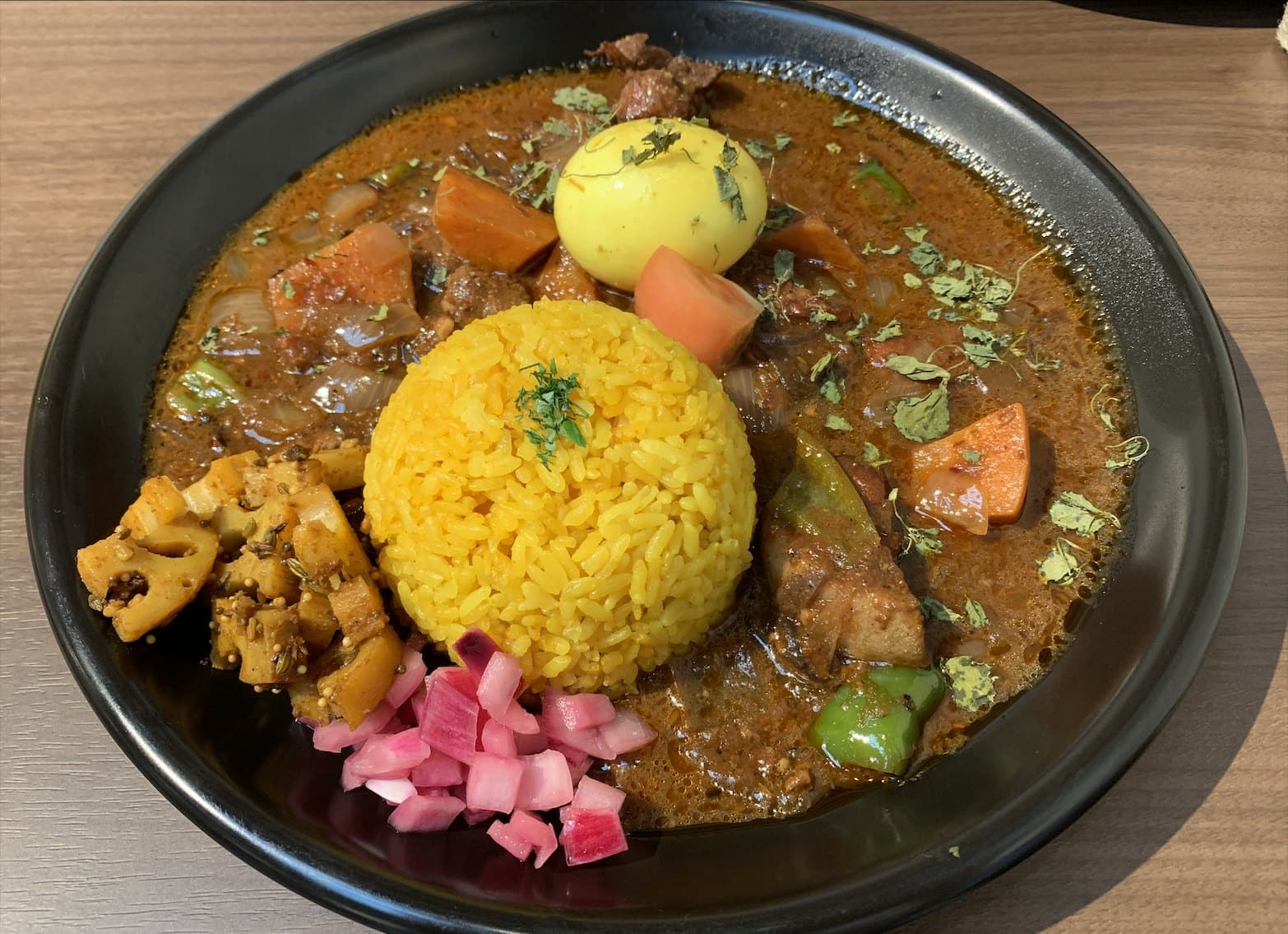
Photo by Semi central mountain. Licensed under CC BY-SA 4.0. Cropped and resized for web
A box of Japanese curry roux does most of the seasoning work for you. Fat, flour, curry powder, salt, and sweetness are already pressed into the blocks. The useful work happens underneath: brown the protein, cook the onions, protect the potatoes from turning to mush, and measure the liquid before the roux goes in.
The result should be glossy and spoonable, with enough savory depth and acidity to keep the sauce from tasting flat. Start the rice first. Dinner will be ready when the curry finishes thickening.
How curry reached Japan
The route begins with South Asian cooking and the British colonial category called curry. British cooks turned a wide range of Indian dishes into a looser idea, then sold premixed curry powder as a convenience. Hannah Glasse printed an English curry recipe in 1747, and bottled powders, chutneys, and flour-thickened sauces followed.
Curry arrived in Meiji-era Japan as Western food. Two Japanese cookbooks published in 1872 contain early recipes, and the dish spread through several channels: treaty-port restaurants, translated books, schools, military kitchens, home cooks, and food manufacturers. Naval kitchens helped institutionalize it, but the familiar story that the navy alone brought curry to Japan is too neat.
Naval doctor Takaki Kanehiro did reform sailors’ diets in 1884, and beriberi fell sharply. Medical histories credit a broader, more nutritious diet rather than curry itself. A 1908 naval cooking manual did include curry, which helps explain its practical appeal for feeding groups.
What the block does
Commercial roux usually combines cooked flour, solid fat or oil, curry spices, salt, sugar, and seasonings. In hot liquid, the fat melts and the flour’s starch hydrates, thickening the pot into the familiar sauce.
Both S&B and House Foods tell cooks to take the pot off the heat before adding roux. A block dropped into actively boiling liquid can set on the outside before it dissolves. Turn off the heat, break the blocks up, and stir until no lumps remain. Then return the pot to low heat for five to ten minutes so the sauce thickens without scorching.
Use the water quantity printed on your box. Package sizes and formulas differ. Check the allergen line too. Wheat is common, and some roux contains milk, soy, honey, cheese products, or animal-derived ingredients.
Build the pot
A reliable order for four to six servings
- Start Japanese short-grain rice first, following its package for rinsing, soaking, cooking, and resting
- Brown chicken thighs, pork shoulder, beef chuck, mushrooms, or firm tofu in batches
- Cook sliced onions until golden, then add ginger and garlic briefly
- Deglaze the browned bits with part of the measured water or unsalted stock
- Add carrots and the protein; add large waxy-potato chunks later so they hold their shape
- Simmer gently until the protein and vegetables are just tender
- Turn off the heat, add broken roux, and stir until completely smooth
- Return to low heat for five to ten minutes, stirring across the bottom
Chicken thighs are the simplest weeknight option because they stay tender during the simmer. Beef chuck needs more time and should be fully tender before the roux goes in. Mushrooms work well for a meatless pot, and tofu is best added gently so it does not break apart.
Onions need enough time to soften and pick up color, usually fifteen to twenty minutes at a moderate pace. Deep caramelization adds complexity but also more sweetness, so it is optional. The browned residue from the protein and onions contributes more savory flavor once you deglaze the pan.
Use Yukon Gold or another waxy potato and cut it into large pieces. Add it after the protein has had a head start. Vigorous boiling and long cooking break potatoes apart, releasing extra starch and making the sauce muddy.
Keep the sauce lively
Taste only after the roux has dissolved and thickened. The blocks are already salty, and current formulas can contain substantial sodium, so soy sauce and stock concentrate are risky first corrections.
If the curry tastes too sweet or muted, add one teaspoon of rice vinegar, a few grinds of black pepper, or a very small pinch of garam masala or fresh curry powder. Stir, taste, and stop as soon as the sauce wakes up. Too much dry spice at the end tastes dusty.
Skip the parade of secret ingredients. Apple, honey, ketchup, chocolate, and extra sugar often pile sweetness onto a block that already contains it. House Foods’ Vermont Curry, for example, is made with apple and honey.
Finish the plate
Serve curry beside Japanese short-grain white rice, which is sticky enough to hold the sauce without becoming gluey. California medium-grain rice is a reasonable substitute. Give rice about half the plate and spoon curry alongside rather than burying every grain.
Fukujinzuke brings sweet, salty acidity and a crisp chopped-vegetable texture. Depending on the maker, it may include daikon, eggplant, lotus root, cucumber, ginger, or shiso. Rakkyo, small pickled bulbs related to onions, offer a sharper crunch. Either one gives a rich brown sauce the contrast it needs.
A soft egg or sliced scallions can be pleasant, but the pickles do more useful work. For katsu curry, fry the cutlet separately and place it on the plate at the last moment so the crust stays crisp.
For a first curry night, buy a medium-hot roux, chicken thighs, onions, carrots, waxy potatoes, short-grain rice, and one sharp pickle. Brown patiently, measure the water, and add the roux off heat. Those small choices are enough to make the box taste considered.