
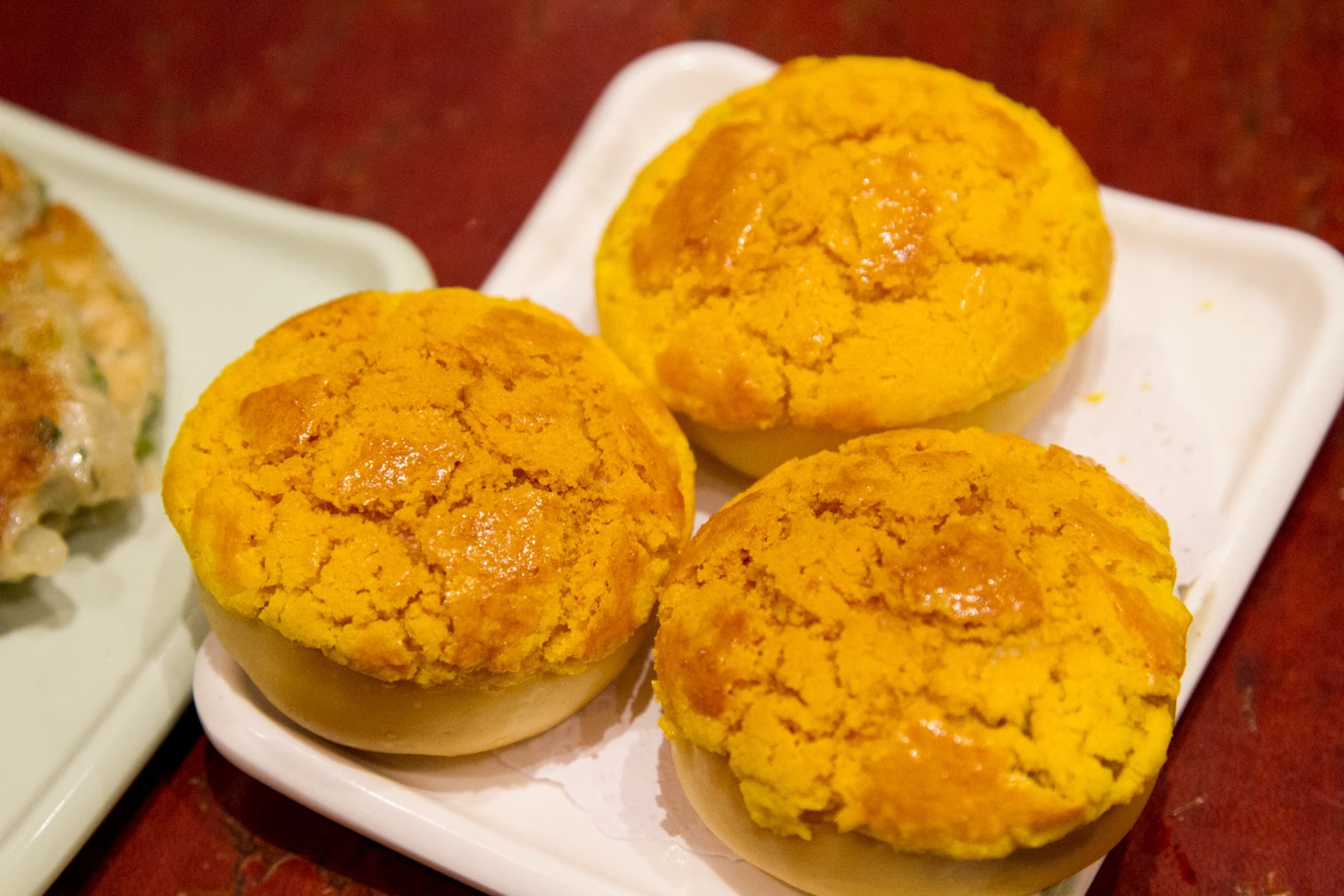
Photo by Party Lin. Licensed under CC BY 2.0. Resized for web
Asian Bakeries and Diaspora Comfort
Why the bakery case matters as much as the restaurant: memory, migration, and the small ritual of bringing something warm home.
July 1, 2025
The bag is still warm when you leave. Steam softens the paper. Someone at home will know what you brought before you say a word.
Asian bakeries run on a gentler clock than restaurants. They catch weekday mornings, after-school hunger, and the quiet errand you send someone on when a full meal feels like too much. You do not need a reservation. You need a tray, tongs, and the comfort of choosing a shape you already understand.
Why the case matters on weekdays
Restaurants ask for time and a bigger appetite. The bakery asks for a few dollars and a decision. That difference matters in diaspora neighborhoods, where the case becomes a reliable stop for something familiar on the ride home, something sweet for guests, or something filling when cooking feels far away.
Reporting from San Gabriel Valley to Vancouver and Montreal keeps finding the same ritual. People stop for pineapple buns and egg tarts the way other neighborhoods stop for coffee. The shop may be a strip-mall bay with fluorescent light. The feeling is still care.
Hong Kong shapes that traveled
Hong Kong–style bakeries lean on soft milk bread, crackled pineapple buns that contain no pineapple, egg tarts, cocktail buns, and savory baked pork. The pineapple bun’s name comes from the scored top, not the fruit. Hong Kong’s 2014 intangible cultural heritage inventory listed techniques for making pineapple buns, egg tarts, and milk tea among hundreds of local practices. That is a civic inventory of craft, not a claim that every overseas shop is identical.
Those shapes moved with families and bakers into Chinatowns and later suburbs. Independent counters in places like San Francisco’s Inner Sunset or SGV’s Hong Kong–leaning cafés keep the takeout-window rhythm: choose, bag, go. Cha chaan teng cousins sit nearby when people want the same bun with a seat and a milk tea.
Later bakery waves
Taiwanese café-bakeries arrived as a different format. 85°C began in Taiwan in 2004 and opened its first U.S. store in Irvine in 2008, pairing a bakery case with drinks in a way that spread quickly through California and beyond. The breads often read fluffier and sweeter; the visit can feel closer to a café stop than a pure takeout bakery.
Korean bakery-café chains such as Paris Baguette and Tous Les Jours added another self-serve case culture, with European-looking pastry names beside soft Asian milk breads. These waves overlap on the same suburban maps without being one continuous tradition. An independent Hong Kong shop, a Taiwanese drink-bakery, and a Korean chain café can sit within a few miles and still teach different habits.
What stays constant is the low threshold. Morning selection is often better. Tongs and trays keep the line moving. You leave with something warm and specific. For how to work a dense bakery corridor, use the SGV bakery crawl. The simpler point: the bakery is where appetite meets memory without needing a dining-room evening.