
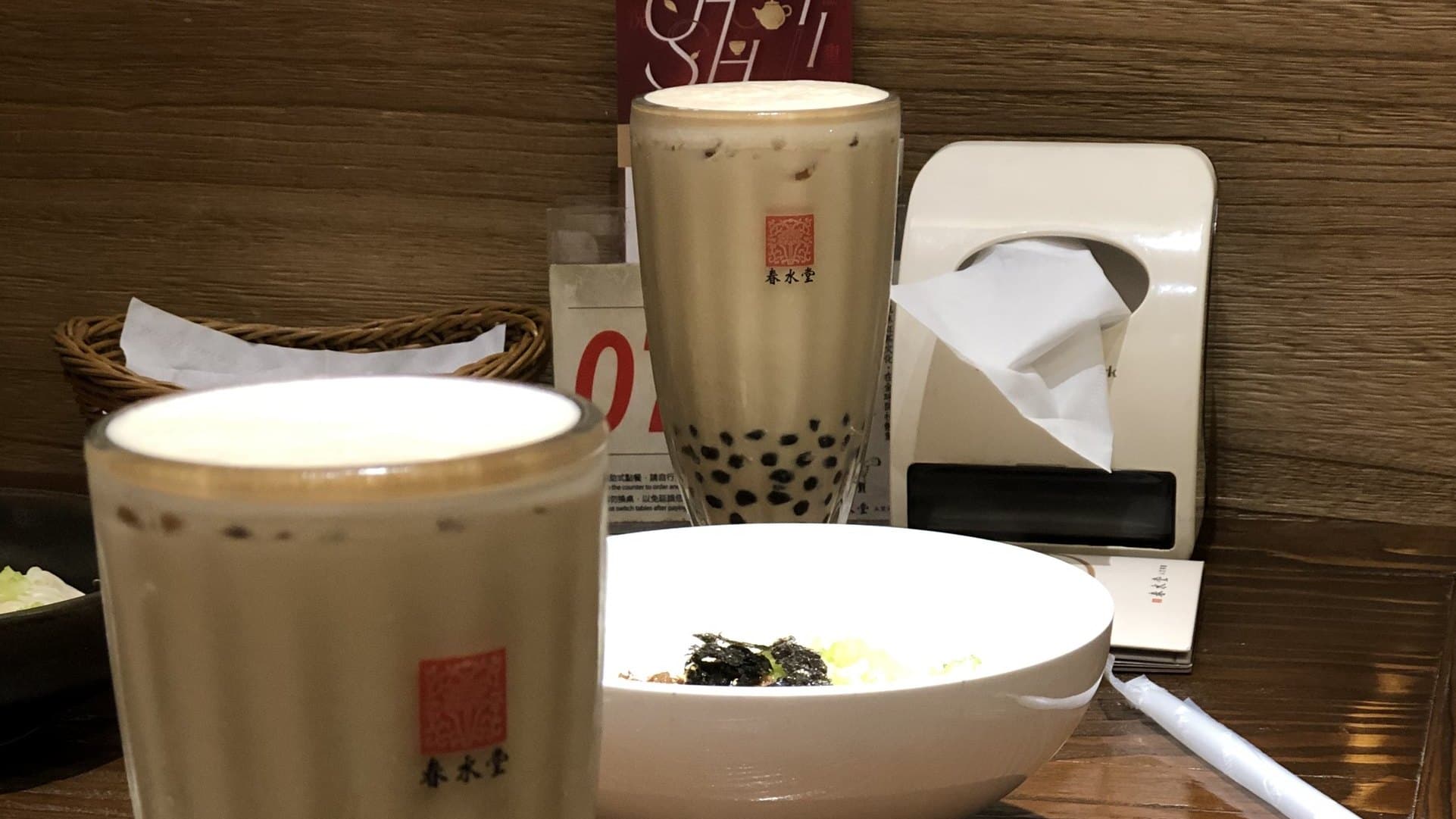
Photo by Coronium. Licensed under CC BY-SA 4.0. Resized and cropped for web
Boba's Second Act
How a Taiwanese tea-shop experiment became a drink that keeps rewriting its own menu.
May 25, 2025
Boba asks you to drink and chew at the same time. That small bit of mischief helped turn a Taiwanese tea-shop experiment into one of the world’s most adaptable drinks.
The cup has changed plenty since the 1980s. Powdered milk tea made room for fragrant oolong and fresh milk. Black tapioca pearls gained neighbors: grass jelly, pudding, aloe, fruit popping boba, cheese foam. The idea stayed recognizable because it was flexible from the start.
Two origin stories, no winner
Bubble tea grew out of an existing Taiwanese habit of shaking cold tea until a cap of foam formed. The “bubble” first referred to that foam, not the tapioca at the bottom.
Two tea houses claim the moment pearls joined the cup. Hanlin Tea Room says founder Tu Tsong-he spotted white fenyuan at Tainan’s Yamuliao market and added them to milk tea in 1986. Chun Shui Tang tells a different story: employee Lin Hsiu-hui poured tapioca pearls into iced tea during a staff meeting in Taichung, usually dated to 1987. Some retellings say 1988.
The dispute eventually reached court, but the 2019 decision did not crown an inventor. Reporting on the judgment says pearl milk tea was not patented and anyone could prepare it, so the court did not need to settle the historical question. Both stories remain part of boba lore.
A root travels, then finds a straw
Tapioca had already traveled much farther than tea-shop gossip. It is the starch of cassava, a root domesticated by Indigenous South Americans thousands of years ago. European maritime networks carried cassava into Africa and Asia. The UN Food and Agriculture Organization says Spanish explorers probably introduced it to Asia through the Philippines; by the early nineteenth century, it was widespread across tropical Asia.
In Taiwan, chewy starch balls called fenyuan belonged to sweet soups, shaved ice, and market desserts before they landed in tea. Larger pearls picked up the name boba, a term with a cheeky and objectifying pop-culture etymology tied to Hong Kong actress Amy Yip. California made “boba” the everyday name; “bubble tea” remained more common in places including New York and Canada.
The cup goes abroad
By the 1990s, Taiwanese tea shops and franchise systems were carrying the drink through East and Southeast Asia, Canada, and the United States. An early New York Times report found shaken bubble tea at Ivangie Tea House in Ridgewood, New Jersey, in 1994. Southern California’s San Gabriel Valley soon became one of its defining American homes.
The setting mattered as much as the recipe. Taiwanese and Chinese immigrant communities, college-age customers, café seating, and late hours turned boba shops into places to linger. Chains such as Quickly, Lollicup, CoCo, and Gong cha made the format easier to reproduce. So did the less glamorous hardware: cup sealers, wide straws, standardized pearls, powders, and wholesale supply networks.
Why it kept changing
Boba works like a set of choices rather than one fixed drink. Pick tea or fruit, milk or no milk, sweetness, ice, and texture. That makes novelty easy, but it also lets regulars settle into exact orders.
The category’s newer wave has paid more attention to the tea itself. Some shops now lead with loose-leaf or single-origin teas, fresh milk, and pearls cooked throughout the day. Others still sell unapologetically sweet, powdered drinks. Both fit under the same broad sign. Brown-sugar fresh milk, popularized internationally by striped cups from shops such as Tiger Sugar after its 2017 Taichung opening, was another turn of the wheel rather than a reinvention of the category.
A modern boba order can be unsweetened jasmine tea with aloe, a tart fruit tea with grass jelly, or a full-sugar brown-milk drink streaked with syrup. The pearls made the cup famous. The room to keep changing is what made it last.