
Taipei: Night Market Strategy
Which markets, what time to arrive, and how to eat without overordering in the first ten minutes.
Updated July 21, 2026
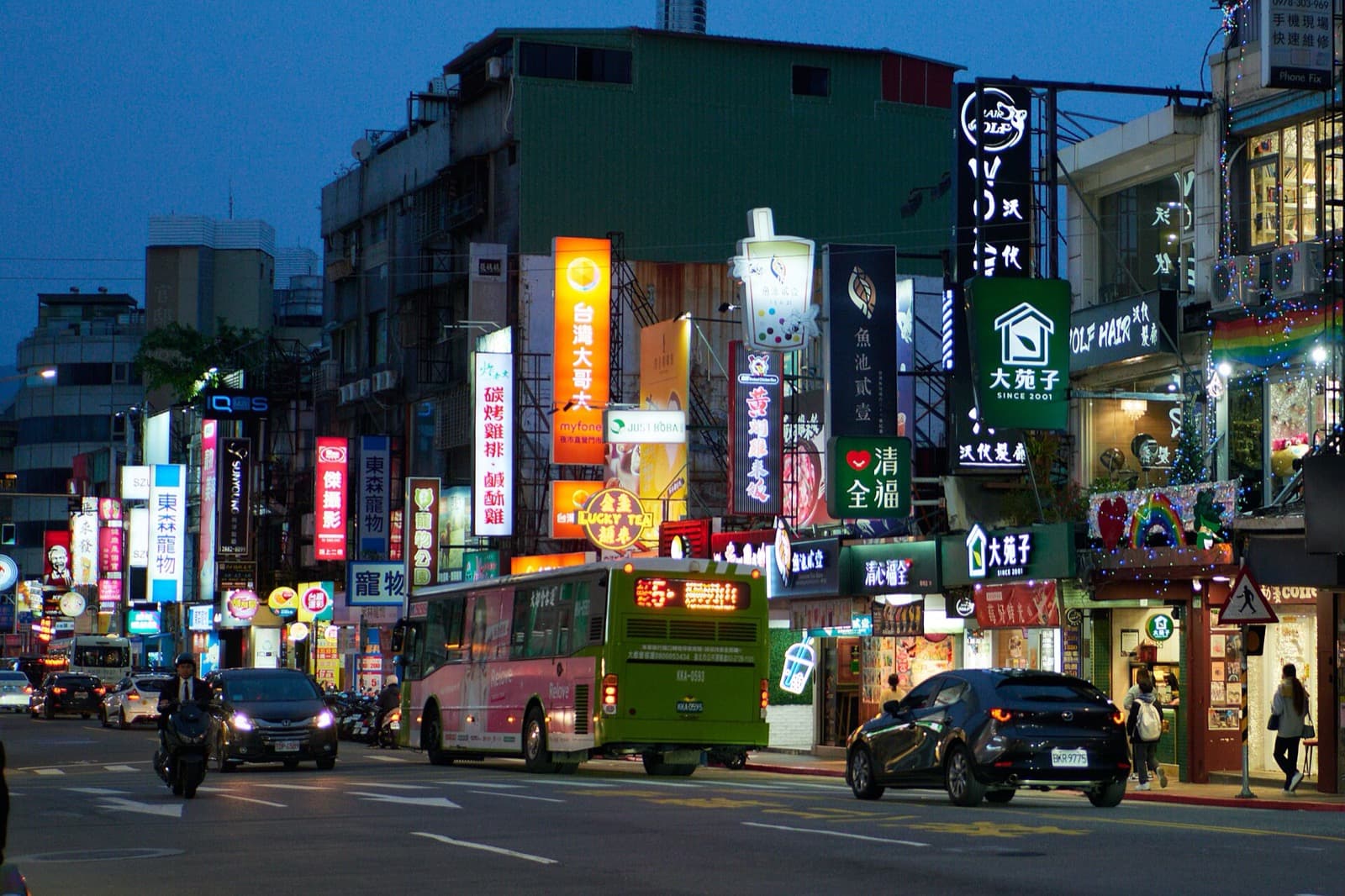
Photo by lumoplank. Licensed under CC0 1.0. Resized for web
Taipei night markets reward appetite and punish panic. The first neon strip offers fried chicken, sausage, and drinks with English pictures. Buy three of those and the night is over before the stall you meant to try.
Treat the evening as a pacing problem, not a scavenger hunt. Pick one market for the night, arrive hungry but not empty, share every bite, and leave room for the line that looks like dinner for the neighborhood.
How to eat a night market
Eat a small afternoon snack if you need to. Starving shoppers overorder the first fried stall. Bring cash in small bills; most food carts still assume cash even as EasyCard and mobile pay spread unevenly. Use EasyCard for the MRT.
Walk a full loop before you commit. Spot duplicate concepts, notice where locals gather, and save one stall you meant to try so you do not spend your stomach on the walk-in. Share everything. Portions are snack-sized, but they stack. Two people can treat the night as six to ten shared bites, not three personal meals.
Alternate rich and bright: a pepper bun or fried cutlet, then fruit juice or aiyu jelly, then oyster omelette or lu wei, then a sweet finish. At the counter, watch the line for twenty seconds, join it, decide before you order, pay, and step aside to eat. Food prices are fixed. Goods stalls may bargain. Do not film at the order window.
First-night rules
- One market per evening on a first trip
- Cash in NT$100 bills; EasyCard for transit
- Loop once, order second
- Share plates and alternate heavy with light
- Save stomach for one stall you came to try
Which market on which night
Raohe
Raohe is the cleanest first lesson: one long food street, Songshan MRT, and Songshan Ciyou Temple at the eastern gate. The tourist night market itself is a late-1980s municipal revival, not an unbroken Qing fair, but the temple and the linear strip make navigation easy. Guides and past Michelin street-food lists keep returning to Fuzhou-style pepper meat buns near the entrance, herbal spare-rib soup, lu wei, oyster vermicelli, and stinky tofu. Arrive near opening if you care about the famous bun line, or later if you want walking room. Finish the street in one direction and you will not get lost.
Ningxia
Ningxia is food-first with a stronger everyday Taipei feel than the big spectacle markets. Reach it from Zhongshan or Shuanglian. Oyster omelette, deep-fried taro balls, pork liver soup, and shredded chicken rice show up again and again in traveler guides and earlier Michelin street-food selections. It is an excellent Night 1 if you want less labyrinth than Shilin, or a Night 2 after Raohe. Many visitors like the later window, closer to 21:30-23:00, when lines ease and key stalls are still open.
Tonghua (Linjiang)
Tonghua, also called Linjiang, is the east-side local evening market near Da'an and Xinyi lodging. Walk from Xinyi Anhe or Liuzhangli. Fire-and-ice tangyuan is the celebrity dessert; lu wei, stir-fry, and stinky tofu fill the savory side. Use it when you are already staying east and want fewer tour-bus vibes than Shilin.
Shilin
Shilin is the big show: scale, games, shopping, side streets, and a renovated underground food court that reopened in 2025 after a major refresh. Take the MRT to Jiantan, not Shilin Station. Cixian Temple anchors the historic heart of the area. Come for variety and the classic first-timer curiosity, and manage expectations on crowds, especially weekend peaks around 20:00-23:00. Early underground grazing or a later street wander usually beats the shoulder crush. Largest and most famous are visitor consensus labels, not a promise of the densest good food.
Optional stretch nights
Liaoning is a shorter Zhongshan strip with office-hour xiaochi and seafood stir-fry energy. Nanjichang rewards alley wandering and fewer tour groups when you want denser local food and can handle weaker English. Huaxi, near Longshan Temple, carries real Wanhua history, including the old Snake Alley spectacle trade. Live snake shows and dedicated snake restaurants are largely past tense in recent reporting. Pair Huaxi with a temple visit if you are curious about the neighborhood; do not make it your first-trip food night.
A simple two- or three-night plan
Night 1: Raohe or Ningxia, with share discipline. Night 2: the other of those two, or Tonghua if you are lodging near Xinyi. Night 3, optional: Shilin for spectacle, or a smaller local strip such as Liaoning or Nanjichang.
Do not stack two big markets in one evening on a first trip. A temple or neighborhood walk before dusk keeps you from arriving empty at the first stall. Michelin Bib Gourmand and street-food mentions can help you spot a stall name, but the lists change yearly, so treat them as signals and check the current guide if a recognition matters to you.
The skill is not collecting every snack. It is leaving the lane still curious, with one stall you would return for. Follow the local line you saved room for, then ride the MRT home a little too full, not ruined.