
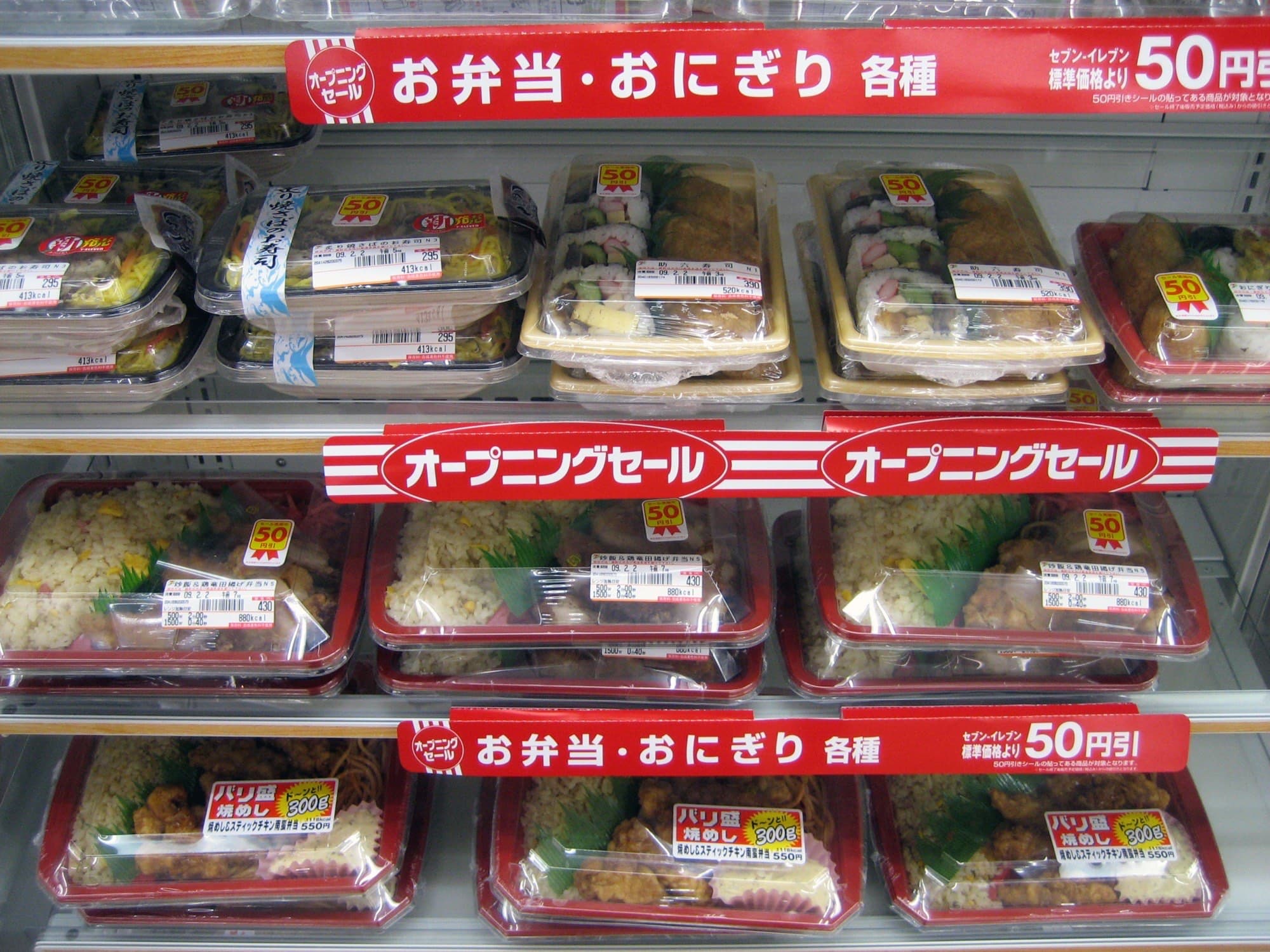
Photo by Corpse Reviver. Licensed under CC BY-SA 3.0. Resized for web
The Convenience Store Dinner Is a Real Meal
Onigiri, dosirak, and tea eggs turned late shifts and solo nights into a meal format, not a failure of cooking.
July 25, 2026
In much of North America, a convenience store meal still sounds like an apology. You are tired. The kitchen is dark. You grab chips, a hot dog that has been turning too long, and call it dinner because nothing better is open.
Walk into a Japanese konbini, a Korean CU or GS25, or a Taiwanese 7-Eleven after ten, and the story changes. The cold case holds rice, protein, and something bright. There is a microwave. Often there is a stool. Nobody treats you like you failed to cook. The store is designed for the meal you are about to assemble.
Japan built the template
Japan’s first full-fledged 7-Eleven opened in Toyosu in May 1974. The franchise idea came from the United States. The food did not. Hot dogs and burritos sold poorly. Toshifumi Suzuki and his colleagues pushed rice meals instead: onigiri, bento, oden, nikuman. Company histories describe years of work to make store-bought onigiri taste worth buying in a culture that assumed rice balls belonged at home.
The packaging breakthrough arrived in 1978. A moisture barrier kept nori crisp and separate from the rice until you tore the film, so the seaweed stayed crackly at the moment of eating. By 1983, tuna-mayonnaise fillings helped turn onigiri into a daily staple rather than a novelty. Today Japan has more than fifty-six thousand convenience stores. Seven-Eleven, FamilyMart, and Lawson account for most of them. Fresh items often arrive two or three times a day. Seasonality still shows up in the case: oden in cold months, lighter salads and fruit sandwiches when the weather turns. The store is not pretending to be a restaurant. It is competing, quietly, with one.
Korea and Taiwan made it social infrastructure
In Korea, the dosirak lunch box is the dinner argument in plastic. GS25’s Kim Hye-ja line made “hyeja” shorthand for generous value. CU answered with chef collaborations and meat-heavy sets. Triangle gimbap, cup ramyeon heated in-store, and a cheap coffee turn into a full plate for students and office workers watching restaurant prices climb. Many shops keep window counters or outdoor tables for honbap, the now-ordinary practice of eating alone. Korean media still argues about whether honbap feels like freedom or loneliness. The store itself does not make you choose. It simply assumes one person is enough.
Taiwan pushed density further. On an island of roughly twenty-three million people, more than fourteen thousand convenience stores mean a corner is rarely far. Tea eggs simmering by the register became a signature after local operators insisted on them over American skepticism. City Café turned coffee into a daily companion to bentos and noodles. Seating areas make some locations feel closer to a neighborhood café than a gas-station stop. Fresh food is not a side aisle. Industry reporting treats it as a growth engine, from railway-style bentos to microwave rice meals people actually prefer on a weeknight.
What the meal is doing
The convenience-store dinner works because the logistics take cooking seriously. Temperature-controlled delivery, short shelf windows, and constant product testing keep the chilled case closer to a prepared-food counter than to a pantry of chips. Private-label lines let chains compete on taste. Microwaves and chopsticks are part of the furniture. The social permission matters as much as the supply chain. Late work, small apartments, and solo evenings are not framed as emergencies. They are ordinary conditions the store is built to feed.
That is why traveler videos of konbini hauls feel so surprising to viewers raised on American corner stores. The shock is not that Asia has convenience stores. It is that the default purchase is a meal with rice, not a bag of snacks next to the fuel pumps. Diaspora cities still skew toward the supermarket and the bakery for that kind of comfort. On a trip through Tokyo, Seoul, or Taipei, the corner store is where you learn the other rhythm: heat the box, take the stool, and eat without apology.
To start, treat one evening as an experiment. Buy a rice item, a protein or fried side, something bright, and a drink. Sit if you can. Notice how little drama the room makes of a table for one. The grocery store remains the deeper pantry anchor. The convenience store dinner is the shorter story: a city that trusts a cold case to feed you between shifts.