
Lunar New Year Table: A Planning Guide
Menu structure, auspicious dishes, and the practical work of feeding a full house.
Updated July 19, 2026
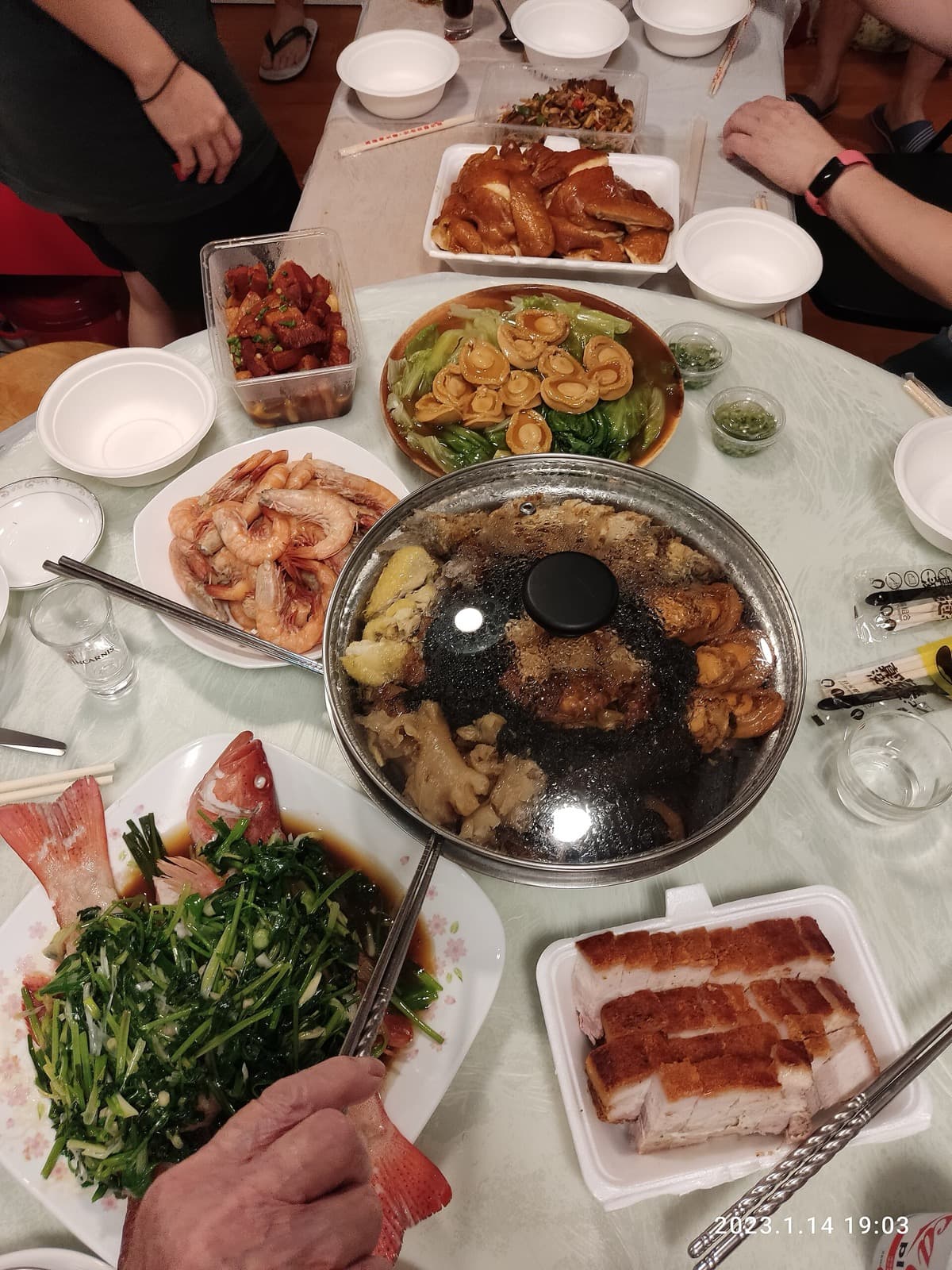
Photo by Hoanseum ShekymrE. Licensed under CC BY-SA 4.0. Resized for web
Lunar New Year tables do not share one correct menu. A Cantonese reunion dinner, a Vietnamese Tết spread, and a Korean Seollal morning each carry different dishes, different rhythms, and different ideas of what belongs on the table. What travels across those kitchens is structure and logistics: enough protein and vegetables, a starch that feeds a crowd, one or two dishes your family actually recognizes as lucky or traditional, and a cooking plan that lets everyone sit down together.
Start with the foods your household already expects. Then fill gaps so the table feels abundant without turning the day into a relay race at the stove.
Build the menu by roles, not by a checklist of twelve musts
Think in categories before you chase symbolism. Most home tables need a protein centerpiece or two (fish, poultry, a pork braise, short ribs), a vegetable or green that cuts through richness, rice or noodles or sticky rice cakes, and fruit or sweets for the end of the meal and for guests who drop by. Symbolic dishes matter when they mean something in your language and region. Homophones that work in Mandarin or Cantonese do not automatically translate to Vietnamese or Korean tables, and diaspora kitchens often mix habits without needing every auspicious dish from every province.
A practical planning aid for shared Chinese-style meals is roughly one communal dish per guest, plus one or two extras so the table does not look sparse once people start serving. Lucky numbers such as eight show up in banquet writing; treat them as optional flavor, not a rule you owe the calendar.
Menu roles to cover
- One or two proteins that can be finished close to seating time or held warm
- Vegetables or greens for color, crunch, and relief from rich braises
- One or two symbolic or family-signature dishes you actually recognize
- Rice, noodles, or New Year cakes so starch keeps pace with the crowd
- Citrus, sweets, or candy for guests and for the close of the meal
Three regional frames, kept separate
Chinese Spring Festival tables
For many Chinese families, the emotional center is 年夜饭, the New Year’s Eve reunion dinner. Northern tables often lean on dumplings that resemble ingots. Southern tables often make more room for nian gao, the sticky rice cake whose name plays on rising higher in the year. Whole fish is widely associated with surplus (鱼 sounding like 余), and many households serve it intact from head to tail. Some families leave a portion unfinished on purpose. Some coastal-derived households avoid flipping the fish on the platter. Those are family customs, not a single national script.
Longevity noodles belong as much to birthday tables as to New Year ones; what matters is keeping the strands long. Cantonese kitchens often reach for yi mein or e-fu. Wordplay dishes such as stir-fried lettuce (生菜 sounding like wealth) or dried oyster with black moss are Cantonese specialties, not pan-Chinese requirements. Fat choy also carries harvest and environmental concerns, so treat it as optional regional tradition rather than a mandatory shopping line. A vegetarian Buddha’s Delight on New Year’s Day is a Buddhist-influenced custom in some households, often Cantonese, not a universal Day One rule. Yusheng, the prosperity toss salad familiar in Singapore and Malaysia, is a modern Southeast Asian Chinese practice, not a mainland reunion-dinner default.
Vietnamese Tết
Tết cooking often revolves around sticky rice cakes and a savory braise that can sit through days of visiting. Northern tables lean toward square bánh chưng; central and southern tables more often wrap cylindrical bánh tét. Both are labor-heavy, and buying from a trusted maker is ordinary, not a compromise. Southern thịt kho, pork and eggs braised in coconut water, is a common anchor that reheats well. Candied fruits and seeds (mứt) welcome guests with tea. The five-fruit tray, mâm ngũ quả, faces the altar more than the dinner plate, and its makeup changes by region: northern trays often follow five-element thinking with a banana-base arrangement, southern trays play on phrases about having enough, and central households tend to be more flexible. Plan savory food and altar fruit as related but separate jobs.
Korean Seollal
Seollal’s signature is tteokguk, rice cake soup. The white slices read as a clean start, and older age-counting custom ties eating the soup to gaining a year. Morning may include charye, the ancestral rite with a carefully arranged offering table documented by Korea’s National Folk Museum. That ritual layout is not the same thing as a restaurant-style banquet. The family meal around it often brings jeon, namul, japchae, and a braise such as galbijjim. If you are hosting a Seollal-leaning table abroad, tteokguk plus a few strong sides usually does more for the day than copying a full ceremonial spread you do not practice at home.
A prep timeline that protects seating time
Two or three days out, shop and do the quiet work: soak dried mushrooms and seafood, wrap and freeze dumplings, braise meats and stews that taste better overnight, and assemble cold plates or pickles. The day before, confirm rice or noodle quantities, thaw what needs thawing in the fridge, and clear fridge space for the finished platters. Day of, keep the active list short. Steam or poach whole chicken or fish close to the meal. Finish greens and stir-fries last so they stay bright. Cook longevity noodles at the end so they do not sit and soften. Refresh platters rather than trying to cook every dish in one breathless hour.
The goal is a full table at one sitting, not a kitchen that never stops plating.
Guest flow at a crowded table
Communal platters beat individual plated courses when the room is full. A round table helps large groups feel equally placed; a lazy Susan, common in restaurants and many diaspora dining rooms, keeps passing from becoming a sport. Seat elders or the guest of honor with care, and let them begin. Serve family-style so the host is not composing every bowl.
Stagger the hot dishes. Put cold plates and braises down first, then the fish or poultry, then greens and noodles. Keep tea, drinks, and a bowl of citrus or sweets ready for the lull after the first rush, when conversation catches up and second helpings start.
What to buy, what to make
Buy the labor bombs without guilt: dumplings by the tray, roast meats from a good shop, bánh chưng or bánh tét from a maker you trust, boxed sweets, and bags of mandarins or tangerines. Make one or two homemade dishes that carry your household’s taste, whether that is a braise, a fish, a soup, or the dumpling filling everyone expects. The table feels personal when a few things taste like your kitchen, not when every item on the lazy Susan was folded at midnight.
Soy sauce, sugar, and time do a lot of the holiday braising work. Rice quantities scale faster than most hosts guess, so measure starch against headcount rather than vibes alone.
Reunion is the point. If a little fish or stew remains on purpose, that surplus can be part of the wish the table is making. Feed the people in the room with the foods they already love, stage the cooking so you can sit with them, and let the calendar meet your family’s habits instead of the other way around.