
Mid-Autumn Gathering: Mooncakes and Tea
A quieter holiday format: tea pairing, mooncake types, and an evening that does not require a full dinner.
Updated July 22, 2026
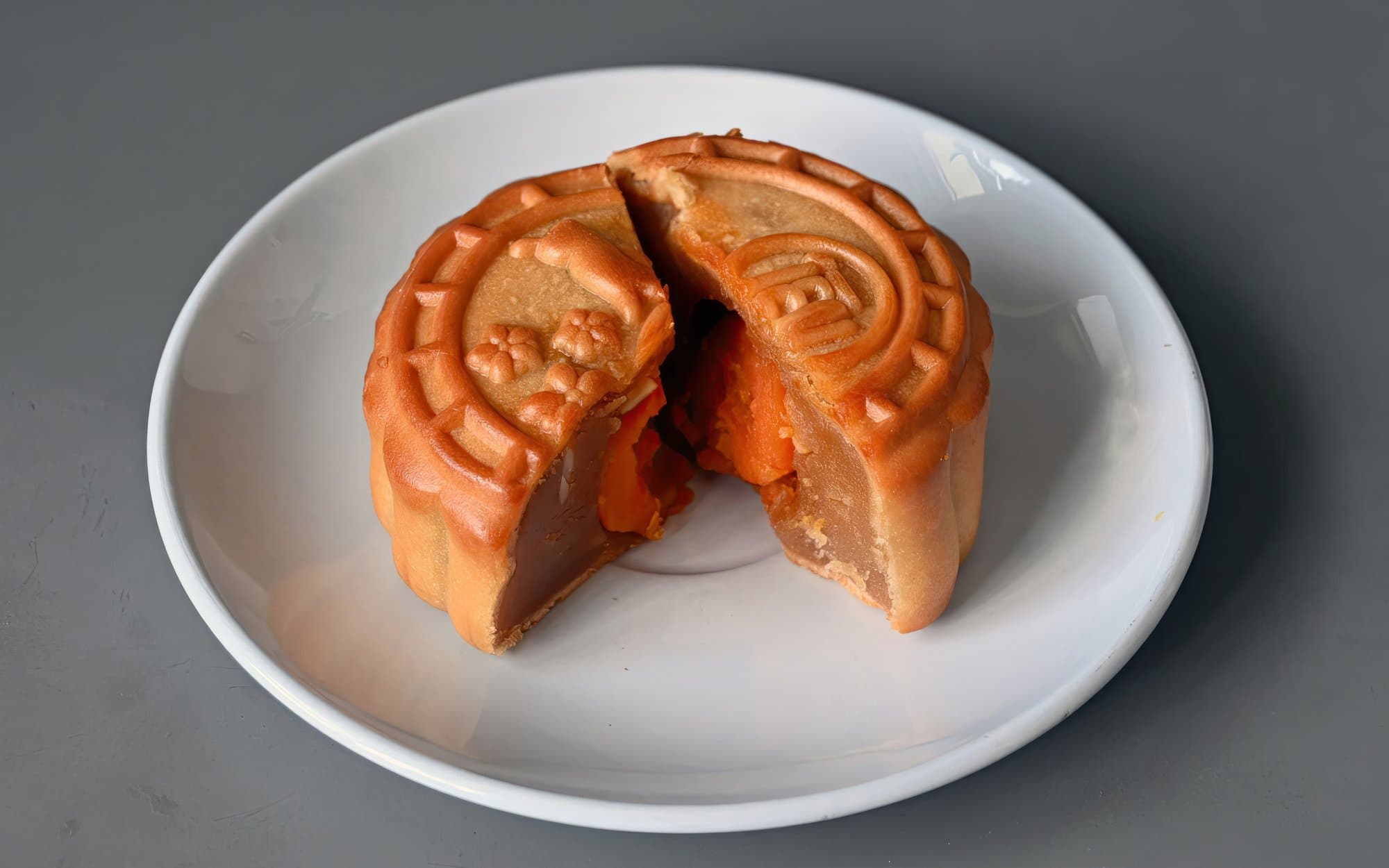
Photo by Choo Yut Shing. Licensed under CC BY 2.0. Cropped and resized for web
The tin is already on the table. Someone has brought fruit. The kettle is on. Outside, the moon is doing its annual job of looking almost too round.
Mid-Autumn does not require a banquet. On the fifteenth night of the eighth lunar month, many families treat tea, shared mooncakes, and a little fruit as a complete gathering. That quieter format still carries the holiday: reunion, the full moon, and a pastry dense enough that nobody should eat a whole one alone.
What the night is about
Mid-Autumn Festival (中秋节), also called the Moon Festival, falls near the autumn equinox on the Chinese lunisolar calendar. It is a harvest holiday and a reunion holiday. Moon viewing, lanterns, and round foods show up across Chinese communities, with local accents elsewhere in East and Southeast Asia.
The Chang’e story, the archer Hou Yi, and the immortality elixir that sent her to the moon, is popular heritage lore more than a single settled history. The useful part for hosts is simpler: gather, look up if you can, and share something round.
In Taiwan, pomelo and outdoor barbecue often join the night. You can borrow the fruit and skip the grill. This guide is for the tea-and-cake evening.
Mooncakes worth knowing by name
Most gift boxes in North America lean Cantonese: a thin, glossy baked crust around a dense sweet paste. That is the classic diaspora tin. Inside, a few fillings do most of the talking.
The short case
- Lotus seed paste (莲蓉), often with one or two salted duck egg yolks: the prestige Cantonese classic. The yolk reads like a miniature moon when you cut.
- Red bean paste (豆沙): smoother and familiar; an easy crowd-pleaser next to lotus.
- Five kernels (五仁): nuts and seeds bound into a sweet mix. Traditional, and polarizing. Offer a wedge, do not force a whole cake.
- Snow skin (冰皮): unbaked, mochi-like wrapper kept cold. Lighter modern fillings; serve chilled.
- Flaky styles (Suzhou, Teochew, and related): layered pastry; sometimes savory pork or yam. Different bite from the glossy Cantonese shell.
Mini or individual cakes help small gatherings. A mixed tin helps mixed tastes. You do not need every regional style on one table. Two kinds, well chosen, beat a dozen half-eaten experiments.
Tea that can keep up
Mooncakes are rich. Tea is not a garnish; it is the pacing tool. Brew it hot and leave it unsweetened so each wedge resets instead of stacking sugar on sugar.
Pu-erh is the sturdy default with salted yolk, nuts, or anything oily. Oolong (including floral Tieguanyin-style cups) sits well with lotus or red bean. Jasmine or another light floral tea helps with snow skin, flaky cakes, or guests who want something gentler. Chrysanthemum, alone or with pu-erh, is a common Mid-Autumn companion when the cakes feel heavy.
To start, we recommend one strong tea and one lighter pot if the group is mixed. Keep water hot. Refill cups between wedges.
Build the evening in one pass
For about four to eight guests
- One traditional lotus cake (with or without yolk) plus one lighter option, such as snow skin or red bean
- Fruit: pomelo if you can find it, or pears, apples, grapes
- Two teas ready to brew, or one excellent pot kept full
- Small plates, a cutting board, and a sharp knife
- A seat by a window, balcony, or short walk for moon viewing if the sky cooperates
If guests arrive hungry, put out a small savory plate first so nobody attacks the tin like dinner. You can still skip a multi-course meal. The holiday holds when the cakes are shared, the tea keeps moving, and someone remembers to look up.
Leave the evening when the wedges are gone, the pots have been refilled once, and the table feels calm rather than sticky with feast cleanup. That is enough Mid-Autumn for a night that wants mooncakes and tea more than performance.