
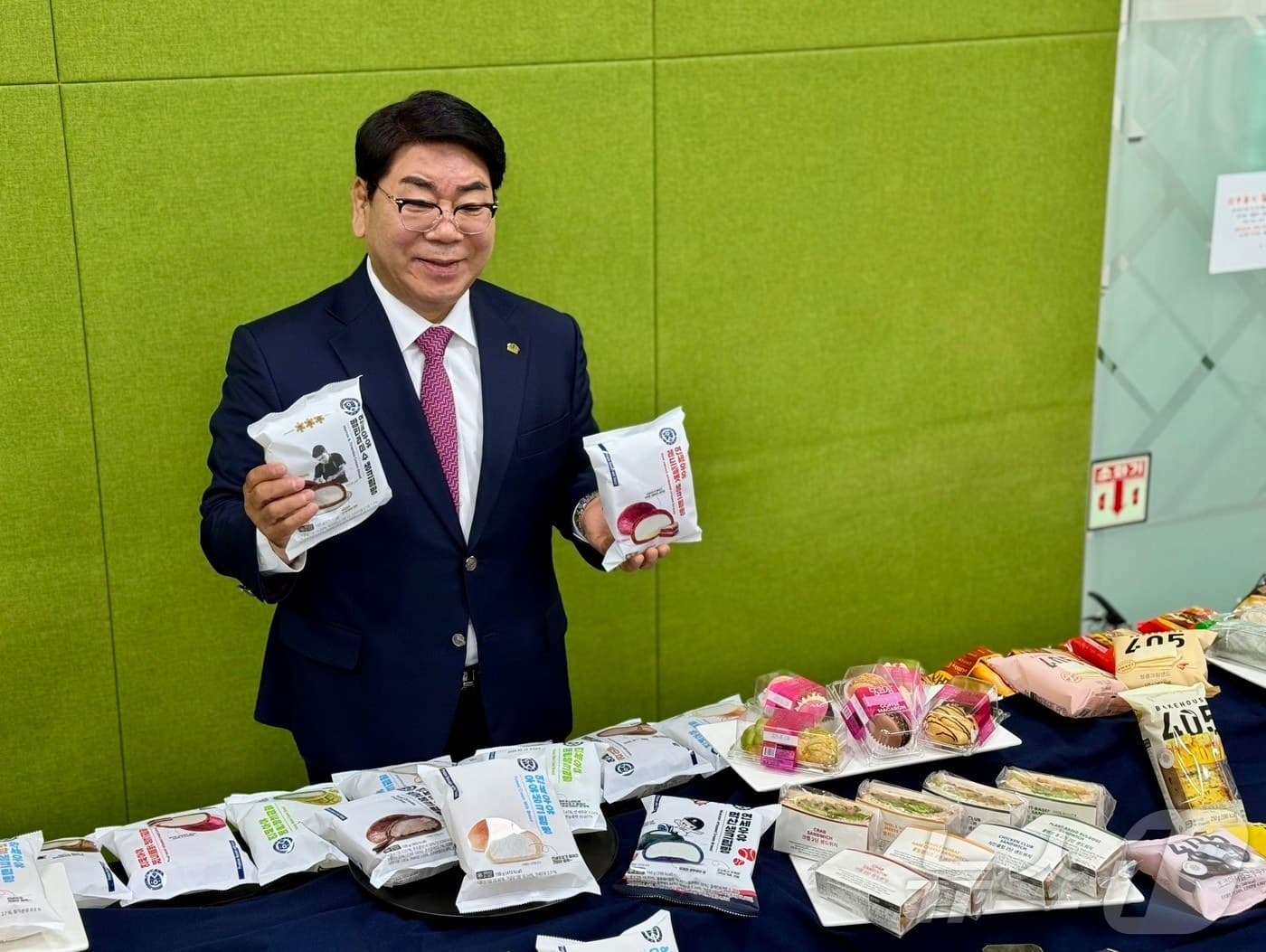
Photo by Lee Min-ju / News1. Licensed under Editorial. News1 press photo of Kim Young-sik with Foodcoa cream-bread products; resized for web.
Kim Young-sik Built Korea’s Cream-Bread Hit. Now He Is Shipping It to Costco.
The first Foodcoa cream bread for U.S. Costco ships September 14. Kim’s Anseong bakery grew from a Japan convenience-store trip into CU’s bangal-shot craze, then bet the next act on export.
September 8, 2026
On September 14, a ship leaves Korea with Kim Young-sik’s cream bread bound for U.S. Costco. After sea freight and customs, the company expects the buns on warehouse shelves in October.
Kim told Herald Business that for a food company, Costco is the dream channel because the volume is different. He said Foodcoa now wants to compete more overseas than at home. The Anseong bakery, also known in English as Foodcore, already ships bread to about eleven countries. Getting into Costco, he argued, tells the market a supplier has cleared the safety, price, and capacity bars that matter at warehouse scale.
His path starts with a Japan trip in the early 2000s. In Korean convenience stores then, dessert breads were mostly red-bean rolls and thin cream sandwiches. Japanese shelves looked fuller and sweeter. Kim left his prior work and founded the bakery business in 2004. Foodcoa grew as an OEM and ODM partner for convenience chains, making early packaged hamburgers for Korean CVS and later sweets for CU, the BGF Retail brand you see on nearly every Korean block.
The breakout arrived in January 2022: Yonsei Milk Cream Bread for CU. More cream than bread, soft crumb, a cross-section that looked almost ridiculous in a phone photo. Koreans called those halves bangal shots, and the images traveled. Cumulative sales figures shift with each company update, but by late 2025 and early 2026 the line was already counted in the tens of millions of units. Domestic shoppers usually met the bun under the Yonsei Milk name. For export, Foodcoa pushes its own brand, Swelly, a name built from sweet and well-being.
COVID nearly stopped the company cold. The Anseong factory in Gyeonggi sat idle for about a month, and cash stopped moving even while the books still looked profitable. Kim has called it the edge of a profitable bankruptcy: raw-material bills and payroll suddenly hard to cover. He borrowed from acquaintances, repaid within a year, and says the cream-bread line that packs heavy filling without bursting the shell is what pulled Foodcoa through.
Last year the company spent about 8 billion won on an automated cream-bread line at Anseong that can add roughly 100,000 units a day. Total plant output sits near 300,000 units daily. Kim says the new line was built with Costco and other export orders in mind. Foodcoa also bought adjacent land of about 1,000 pyeong, roughly 35,000 square feet, and is weighing about 20 billion won more in equipment if overseas volume grows. Consolidated sales last year were about 143 billion won; this year’s target is about 150 billion. FSSC 22000, an international food-safety management certification, is part of the paperwork for U.S. retail.
Asked where he wants the company in five years, Kim pointed to Samyang’s Buldak noodles growing abroad. He would rather catch that overseas K-food wave than only fight larger bakery groups inside Korea. His son, Kim Jun-hoo, runs day-to-day as CEO; the founder stays chairman and is the face of the Costco bet.
Warehouse doors and pack formats will firm up once the stock clears customs. Until then the calendar is clear enough. A Japan convenience-store trip in 2004 became a phone-famous bun in Korean CU shops. Mid-September, that bun leaves for Costco’s American floor.