
Photo by Madilyn Bedsole. Licensed under Brand. Courtesy Oyatte; resized for web.
A Culinary Class Wars Chef Has Opened a Produce-Driven Korean Tasting Restaurant in New York
Hasung Lee’s Oyatte runs an eight-course menu on Crown Daisy Farm produce and house ferments. Class Wars filled the book for a kitchen planned long before the cameras.
August 12, 2026
On Netflix, Hasung Lee was Culinary Monster, the Black Spoon finalist on Culinary Class Wars season two who lost the last round and still left an imprint. In Murray Hill, he is the chef of Oyatte, an eight-course tasting restaurant at 125 East 39th Street built around micro-seasonal produce, house fermentation, and a single upstate farm. The room opened in early May in the former Kajitsu townhouse. Two and a half months later, the bookings still read like a television aftershock. The cooking reads like something planned long before the cameras.
That gap is the news. Lee told Eater this month that he started collecting restaurant references around 2020, found investors before the show aired, and still benefits from guests who watched Culinary Class Wars and want a table. Oyatte is fully booked. Fame filled the calendar. The kitchen’s harder job is keeping an eight-course sequence honest when Crown Daisy Farm’s outdoor beds change by the week.
Oyatte’s name nods to the plum blossom and to Lee’s own surname. Guests meet a contemporary tasting format, not a recreation of classic hansik. Most produce, about 80 percent by Lee’s count, comes from Crown Daisy Farm in Staatsburg, where Brett Ellis, formerly head farmer at the French Laundry, grows in open soil without a greenhouse. Deliveries arrive twice a week. The rest is filled at Union Square. Because the farm is small and the New York micro-seasons move fast, Lee says the kitchen changes at least one or two dishes every week. Preservation is how the pantry keeps up: sake-lees crème fraîche, soy-macerated black truffle, radicchio-perilla marmalades, fruit vinegars, bark and branch oils. He keeps a long spreadsheet of what is fermenting at any moment.
The meal is staged like a short trip upstate and back. Guests begin downstairs in a lounge wrapped in wood reclaimed from a Crown Daisy barn, eating the early vegetable courses. Later they move upstairs for seafood, meat, and dessert. The listed menu is eight courses and $210, with a $170 wine pairing; Lee has said the full run can feel more like fifteen-plus plates once canapés are counted. Hand Hospitality, the group behind rooms such as Jua and Atoboy, is the partner. Lee’s résumé supplies the rest of the seriousness: Gramercy Tavern, Geranium in Copenhagen, chef de cuisine at Atomix while it earned two Michelin stars, then sous chef at the French Laundry, where the friendship with Ellis took root.
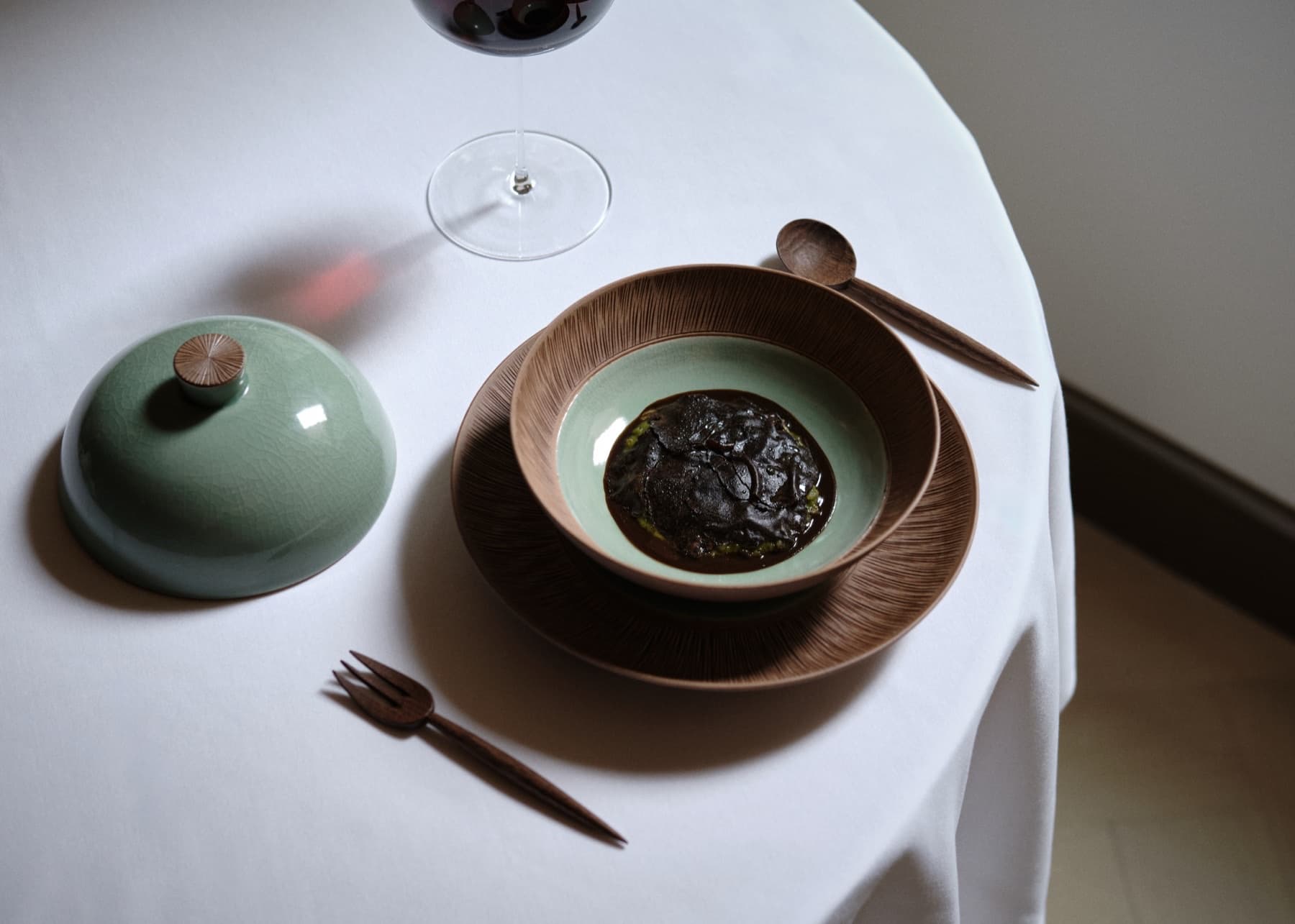
One plate makes the television-and-farm overlap visible. The spring green porridge, a glossy bowl under soy-preserved black truffle, is the dish Lee first presented to Ahn Sung-Jae, a White Spoon chef and judge on Culinary Class Wars. At Oyatte it is built from Korean and aromatic brown rices cooked in a spring-green béchamel of ramps, chrysanthemum, wild garlic, and chive, finished with black-garlic gastrique. Lee has said no one would call it hansik, and that hybrid is intentional. Korean roots move through French Laundry discipline and Nordic fine-dining habits without becoming a theme.
Fame can fill a reservation book and still leave a kitchen scrambling. Lee has been frank about postponed openings, permit delays, and a cover count that jumped hard once bookings went live. What steadies Oyatte is older than the moniker: a farm plan set in winter, ferments started before service, and a willingness to rewrite the menu when the beds say so. Netflix may explain why the table is hard to get. Crown Daisy and the fermentation sheet explain why the restaurant was worth building.