
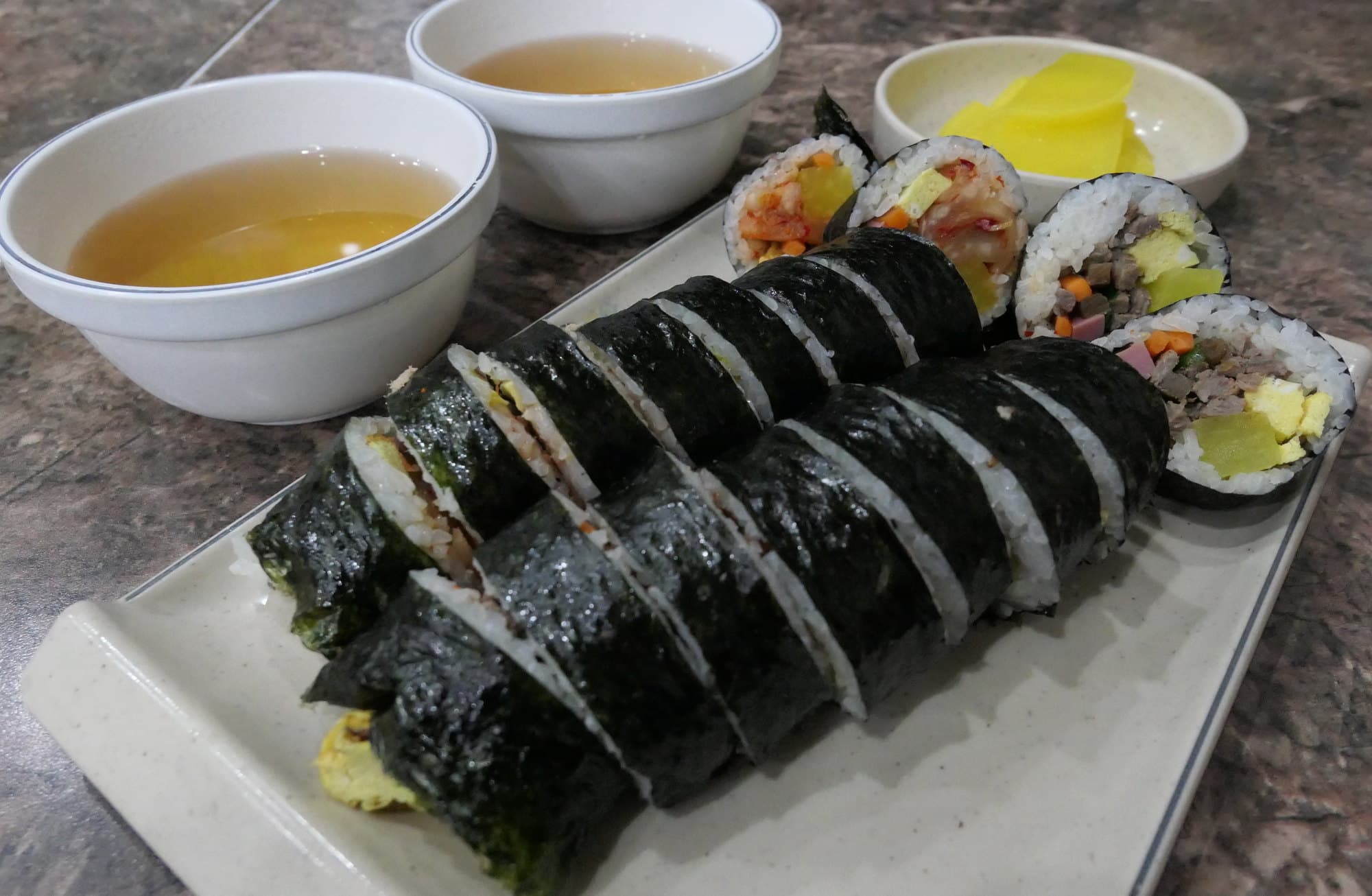
Photo by bryan.... Licensed under CC BY-SA 2.0. Cropped and resized for web.
Downtown L.A. Lined Up for Onigiri as Gimbap and Temaki Share the Same Lunch Hour
A July 24 shop opening, frozen gimbap still in Costco, and a wave of temaki bars landed in one American week. Rice seasoning, seaweed, and temperature still tell them apart.
August 17, 2026
The line ran out the door and around the corner at CAL Marketplace on July 24. The food court sits inside the City National 2CAL office tower on Grand Avenue, between Third and Fourth streets in downtown Los Angeles. The new counter was Onigiri Sun, a Japanese rice-ball shop opening its second Los Angeles location. The first began as a Little Tokyo pop-up in August 2023 and then stayed.
Kohei Nomura, who manages both shops, told the Rafu Shimpo, Los Angeles’s Japanese American newspaper, that downtown draws people from all over the world, not only from Japan. He called the room a chance to introduce them to Japanese-style onigiri. The operator is KNT-CT Foods (U.S.A.), the Los Angeles-area food arm of Tokyo travel company KNT-CT Holdings. Weekday hours run 7 a.m. to 6 p.m., built for office breakfasts and lunches. Fillings run kombu, salmon, snow crab, or miso eggplant, from about $5 to $13, on Mori no Kumasan rice grown in Kumamoto. Downtown is getting the snack Japan already treats as lunch, sold from a food-court window.
That opening lands in an American lunch that already sells two other handheld rices, often as sushi or a hand roll. Korean frozen gimbap, also spelled kimbap, rode a 2024 TikTok and Trader Joe’s surge, then cooled. Industry figures put U.S. imports of the frozen rolls at about $2.2 million in 2024 and about $440,000 in 2025, still more than triple 2023, and Costco kept the category on the shelf.
New York added a Union Square kimbap counter at the end of June. The cook is Jun Hee Park, who came from Jungsik, Manhattan’s three-Michelin-star Korean restaurant. Houston, separately, spent July adding Japanese temaki bars.
The three share seaweed and rice, then split in the seasoning. Temaki is sushi: vinegared rice in a nori cone, eaten before the sheet goes limp. Gimbap seasons the rice with sesame oil and salt, wraps cooked and pickled fillings, and is sliced into coins for a picnic cloth, often with extra danmuji, the yellow pickled radish. Onigiri is salted rice with the filling inside, a triangle or a ball you can carry until lunch. American menus fold them into “hand roll” because the pictures look related. The rice is doing different jobs. Nigiri, the small sushi mound with fish on top, only shares a verb for pressing grain in the hand.
The origin arguments are older than this downtown line. Japan packed salted rice long before the wrap became everyday. Nori as a common sheet spread in the late 1600s. Convenience stores later learned to keep that sheet crisp, which is why Seven-Eleven Japan’s film-separated onigiri from 1978 still looks modern in a plastic pack.
Gimbap’s cylinder is still argued over. Some cooks point to older Korean seaweed wraps; others to Japanese norimaki from the occupation years. The Korean word was in print by 1935. The triangle convenience snack, samgak gimbap, later borrowed the Japanese onigiri pack, around 1990. The cone most Americans now call a hand roll is newer. The Japan Times has traced that eat-as-you-go temaki to Tama Sushi, a Tokyo sushi restaurant.
Sliced gimbap is picnic food. A fridge after slicing can wet the gim. Onigiri likes a packed lunch. Temaki goes limp in a bag. Dan Ahn, director of operations at New York’s Kimbap Lab, told The Washington Post last year that health inspectors have asked whether the counter was serving sushi. He treats the mix-up as a chance to talk about sesame oil. A downtown line for onigiri, a Costco freezer of gimbap, and a counter of Korean rolls can share an American week.