
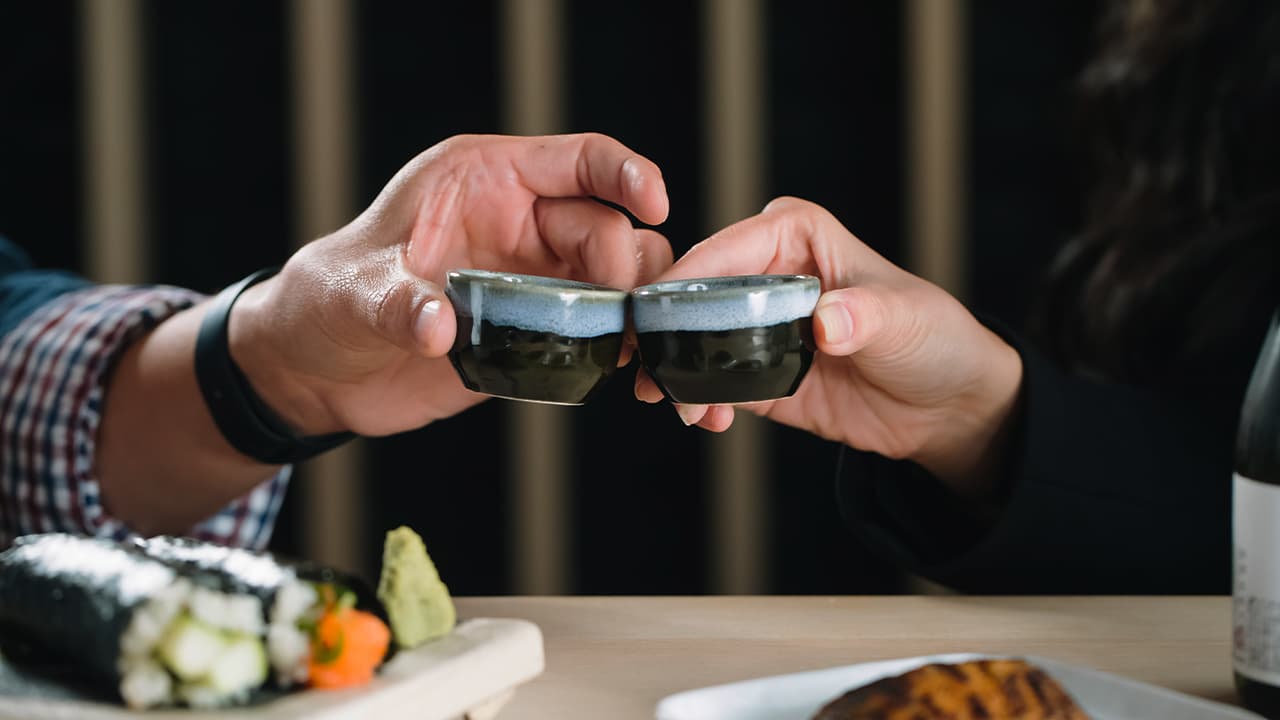
Photo by Nori Handroll Bar. Licensed under Brand. Courtesy Nori Handroll Bar.
Deukbok Cha Is Bringing a Dallas Hand-Roll Bar Home to Pearl
Deukbok Cha’s Nori Handroll Bar plans a spring 2027 opening at Pearl’s Coopers Row. Temaki travels as a visible counter with less ceremony than omakase, and room for Korean flavors on a Japanese roll.
August 17, 2026
Pearl said last week that a Dallas temaki shop is coming across the river. Nori Handroll Bar will open next spring inside Coopers Row, the apartment development that is pulling the old brewery district west, across from Pullman Market. State filings put the room at 1118 E. Elmira Street, Building 1, about 3,000 square feet. Construction is due to start this September and finish in April 2027. An opening date has not been set.
Deukbok Cha, the chef-owner, called Pearl a food culture he wanted to join. In the statement that went out with the news, he said the shop should be a gathering place for fresh hand rolls and Japanese-Korean flavors that are simple and approachable. The same release said the fish is flown in from Japan and Europe. This one is built around a cone you eat before the seaweed goes soft.
Cha is a Korean-born cook who learned Texas restaurants in San Antonio first. He ran two Yummi Japanese restaurants in the city for years, sold them to family around 2021, and opened NOVO Açaí Bowls on the Northwest Side when he wanted earlier hours and more dinners at home. The Dallas counter he now owns started as someone else’s shop. Mark Lee, a Dallas entrepreneur who moved from Korea as a child, opened Nori in Deep Ellum in 2018 with Jimmy Park, a former Nobu chef. The original room was a 24-seat sliver modeled on Tokyo alleyway bars, with about a dozen temaki on the board.
Cha later took over and widened the list. Dallas now sells à la carte rolls, set menus from three pieces up to a six-roll Hangry for $49, izakaya snacks, and a $125 omakase if you want the longer counter. He talks about Korean flavors as an homage to his heritage. The live menu still reads as a Japanese hand-roll bar first: spicy tuna, unagi, Hokkaido scallop, yellowtail collar, jalapeño poppers stuffed with crab. Korean seasoning can land in the fillings and the small plates without the restaurant having to rename itself.
Hand-roll bars have become an expansion format for a practical reason. They ask less ceremony than a full omakase. Guests watch the work. The menu stays short. Houston spent this summer adding more of them, and operators there have pointed to smaller footprints, lighter kitchen build-out, and a check that sits between a fast-casual bowl and a tasting-menu night. Nori’s San Antonio room will be far larger than the Deep Ellum original. The bet is still the same product: a roll made in front of you, not a long counter booking.
San Antonio restaurants already serve temaki. The city does not yet have a dedicated hand-roll bar, according to local coverage around the announcement. Cha is bringing one to Pearl. The Japanese structure stays. Korean flavors can ride along in the fillings and the small plates.