
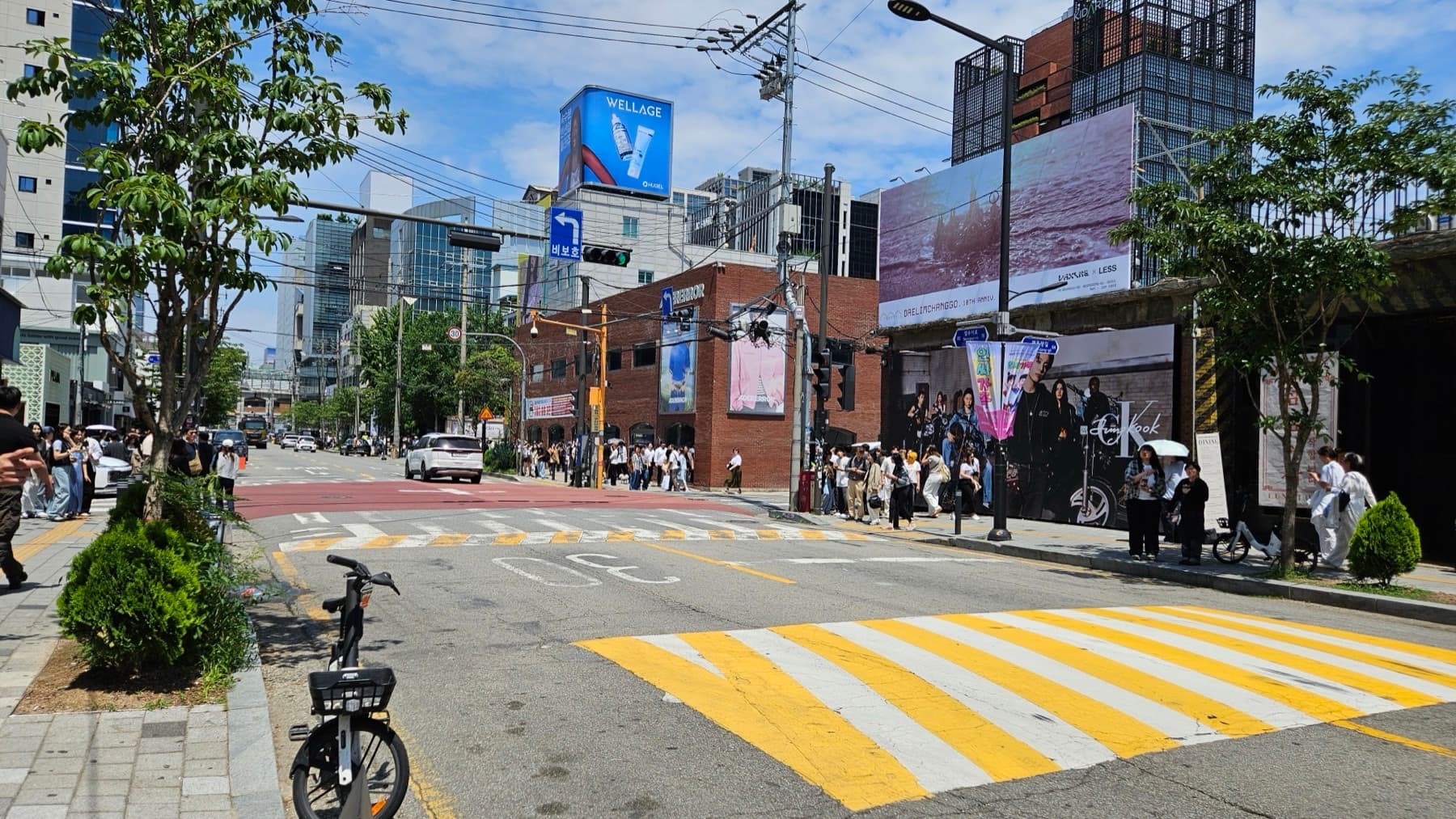
Photo by Aspere. Licensed under CC0. Seongsu street view, May 2026; resized and cropped for web.
Spotify’s Largest Seoul Pop-Up Confirms Seongsu’s New Role: The Neighborhood Where Culture Becomes Retail
Spotify House returns to Anderson C for four days in September. Around it, Seongsu’s cafés and warehouses already turn brand culture into foot traffic.
August 11, 2026
Spotify is coming back to Seongsu with a bigger house. From September 10 to 13, Spotify House Seoul fills Anderson C, a vintage-furniture gallery and café a short walk from Seongsu Station Exit 4. The company and Korean press are calling it the platform’s largest physical footprint in Korea yet. Three nights cover electronic and K-pop, indie rock, and hip-hop. A fourth day opens the building for installations and fan experiences. Food and brand partners for that daytime program are still under wraps.
The lineup will get the headlines. For anyone planning to eat, the more useful story is the neighborhood. Seongsu’s cafés, bakeries, and converted warehouses already turn culture into foot traffic. Spotify is booking the same streets that beauty, fashion, and K-pop pop-ups pack every weekend.
Anderson C is already a café and furniture gallery, not an empty shell rented for four days. A street-facing café shares the building with curated vintage interiors, and a drink has long doubled as a ticket into the rooms upstairs. That dual identity fits how Spotify has staged Seoul listening so far. Last November’s Anderson C run included a Daylist Café pouring limited drinks and desserts as playlist moods shifted, plus snack and cocktail stations tied to social listening features. Exact 2026 beverage partners are not public yet. Inside the pop-up, music becomes something you sip and photograph. Outside, the district’s permanent cafés catch the overflow.
Seongsu earned that role over a decade. East of the Han, the neighborhood filled with low-rise shoe, leather, and light-industry workshops, then emptied as manufacturing moved. Mid-2010s creatives kept the brick and steel and opened coffee rooms and galleries instead. Travel writing still calls it Seoul’s Brooklyn. The nickname is soft, but the brick-and-steel reuse is real. What feels newer is the pop-up pressure. Short-term brand leases treat busy corridors like Yeonmujang-gil as stage sets, and local reporting describes weekend crowds there as critically overcrowded. Station traffic has climbed sharply since 2021. Landlords who can charge day rates for activations have less reason to keep long-term independent tenants. Café terraces still line the curb. The rent math underneath them is harder.
If you are going for Spotify House, that tension shapes the meal around it. Start at Seongsu Station on Line 2. Anderson C sits on Seongsuil-ro 6-gil, close enough that concert evenings will thicken the walk from Exit 4. The neighborhood still runs on specialty coffee and bakery more than one banquet reservation.
Café Onion Seongsu, a few minutes toward Achasan-ro 9-gil, is the industrial bakery-café that put powdered-sugar pandoro and warehouse light on international Seongsu itineraries. Weekday mornings are quieter than weekend afternoons. Daelim Changgo, the red-brick former rice mill that helped invent the warehouse café-gallery format, still serves coffee and food closer to Seongsui-ro, with exhibitions rotating through the same shell. Between those poles, Yeonmujang-gil and the side streets fill with newer concept cafés and short-run brand rooms. On an ordinary Saturday they catch spillover. When a global activation lands, the same sidewalks can crush their doors.
Independent rooms do not automatically win when Spotify arrives. Some will sell every table. Others will watch queues block the entrance while visitors chase the house with the green branding. Residents’ safety worries and rent reporting point the same way: Seongsu’s food culture now shares the street with crowd management. Plan for lines, heat, and last trains. Treat the four-day house as a temporary upstairs neighbor, not the whole district.
When the installations come down on September 13, the cafés stay. Converted industrial space is what Seongsu sells now: a place where a playlist, a skincare launch, or a streaming platform can become a room you walk into, while coffee and bread keep the neighborhood going between campaigns. Spotify’s biggest Seoul pop-up yet is joining a pattern that was already here.