
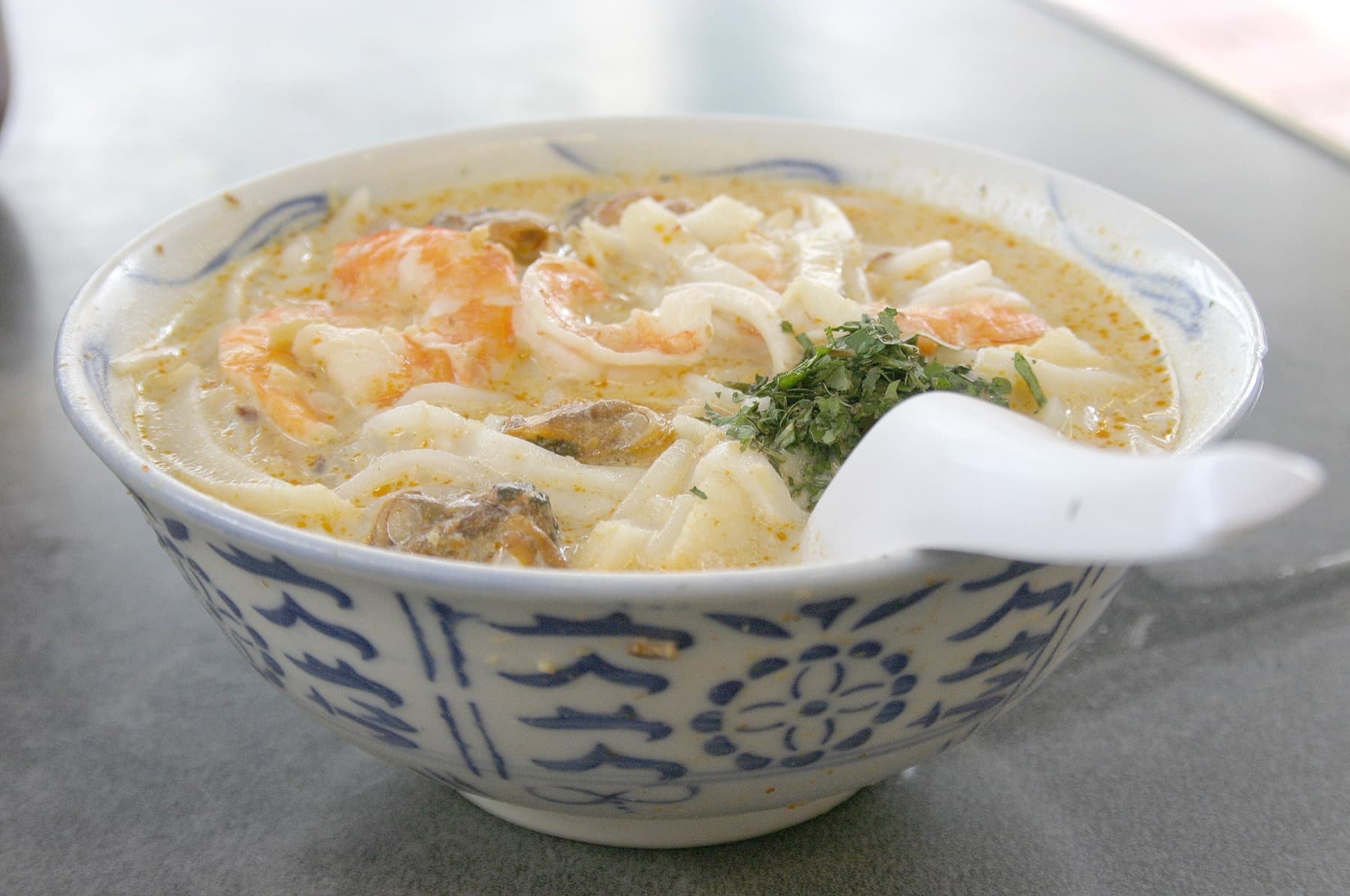
Photo by Meutia Chaerani / Indradi Soemardjan. Licensed under CC BY 2.5. Resized for web
Singapore’s Michelin Bib List Grows to 97, With Mee Siam and Laksa Among the New Names
The 10th-edition Bib Gourmand picks high-quality food at good value, not stars. Ten newcomers joined on July 28; the full guide lands August 4.
July 28, 2026
Michelin Guide Singapore released its 2026 Bib Gourmand selection on July 28: ninety-seven places, ten of them new, in the guide’s tenth year covering the city. The full selection, including stars, arrives on August 4. If you only follow the star ceremony, you miss the half of the guide that matches how Singapore actually feeds people on an ordinary Tuesday.
A Bib Gourmand is not a Michelin star. It is the guide’s value badge, named for Bibendum, the puffy Michelin Man mascot. Inspectors look for high-quality cooking at a price that still feels like a good deal by local standards. In Singapore coverage, that frame often sits around S$45 or less for a satisfying meal. The rooms range from hawker stalls to casual restaurants. The shared idea is dinner you can afford without treating the meal as an event.
A bigger value list on a tenth anniversary
Last year’s list held eighty-nine names. This year’s ninety-seven is growth, not a rewrite. Seventeen stalls and restaurants have kept the Bib through every Singapore edition so far, including Tian Tian Hainanese Chicken Rice at Maxwell Food Centre, Song Fa Bak Kut Teh on New Bridge Road, A Noodle Story, and Bismillah Biryani in Little India. Those long holds matter more than the headline count. They are the places the inspectors keep finding worth the money after a decade of tasting.
Two names fell off: Eminent Frog Porridge & Seafood in Geylang, and Soon Huat, a prawn-noodle stall at North Bridge Road Market & Food Centre. Drop-offs are normal guide housekeeping. They are not a verdict on Singapore’s appetite for porridge or prawn noodles.
What the new names are actually pointing at
The useful way to read the ten newcomers is as a short itinerary, not a scoreboard. Jia Xiang, at Redhill Food Centre, has spent decades on mee siam and lontong from a family recipe line that local digests still treat as the reason to make the trip. Mee siam is the sour-sweet vermicelli bowl with sambal and egg that rarely headlines tourist lists the way chicken rice does. Seeing it on the Bib list is a quiet reminder that Singapore’s value map still runs through neighborhood markets, not only the stalls with the longest photo lines.
King of Laksa joins for a coconut chili broth that coverage describes as smoother and lighter than the thickest Katong-style bowls, with low-carb noodle options for diners who want the spice without the usual rice-noodle weight. Laksa is already one of Singapore’s most exported comfort dishes. A Bib here is less about inventing a category than about inspectors finding a bowl that still earns the price of admission.
Tian Nan Xing Minced Pork Noodle is the heritage deep cut: a bak chor mee stall with roughly a century of reported history, now in third- and fourth-generation hands. Bak chor mee is minced-pork noodles in the Teochew-Hokkien hawker register, vinegar and chili and springy noodles, the kind of lunch that disappears in fifteen minutes if you sit down hungry. A century-old stall earning a first Bib in year ten of the Singapore guide is a useful signal. The inspectors are still catching up with places locals already treat as fixed points.
Hup Kee Fried Oyster Omelette at Newton Food Centre brings another long street-stall lineage into the fold, the crisp-edged omelette with briny oysters that night-market visitors already chase. Seng Kee Black Chicken Herbal Soup has about sixty years of double-boiled herbal broth behind it, the restorative bowl Singaporeans reach for when they want something quieter than chili heat. Xiangyee sits outside the hawker script: a Hunan restaurant that sources mountain ingredients and smoked cured meats from its home province. The Bib list is not only a greatest-hits of local classics. It also makes room for regional Chinese cooking that still clears the value bar.
The remaining newcomers fill out the same map. Boon Keng Road Fish Head Bee Hoon is the milky fish-head noodle bowl; Rajarani Thosai is known for fresh thosai and a long list of fillings; Xiu Ji Ikan Bilis Yong Tau Fu stuffs tofu and vegetables in the ikan bilis (dried anchovy) gravy style; Yi Pin Wei Braised Duck Kway Chap serves the braised duck and offal plates that run on rice sheets and dark sauce. You do not need all ten on one trip. You need the pattern. Inspectors are still finding quality in fish-head noodles, Indian flatbreads, stuffed tofu, and braised duck as readily as in the famous chicken-rice queues.
What to do with the list before August 4
Treat the Bib list as a map of places where the cooking is already good enough to travel for, and the bill still looks like lunch. Stars will dominate the conversation next week. They should. Fine dining is part of Singapore’s food story. The Bib page is the other half: the guide admitting, year after year, that some of the city’s best eating still happens under a ceiling fan with a plastic tray.
If you are planning a visit, pair a few of these names with a hawker-centre strategy rather than trying to tick all ninety-seven. Maxwell, Redhill, Newton, and the market stalls on the new list will teach you more about Singapore eating than a single tasting menu can. The August 4 star announcement will tell you where the white tablecloths landed. This week’s list already told you where the city still eats for value.