
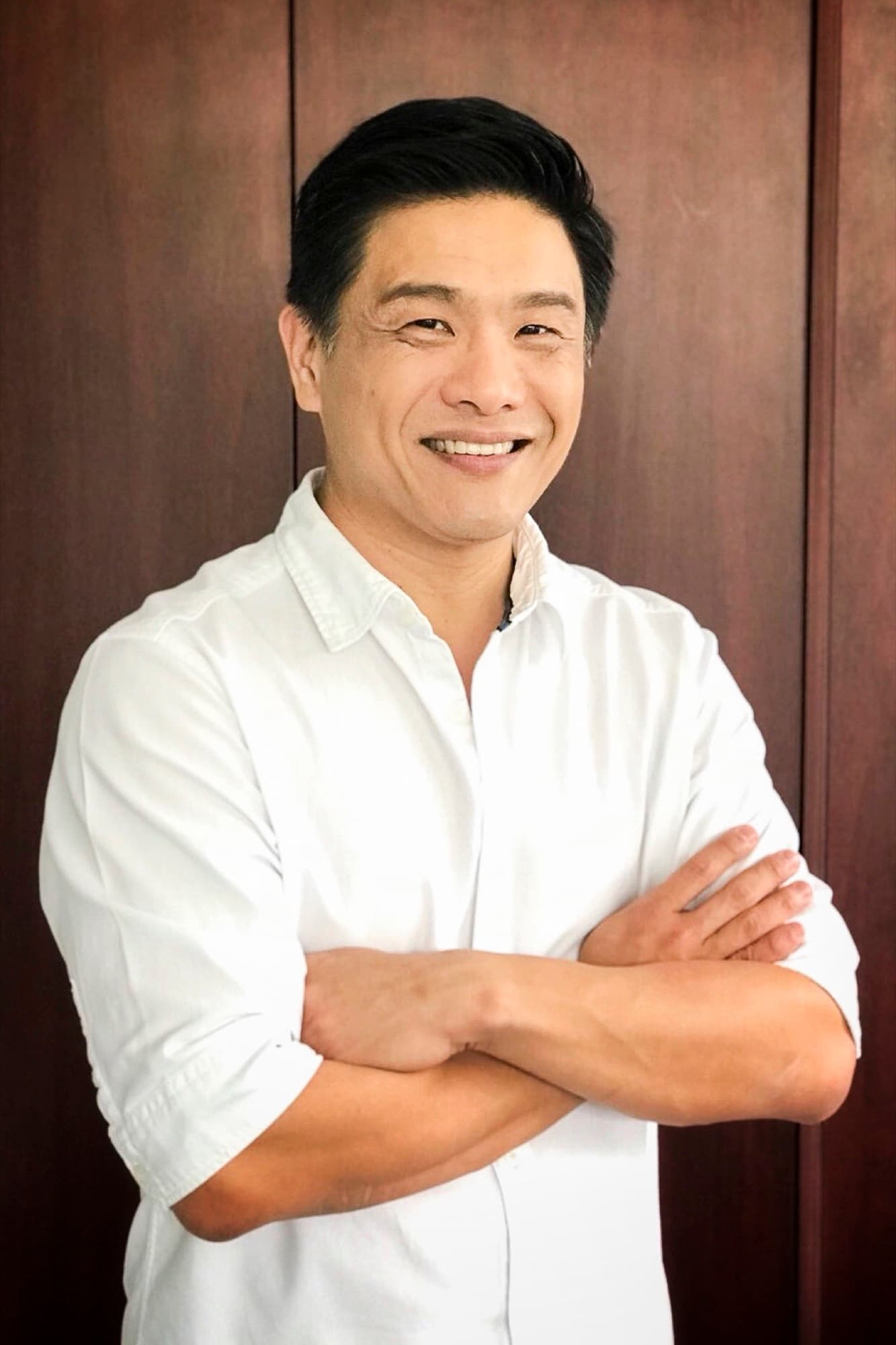
Photo by ieatishootipost. Licensed under Editorial use. Courtesy portrait from the blog’s about page; resized for web.
How to Hunt Singapore Hawkers Like a Local Food Blogger
Dr Leslie Tay spent years photographing stalls and arguing for hawker heritage. For visitors, his blog is a model for how to look, not only where to queue.
July 26, 2026
A family sits down at a hawker centre. Someone has already pulled out a camera. The plates wait a minute longer than hunger wants, because the photo matters as much as the first bite.
That habit belongs to Singapore’s long food-blogging era, and few names carry it as steadily as Dr Leslie Tay. By day he is a family physician at a clinic in Tampines. For more than fifteen years he has also run ieatishootipost, the blog whose name is a whole method: eat, shoot, post. For a visitor planning Maxwell or Old Airport Road, his work is less a second itinerary than a way of looking. A centre-by-centre plan tells you how to move through a room. Tay’s archive shows why the room is worth moving through carefully.
A doctor who treats stalls like patients with stories
Tay’s about page and interviews describe the same loop. He hunts stalls across the island, photographs the food in natural light without studio props, and writes beyond a score. Origins, ingredients, technique, and the people frying the noodles sit beside the recommendation. In early interviews he said he would rather skip a weak stall than turn a bad meal into a spectacle. That choice still reads as traveler advice. A viral takedown can empty a counter. A careful silence, or a soft note, leaves the kitchen room to improve.
The blog won Best Food Blog at the inaugural Nuffnang Asia Pacific Blog Awards in 2009. The books followed. *The End of Char Kway Teow and Other Hawker Mysteries* (2010) mixed stall guides with the worry that labor-heavy dishes were slipping away; it became a Straits Times bestseller and took Singapore’s Best Food Literature nod at the Gourmand World Cookbook Awards in 2011. *Only the Best* gathered years of ieat hunts into a hawker guide. He later co-authored an SG50 heritage cookbook. Television and live judging, including an inaugural World Gourmet Summit hawker series in 2022, kept the same public face: a local who eats for documentation, not only for content.
Heritage anxiety with a committee seat
Tay’s char kway teow title was never only branding. When Singapore convened the Hawker Centre 3.0 Committee in the mid-2010s to think about aging hawkers, training, and centres as social spaces, he was among the members. Contemporary coverage quoted him arguing for ways to recognize heritage hawkers and support labor-intensive, low-margin dishes that are easy to abandon and hard to replace. That is the same anxiety his readers already knew from the blog: the queue is not the whole culture. The cook who still makes the difficult plate is.
UNESCO inscribed Singapore’s hawker culture in 2020. The listing celebrated everyday multicultural eating at shared tables. Tay’s older writing sits underneath that moment. He had been telling locals and visitors that the format needed attention before the plaque arrived. For a traveler, the useful translation is simple. Do not treat a Bib sticker or a blog headline as a finish line. Treat it as a prompt to notice who is still cooking the hard stuff two stalls down.
How to borrow the method on a short trip
Habits that travel well
- Walk the centre before you order. Tay’s maps and categories reward comparison. Your eyes can do the first pass in five minutes.
- Learn one dish’s story. Chicken rice, bak chor mee, or chendol tastes better when you know what the stall is trying to do.
- Photograph if you must, then eat while it is hot. The blog’s street style is about clarity, not a studio shoot that kills the meal.
- Prefer help over humiliation. If a plate is weak, move on. Save your loud opinions for kitchens that asked for a review culture war.
- Use a local blog as a compass, not a checklist. Stall names and hours move. Cross-check, then leave room for a neighbor’s tip.
- Pair attention with a day plan. One centre per meal still beats a scavenger hunt across every famous queue on your phone.
Since around 2020 his wife, Lisa, who posts as FeiEats, has joined more of the eating, filming, and producing. The project remains a household beat as much as a brand. That domestic scale is part of why the archive feels usable to visitors. It was built for Singaporeans deciding where to take relatives, then grew into a public reference.
To start, we recommend reading a few of Tay’s hawker write-ups the night before you fly, then choosing one centre per meal once you land. Let the blog teach you how to look. Let a simple day plan keep the trip from collapsing into one line. The best compliment you can pay either is a tray returned, a second stall tried, and a cook who still has customers after the tourists leave.