
Singapore: Hawker Centre Strategy
Which centres to prioritize, how to chope a table, and how to eat so one famous queue does not eat the whole trip.
Updated July 25, 2026
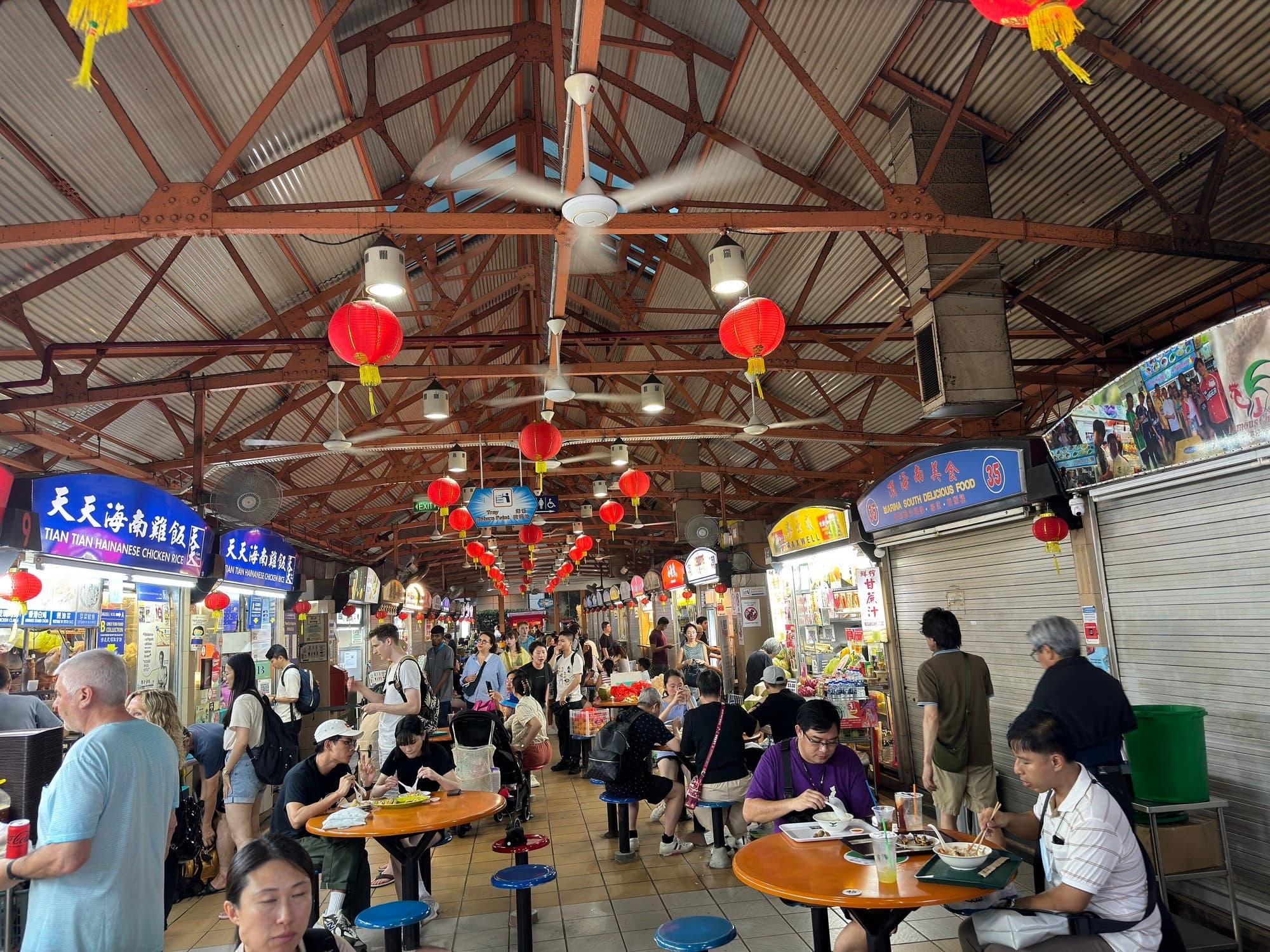
Photo by LN9267. Licensed under CC BY-SA 4.0. Resized for web
Singapore’s hawker centres are community dining rooms with a queue problem. The first famous stall you recognize will take your morning. Buy only that plate and the day collapses into one line and one dish.
Treat the city like a format map, not a trophy hunt. Pick one centre per meal, walk a loop before you commit, share everything, and leave stomach for a second stall that is not on your phone’s first search result. UNESCO inscribed Singapore’s hawker culture in 2020 for exactly that mix of food, shared tables, and everyday multicultural eating. The skill for a visitor is the same skill locals already practice: choose a room, then eat inside it.
How to work a hawker centre
Chope a table first if the room is packed. A tissue packet, umbrella, or small bag on a seat is the ordinary signal that someone is in a queue and coming back. It is custom, not law, and it works best when you keep the hold short.
Then walk. Spot duplicate concepts, notice which lines are office workers versus tour groups, and decide on two dishes before anyone orders. One person holds the table; the others queue. Drinks often come from a separate stall. Some counters hand you a buzzer; others expect you to wait. Cash in small notes still helps. PayNow QR codes are common. Cards remain rare at individual stalls.
Share plates. A typical dish runs a few Singapore dollars, rich enough that three personal mains will flatten you. Alternate heavy and bright: chicken rice or fried noodles, then a clear soup or cut fruit, then a second savory or a chendol. When you finish, return trays and crockery to the tray station and clear table litter. That rule has been mandatory at hawker centres since 2021.
First-meal rules
- One centre per meal on a first trip
- Chope briefly, then walk a loop before ordering
- Cash or PayNow; small notes help
- Share two or three dishes, not three solo mains
- Return trays and clear the table
Which centre for which meal
Maxwell Food Centre
Maxwell is the cleanest first lesson: Chinatown-adjacent, open-sided, and easy to read once you clear the entrance. Guides and Michelin hawker coverage keep returning to Tian Tian Hainanese Chicken Rice, the Bib Gourmand stall Anthony Bourdain helped make famous, with Ah Tai as the neighboring chicken-rice counter people use when Tian Tian’s line is brutal. Come early if the chicken rice line is your mission. Then add something else from a shorter queue, oyster cake or porridge in the morning windows many visitors miss, so the centre is not only one plate. Tanjong Pagar and Chinatown MRT both work for the walk in.
Chinatown Complex Food Centre
Chinatown Complex is scale. The wet market sits below; the food floor upstairs holds well over two hundred stalls, which means more variety and more chance of getting lost. Hong Kong Soya Sauce Chicken Rice and Noodle, often still called Hawker Chan, became the world’s first Michelin-starred hawker stall here in 2016 and has since been listed as Bib Gourmand in later guide reporting. Lian He Ben Ji claypot rice and other Selected stalls show up in Michelin hawker roundups, but the lists move yearly. Use Maxwell for orientation, then Chinatown Complex when you want density and are ready to navigate.
Old Airport Road Food Centre
Old Airport Road is the east-side room serious local guides keep recommending when someone asks for overall stall quality rather than tourist convenience. Walk about ten minutes from Dakota MRT to 51 Old Airport Road. Daytime stalls lean Hokkien mee, char kway teow, rojak, and the usual Chinese noodle and rice canon. Nam Sing Hokkien Fried Mee at #01-32 is a frequently documented line with a drier, wok-forward style. Evenings shift toward BBQ seafood, satay, and cooked-to-order plates. Come for lunch on a weekday if you can, or early evening, and expect less English hand-holding than Maxwell.
Lau Pa Sat and Satay Street
Lau Pa Sat is the CBD landmark: the former Telok Ayer Market, a Victorian cast-iron National Monument rebuilt on reclaimed land in 1894, dismantled for MRT works, and reassembled as a festival market renamed Lau Pa Sat in 1989. The indoor stalls feed office lunches under the octagonal roof. The evening show is Satay Street on Boon Tat Street, when the road closes and charcoal grills take over. Official hours run later into the night, with weekend carts starting earlier in the afternoon. Come for atmosphere and satay sticks with peanut sauce and ketupat. Treat it as a night format, not your only serious food research day.
Optional stretch meals
East Coast Lagoon Food Village puts satay and BBQ seafood beside East Coast Park. Pair it with a park afternoon; reach it by Grab or bus from Bedok rather than assuming a simple MRT exit. Tekka Centre in Little India is the stretch for roti prata, briyani, and Indian Muslim breakfast energy next to the wet market. Use either when you already have Maxwell or Old Airport Road under your belt.
A simple two- or three-day plan
Day 1 lunch: Maxwell, with share discipline and a second stall after chicken rice. Day 1 evening: Lau Pa Sat Satay Street if you want smoke and CBD lights, or Chinatown Complex if you still have walking legs. Day 2: Old Airport Road for lunch, then leave the evening free for a neighborhood walk or a booked dinner elsewhere. Day 3, optional: East Coast Lagoon after the park, or Tekka for a different breakfast map.
Do not stack Maxwell and Chinatown Complex as two full meals in the same short window on a first trip. The point of hawker culture is daily eating at shared tables, not a scavenger hunt across every Bib sticker. Stall recognition from Michelin and food blogs can help you spot a name. The lists change, so treat them as signals and check the current guide if a recognition matters to you.
The skill is leaving a centre still curious, with one stall you would return for. Follow the second line you saved room for, return the tray, and ride the MRT on to the next meal instead of declaring the city finished after one famous chicken rice.