
How to Read a Bag of New-Crop Rice
Shinmai and haepssal mean this year’s harvest. On Japanese white rice, the word is allowed only if the grain was polished and packed by December 31. Read the crop year and the milling date, then cook the first pot on the line in the cooker.
Updated October 13, 2026
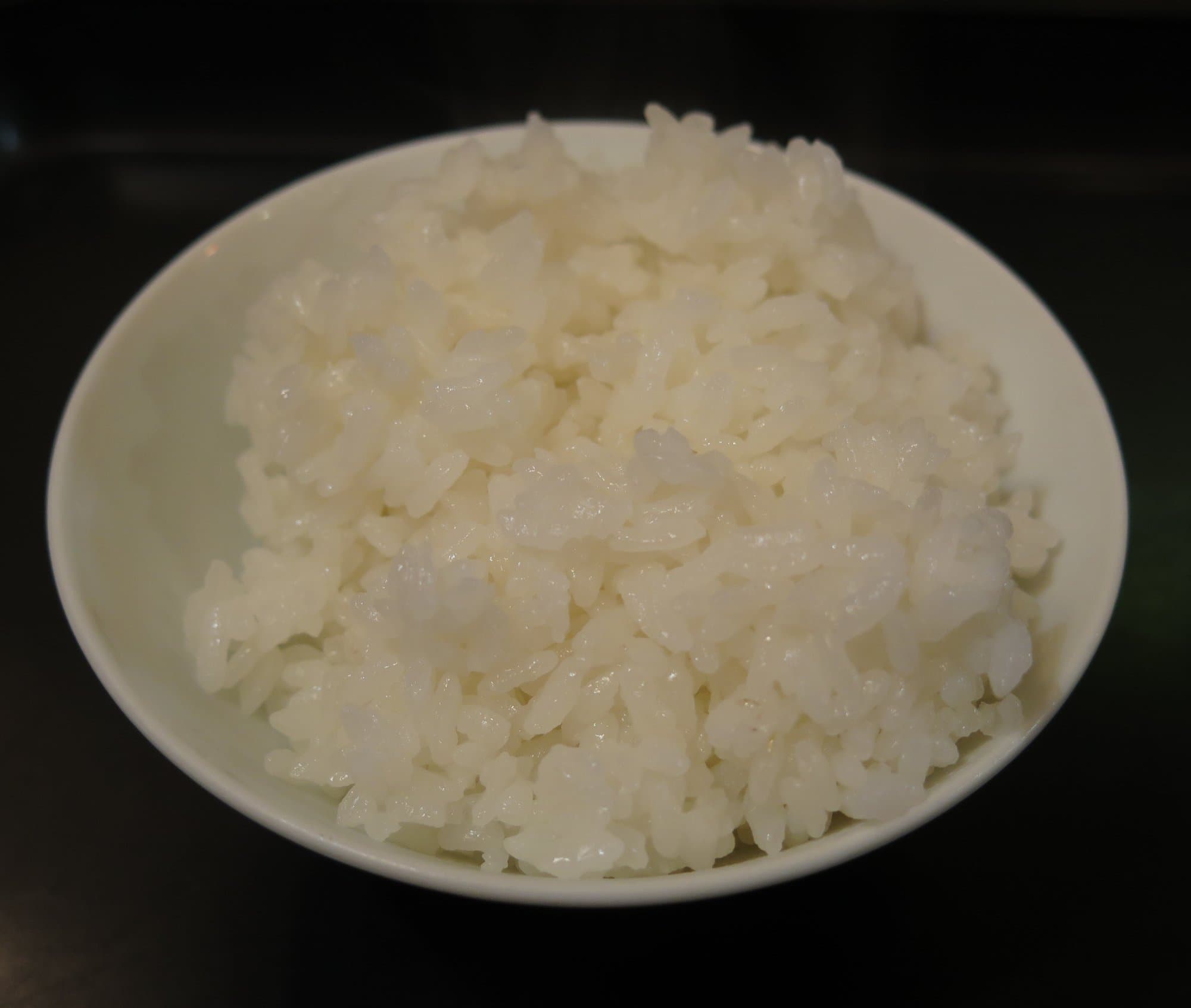
Photo by Douglas Perkins. Licensed under CC0 1.0. Bowl of cooked white rice. Resized for web.
In October, one bag in the rice aisle says new crop in large type. The bag beside it only prints a year.
Both can be this harvest. In Japan the large type has a packing deadline. The year is what you can still use in January.
What the word is allowed to mean
Shinmai, written 新米, is the Japanese word for that large type. Japan’s food labeling rules mostly keep it off the package. Brown rice may say shinmai when it was packed by December 31 of the year it was grown. Milled rice may say it when it was polished and packed by that same day. A second crop from the same year can qualify too, if it makes the deadline. A bag packed in January cannot say shinmai, including rice that was grown the autumn before. A bag packed in time may keep the word into the new year. The sack can still say 令和8年産. That is the 2026 harvest, Reiwa 8.
Korea’s word is haepssal, 햅쌀, rice harvested this year. The main harvest reaches shops in October. Earlier rice was already out for Chuseok, Korea’s harvest holiday, on September 25.
The National Agricultural Products Quality Management Service, Korea’s farm-product inspection agency, is checking labels from September 28 through November 30. The sweep looks for old rice sold as new, and for old and new grain blended in one bag. Inspectors check the production year, the milling date, the origin, and the variety. A sample they question can go to a DNA test. On the bag, 생산연도 is the year it was grown. 도정연월일 is the date it was milled. Rice milled last week from a 2025 crop is new from the mill and still last year’s grain.
The bag in a U.S. store
Those rules govern bags sold in Japan and Korea. A sack packed for the U.S. market can be vaguer. California grows the medium-grain rice that fills a lot of these shelves. The California Rice Commission calls Calrose its main rice, a soft medium grain for bowls and for packages that say sushi rice. Sushi rice on an American bag names a plan for the pot. When a bag is vague, Calrose is the variety name the commission uses for that grain. An imported Japanese sack, still in its original printing, should show the crop year, the variety, and a milling date, 精米年月日. A Korean sack should show the production year and the milling date.
Jasmine and basmati are long grains, with a different smell and a looser pot. The water notes below are for the short and medium grain.
Once the year is settled, read the variety. In the Japanese agriculture ministry’s variety tables, Koshihikari covers about a third of the country’s table rice. On a Japanese sack, rice from one place, one variety, and one year is marked 単一原料米. A blend has to say so. California Koshihikari is the same variety, grown somewhere else. Niigata is the prefecture the name is famous for, and other prefectures grow it too. If the place matters, the bag has to say the place.
The first pot
The old kitchen habit says new rice is soft and takes water quickly, so the pot should get less. Japan’s agriculture ministry says that habit matters less than it used to. Rice is dried and held near 15 to 16 percent moisture through the year.
The first pot can be the ordinary one. Use the cup that came with the cooker, and level it. In Japan that cup is one go, 180 milliliters, about 150 grams of ordinary milled rice. No-wash rice settles a little heavier, about 160 grams in the same cup, and some pots print a separate line for it. A 200 milliliter kitchen cup is a different measure. Using it against the cooker line is an easy way to cook a hard pot. Rinse ordinary rice in a few changes of water. A hard scrub breaks more grains. If the bag says musenmai, 無洗米, skip the rinse. The mill already removed the loose bran, and a wash changes the water you measured. Many electric cookers soak during the cycle. Read the manual before you add another long soak.
If that pot eats soft, take a spoonful or two of water off the next one. Tiger, the cooker company, describes that same nudge as one or two tablespoons under the line, and says to leave the line alone when the cooker has a shinmai setting. The first bowl tells you whether this sack needs the change.
On the bag, look for
- The crop year, including 令和8年産 or 2026년산 for this harvest
- The milling date, separate from the year it was grown
- The variety, such as Koshihikari or Calrose
- Whether the sack is one variety or a blend
- A no-wash note, 無洗米, so you know whether to rinse
Where the bag sits
Buy the bag you will finish. Milled rice fades in warmth and light. Keep it in an airtight jar, somewhere cool and dark.
Cook one pot plain before it becomes fried rice. A pickle or an egg is enough beside it. Then you know what this sack tastes like.