
Sesame Oil, Explained
The amber finishing oil East Asian recipes mean when they say sesame oil, and why it is not your stir-fry fat.
Updated July 27, 2026
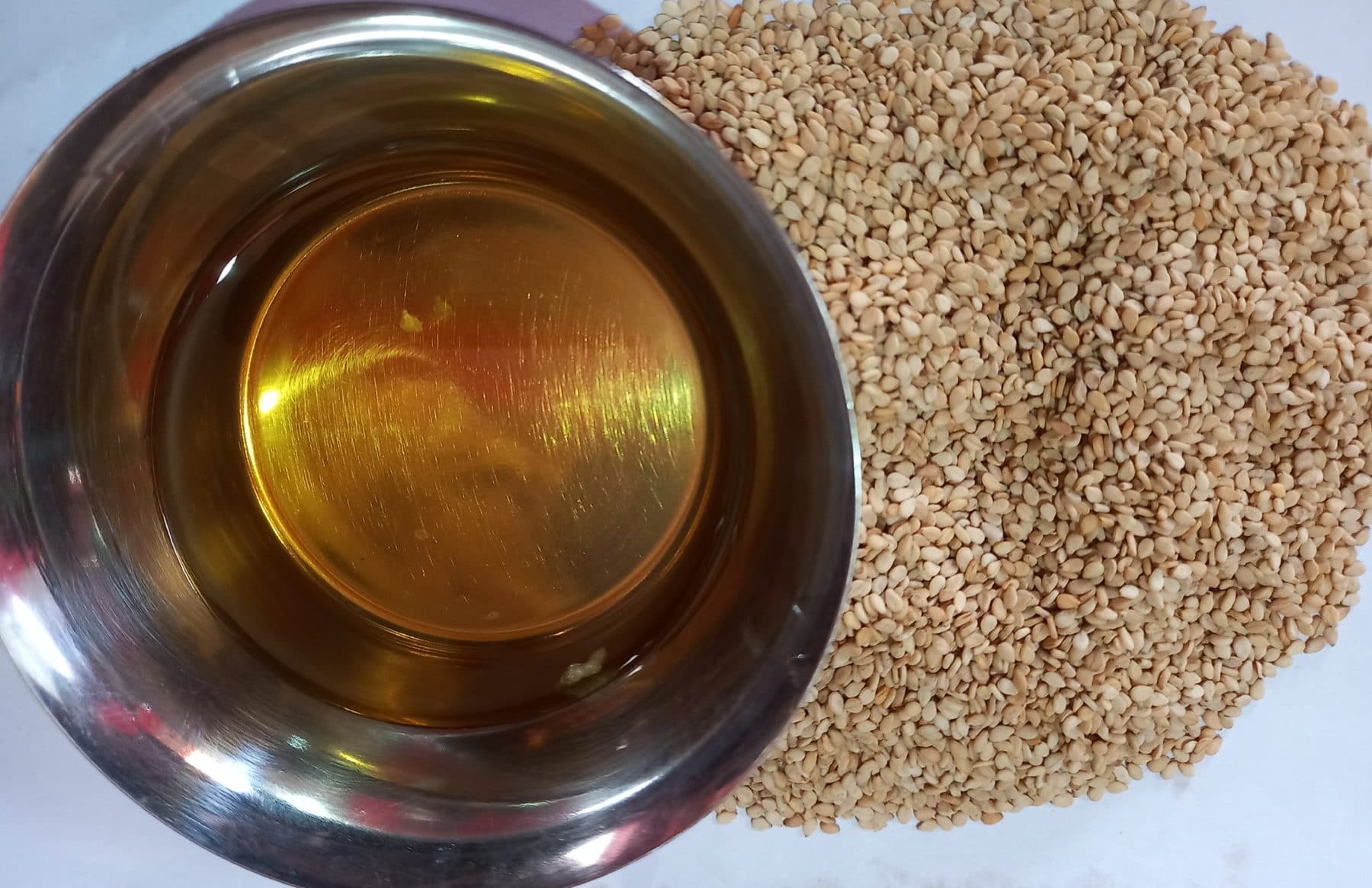
Photo by Dr. Satish Upalkar. Licensed under CC BY-SA 4.0. Resized for web
A cold cucumber salad needs one more thing after the vinegar and soy. Someone tips in a teaspoon of dark amber oil. The room smells roasted and nutty before the first bite.
That bottle is toasted sesame oil. When Chinese, Japanese, or Korean recipes simply say sesame oil, this is usually what they mean: a fragrant finishing oil pressed from roasted sesame seeds, not the pale oil next to the vegetable oils, and not a soybean blend that only whispers sesame. It is as ordinary on an East Asian pantry shelf as soy sauce once you know which color you are holding.
What it is
Toasted sesame oil starts with sesame seeds (Sesamum indicum) that are roasted, then pressed. Roasting is the whole point. Heat builds the nutty, almost popcorn-like aroma cooks want, and it turns the oil amber to reddish brown. Mandarin labels may say 芝麻油, 香油 (“fragrant oil”), or 麻油. Japanese grocery language usually means ごま油 (goma abura) as the toasted bottle. Korean kitchens reach for 참기름 (chamgireum).
English shelves use toasted, roasted, dark, or Asian sesame oil. The useful test is still sensory: deep color and a strong roast smell when you open the cap. A pale, nearly odorless bottle is a different product.
Toasted vs light
Toasted sesame oil
This is the seasoning oil. Use it in small amounts in dressings, marinades, dumpling dips, namul, noodle sauces, and as a last drizzle on soups or stir-fries. It is potent. A half teaspoon can finish a pan; a tablespoon can take over.
Light or untoasted sesame oil
Pressed from raw or lightly processed seeds, this oil is pale and mild, with a higher practical smoke point when refined. Some kitchens use it like other cooking fats. It will not give you the toasted perfume a recipe is counting on. The two bottles are not interchangeable.
What else is on the shelf
Blends and “sesame flavored” oil
Some inexpensive bottles mix a little toasted sesame oil into soybean or other oils. They can smell faintly right and taste thin. Prefer labels that list sesame seed oil alone, or say 100% sesame / pure sesame. If soybean oil is the first ingredient, treat the bottle as a flavored cooking oil, not as the finishing bottle this guide is about.
Black sesame oil
Oil from black sesame seeds, especially familiar in Taiwanese cooking, runs darker and more intense. It shows up in sesame-oil chicken and other warming, ginger-forward dishes where the oil is part of the cooking fat as well as the aroma. Useful as a second bottle if you cook those dishes often. For most dumpling dips and cold salads, the ordinary toasted amber oil is the first buy.
How to use it
Reach for toasted sesame oil when you want to…
- Dress cold cucumbers, tofu, greens, or noodles that need roast nuttiness
- Round a dumpling or hot-pot dip after soy and vinegar
- Finish bibimbap, namul, or a bowl of ramen with a few drops
- Add a small spoon to a marinade or meat filling for aroma
- Drizzle over a stir-fry after the pan comes off high heat
Measure more carefully than you think you need to. The oil is a perfume, not a frying medium. In Chinese cold dishes it often sits with soy, vinegar, garlic, or chili oil. In Korean cooking it completes vegetable banchan and marinades. In Japanese cooking it finishes dressings and many home bowls the same way a good olive oil finishes a salad: late, and with restraint.
What to buy and how to keep it
To start, we recommend one small-to-medium bottle of pure toasted sesame oil with sesame as the only oil on the label. Japanese, Chinese, Korean, and Taiwanese producers all make good everyday bottles; buy for aroma and a short ingredient list rather than packaging. A large metal can makes sense only if you cook with it often enough to empty it while it still smells lively.
Store it sealed, cool, and dark, away from the stove. Refrigeration is optional if you use the bottle slowly; cold oil may look cloudy and will clear as it warms. When the smell turns sharp, crayon-like, or flat, replace it. Freshness matters more than collecting a wall of half-empty bottles.
If you are out and the recipe needs only a few drops, a little oil from a jar of Chinese sesame paste is a closer emergency swap than pale cooking oil. Tahini, usually made from raw seeds, is milder and less roasted. If sesame is off the table for allergy reasons, omit tiny amounts or use another nut oil knowing the dish will change.