
Chinese Black Vinegar, Explained
Zhenjiang (Chinkiang) vinegar is the first black vinegar most kitchens need, and it is not balsamic under another name.
Updated July 22, 2026
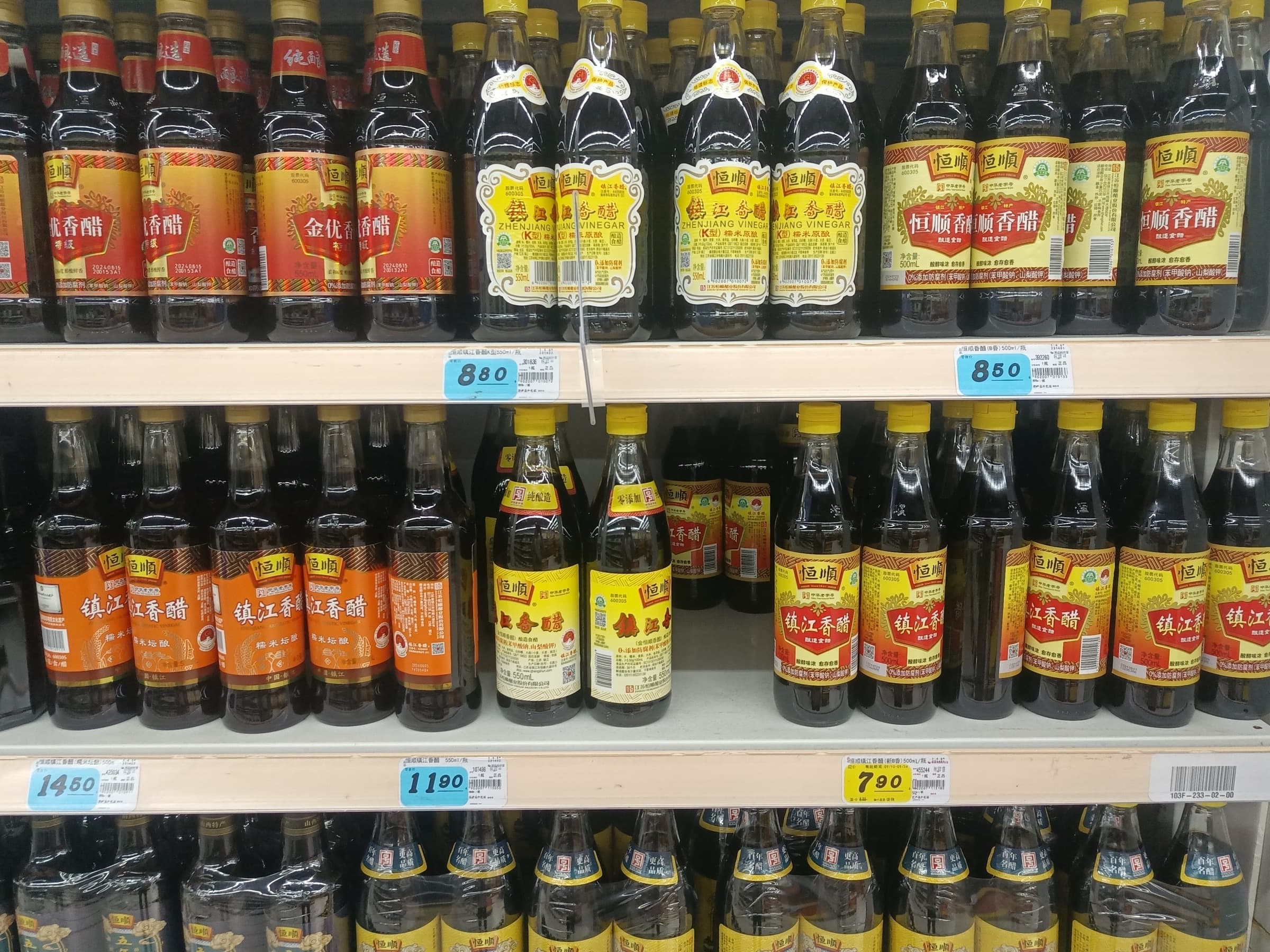
Photo by Fumikas Sagisavas. Licensed under CC0 1.0. Resized for web
A steamer basket lands. Someone pours a little dark vinegar into a saucer and adds thin ginger. The dumplings are ready before you have finished arguing about chili oil.
That dark pour is usually Chinese black vinegar, and in a lot of grocery stores outside China it means Zhenjiang vinegar, also labeled Chinkiang vinegar. It looks a bit like balsamic, but it is a grain vinegar with a malty, rounded sourness that belongs next to soy sauce on a Chinese pantry shelf.
What it is
Zhenjiang fragrant vinegar (镇江香醋, Zhènjiāng xiāngcù) is a brewed black vinegar from Zhenjiang, in Jiangsu province. Older English labels often keep the older romanization “Chinkiang.” The main raw material is glutinous sticky rice, joined by wheat bran, rice husk as a fermentation carrier, a traditional daqu starter, and scorched or fried rice that helps the color and toasted aroma.
In the mouth it is dark, fragrant, and gently sweet as well as sour. The European Union’s protected description calls the color a lustrous reddish brown with umber, and the taste sour but not astringent. Acidity on protected product is set around 5 to 6 grams of acetic acid per 100 ml. That is sharp enough to wake up a dipping dish, softer and more savory than distilled white vinegar.
How it is made
Traditional Zhenjiang vinegar uses solid-state fermentation rather than a simple liquid vinegar tank. Cooked rice is turned into an alcoholic mash, then mixed with bran and husk so acetic bacteria can work through a solid pile that is turned for days or weeks. The vinegar is leached out, boiled, and aged in ceramic containers. Protected specifications describe storage of more than 180 days for ordinary fragrant vinegar and more than a year for mature vinegar.
The brewing technique associated with Hengshun, Zhenjiang’s best-known producer family of firms, is listed among China’s national intangible cultural heritage items. Company histories date the Hengshun workshop to 1840. That heritage matters for understanding the method. It does not mean every yellow-capped bottle on a diaspora shelf is identical, or that one brand should be crowned from afar.
The vinegar family around it
Pale rice vinegar
Pale rice vinegar or white rice vinegar (米醋 / 白醋) is the clean acid in the Chinese pantry. Use it when you want brightness without dark color: pickles, some sweet-and-sour sauces, light cold dishes. It is not a full stand-in for black vinegar’s malt and aroma.
Zhenjiang black vinegar
This is the default aromatic black vinegar for most English-language Chinese recipes and for many eastern Chinese habits abroad. Dumpling dips, xiaolongbao saucers, cold noodles, and a long list of braises and dressings are written with this bottle in mind.
Shanxi mature vinegar
Shanxi mature vinegar (山西老陈醋) is a northern style based more on sorghum and other grains. It often tastes sharper and smokier. Many northern tables prefer it with noodles and dumplings. It is a wonderful second bottle once Zhenjiang is already in the kitchen. It is not the same first buy if your recipes say Chinkiang.
Nearby cousins
China’s “four famous vinegars” conversation also includes Sichuan Baoning vinegar and Fujian Yongchun red vinegar. Japanese kurozu is a brown-rice black vinegar with its own milder profile and different everyday uses. Keep those as later curiosities unless you cook those regional dishes often.
Why balsamic is the wrong shortcut
Balsamic vinegar is built on grape must. It reads fruity and jammy. Chinese black vinegar is built on grain fermentation. It reads malty and savory. They can look alike in a dark glass bottle, and that is where the confusion starts.
If a recipe for dumpling sauce or a Chinese braise calls for black vinegar and you pour balsamic, the dish drifts toward Italian sweetness. In a true pinch, cooks sometimes cut balsamic with pale rice vinegar and a pinch of salt to reduce the grape note. That is a rescue, not a pantry plan. Buy the grain vinegar when you can.
How to use it
Reach for Zhenjiang vinegar when you want to…
- Make a dumpling or xiaolongbao dip with ginger, and light soy if you like
- Dress cold vegetables, tofu, or noodles that need malty acidity
- Brighten a braise or sweet-sour style sauce without using distilled white vinegar
- Balance chili oil, sesame paste, or rich pork at the table
Start small. A spoon in a dipping dish goes further than you think, especially with ginger. In cooked sauces, add black vinegar where you want aroma and rounded sourness; use pale rice vinegar when you need sharper acid and a lighter color. Sediment in the bottle can be normal. Store it cool and dark with the cap closed. It keeps well.
What to buy first
To start, we recommend one bottle labeled Zhenjiang or Chinkiang fragrant vinegar with glutinous rice and wheat bran near the top of the ingredient list. Hengshun is the producer name you will see most often on those shelves, including many export bottles. Aged “mature” lines exist for cooks who want deeper roundness later. They are optional once you know the everyday bottle.
If you cook a lot of northern noodles, a Shanxi mature vinegar can be bottle two. If you pickle and make pale sweet-and-sour sauces, keep pale rice vinegar beside the black vinegar rather than asking one bottle to do both jobs.