
Shaoxing Wine, Explained
The amber Chinese rice wine most recipes mean when they say cooking wine, and how salted supermarket bottles differ from drinkable huangjiu.
Updated July 26, 2026
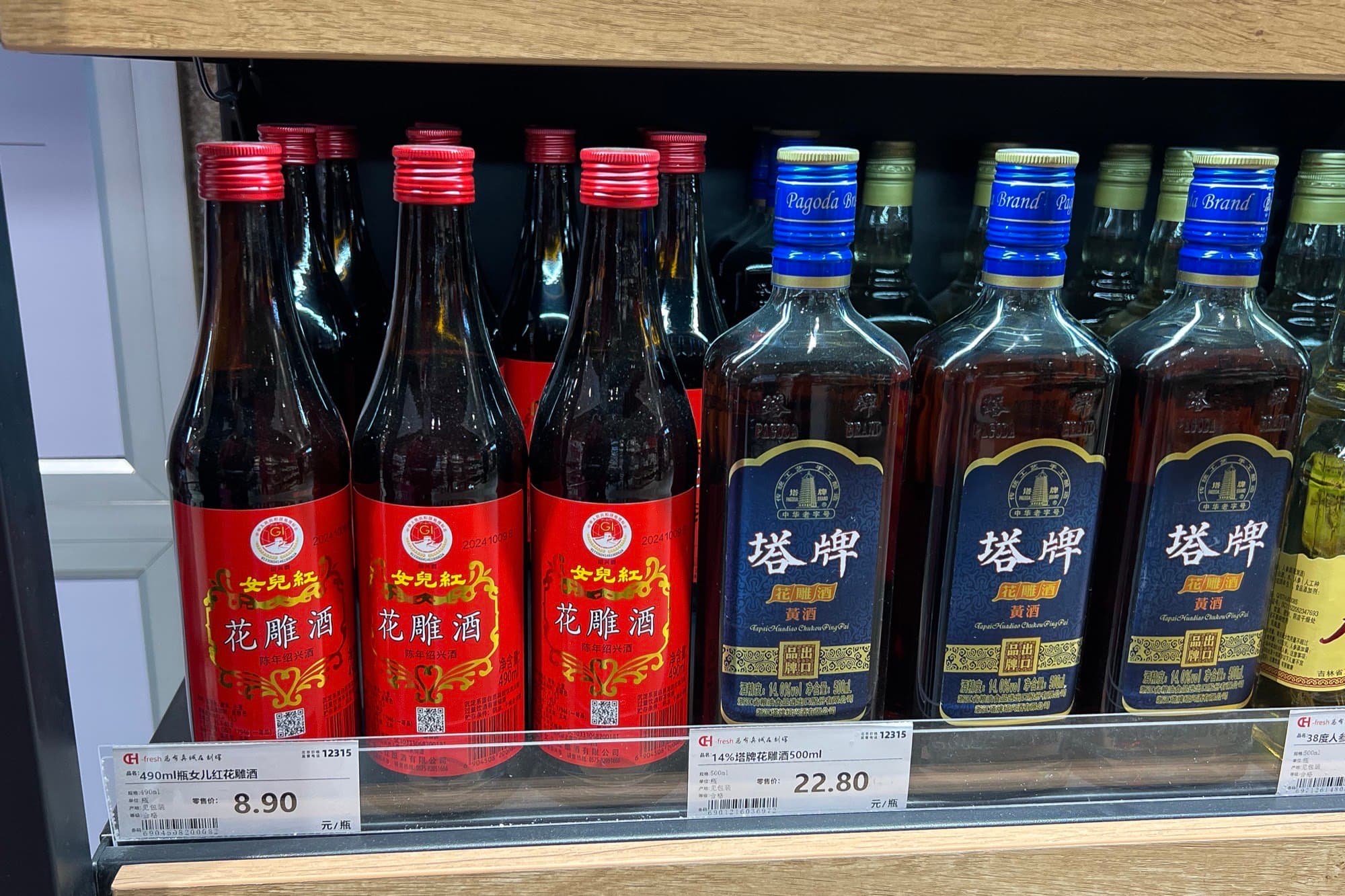
Photo by N509FZ. Licensed under CC BY-SA 4.0. Resized for web
A Chinese recipe asks for a spoon of Shaoxing wine. You are in a grocery aisle full of bottles that say cooking wine, rice wine, or mirin. They are not the same job.
Shaoxing wine is the amber rice wine most of those recipes mean. It is a yellow wine, or 黄酒 (huángjiǔ), from the Shaoxing area of Zhejiang, fermented from glutinous rice with a wheat-based starter. In the pan it adds warmth and depth, and it helps quiet the raw smell of meat and seafood. It is as ordinary in Chinese home cooking as soy sauce, once you know which bottle you are holding.
What it is
Shaoxing wine (绍兴酒 / 紹興酒) is fermented, not distilled. Labels often also say huadiao (花雕), a familiar style and jar tradition within the Shaoxing family. Bottles commonly sit around the mid-teens in alcohol by volume, with style and aging shifting the sweetness and body. The taste is nutty and lightly sweet, closer to a dry sherry than to clear Japanese sake.
The name is a place name. Shaoxing wine is a Chinese geographical indication product, and it was among the Chinese names protected when the China–EU geographical indications agreement took effect in 2021. Traditional Shaoxing brewing technique is also listed on China’s national intangible cultural heritage inventory. On a diaspora shelf, still read the label. Not every bottle that borrows the word is the same quality, and some cooking wines are only Shaoxing-style in spirit.
Salted cooking wine vs drinkable bottles
In many places outside China, the easy bottle in the sauce aisle is 料酒 (liàojiǔ), cooking wine. It is often a Shaoxing-style rice wine with salt added, commonly around one and a half to three percent, so it can be sold as a grocery condiment rather than as beverage alcohol. That bottle is what a lot of English-language Chinese recipes quietly assume. It works. You just need to season the rest of the dish a little more carefully, because the wine is already carrying salt.
Unsalted Shaoxing, the kind people drink warm from small cups, gives you cleaner control and a rounder aroma when the wine is meant to show, as in drunken chicken or a wine-forward marinade. Those bottles often live in a liquor store, an Asian wine shop, or the alcohol section, depending on local rules. If you cook Chinese food often, unsalted is worth hunting. If you are filling a first pantry, a Shaoxing-labeled cooking wine with a short ingredient list is still a real upgrade over skipping the wine entirely.
What it is not
Mirin
Mirin is a sweet Japanese rice seasoning. It can rescue a recipe in a pinch if you cut other sugar, but it pulls the dish toward Japanese sweetness. It is not a clean one-to-one swap for Shaoxing.
Sake
Sake is lighter and cleaner. A small splash can stand in when you need rice-wine aroma without Shaoxing’s deeper nuttiness. It will not give you the same braise perfume.
Grape wine and clear mijiu
Dry white grape wine is a distant backup for tiny amounts. Clear Chinese rice wine (米酒, mǐjiǔ) is closer than grape wine for many marinades. Neither replaces Shaoxing when a recipe builds a whole sauce around that amber note.
How to use it
Reach for Shaoxing wine when you want to…
- Marinate chicken, pork, beef, or seafood before a stir-fry or braise
- Add a spoon to a hot wok with ginger, scallion, or garlic so the dish smells finished rather than flat
- Build red-braised sauces and other soy-forward braises that need warmth behind the salt
- Make drunken-style cold dishes where the wine itself is part of the seasoning
Start with the amount the recipe gives, usually a teaspoon to a tablespoon or two for a weeknight pan. You are seasoning, not making a wine sauce, unless the dish says otherwise. Because traditional starters are wheat-based, Shaoxing is not a gluten-free ingredient; cooks who need to avoid wheat usually reach for dry sherry or another verified substitute instead.
What to buy first
To start, we recommend one bottle clearly labeled Shaoxing wine, Shaoxing huadiao, 绍兴酒, or 花雕酒, with rice and wheat near the top of the ingredient list. If the only bottle in reach lists salt, buy it and cook with a lighter hand on added salt. If you can find an unsalted drinking bottle, keep that for marinades and dishes where the wine shows, and use everyday cooking wine for routine stir-fries if you like.
If you cannot find Shaoxing at all, dry sherry is the usual substitute, ideally not the heavily salted “cooking sherry” sold beside the vinegar. Keep mirin for Japanese recipes. Once soy sauce, Shaoxing wine, and a bottle of Chinese black vinegar are on the shelf, a long stretch of Chinese weeknight cooking gets much easier.