
What Stalls a First Visit to 99 Ranch
Produce is often the first room. The cart gets stuck later, in front of the rice and the soy. Jasmine is for a fragrant pot. Medium grain is for a Taiwanese bowl, and short grain is for a Japanese or Korean one. Take one bottle of light soy, and a green you will cook this week.
Updated October 15, 2026
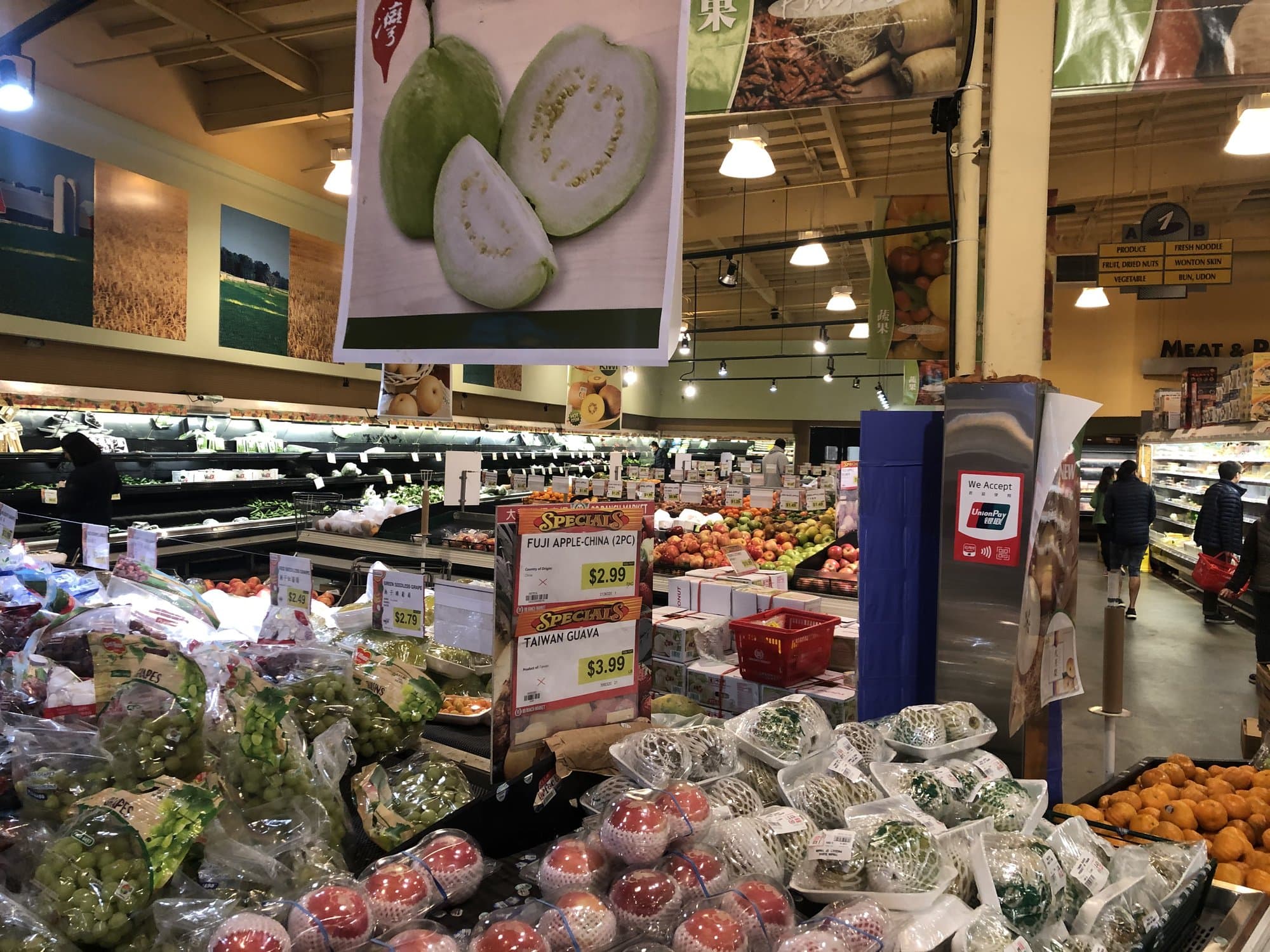
Photo by Fastily. Licensed under CC BY-SA 4.0. Produce department, 99 Ranch Market, Foster City, California, March 16, 2020. Resized for web.
The Foster City store opens on fruit and greens, under a sign that points at fresh noodles and the meat counter. Jersey City and Flushing open on produce too. The cart stalls later, in front of the rice, and again in front of the soy.
99 Ranch opened in 1984 in Westminster, California. Roger Chen had come from Taichung, Taiwan, and the first store sold food imported from Taiwan to Chinese shoppers in Southern California. The parent company is Tawa Supermarket Inc. In Chinese the company is 大華超級市場. His daughter Alice Chen has been chief executive since 2018, and his son Jonson is chairman. The company counts 66 stores in 11 states.
Chinese and Taiwanese cooking is what the shelves were stocked for. Korean, Japanese, and Southeast Asian bottles share the floor. The stalls for a first cart are the rice, the soy, and the tanks. A stir-fry with greens is a good first week here.
The floor
The floor plan changes from store to store. A walk-through of the Jersey City store, published by The Market Report in 2021, enters through produce on the left, with seafood and meat along the back wall. The Flushing store, in a July 2025 walk-through on the same site, puts produce at the front and the live tanks in a back corner. The Portland store, which opened on August 16, 2025, includes produce, meat, live seafood, frozen food, packaged groceries, a bakery, and a hot deli. That opening offered fish frying, and steaming for live crab or lobster, at no charge.
The company has been adding a food court it calls Eat Up at newer stores. Flushing opened with that room still unfinished, downstairs. Jersey City has a café and a bakery island. Eat if the hot food is open.
Look at the greens on the way in. Buy the bottles and the rice while the cart is still light. Pick up the fish, the meat, and the vegetables on the way out, and set the greens on top.
The bag and the bottle
The rice wall is where a first cart goes wrong. Jasmine is the fragrant long grain for a lot of Cantonese and Southeast Asian pots. The grains stay a little separate once they are cooked. Medium-grain rice is the everyday Taiwanese bag. Short-grain rice is the one for Japanese and Korean bowls. A sack marked sweet rice, or glutinous rice, is the sticky one. It cooks into a mass. Save it for a sticky dish.
Buy the size you will finish. On a Japanese bag, read the crop year and the milling date. Shinmai, the word for new rice, is allowed on white rice only when the grain was polished and packed by December 31.
Light soy, marked 生抽, is the pale, salty bottle that seasons a stir-fry or a noodle sauce. Dark soy, 老抽, is thicker and used for color. It is often a little sweeter. The two bottles do different jobs. One light soy cooks the week. Dark soy can wait for a braise, or for scallion oil noodles, which use both.
The tanks
Live crab, lobster, and fish sit in the tanks, often toward the back. Ask the counter to clean what you want, and ask whether it will fry or steam it. In a 2017 Oregonian report, the Beaverton counter would scale, debone, fillet, or cook the fish, and would steam a crab at no charge. That is one counter. Read the sign where you are standing.
If a fish was not the plan, leave the tanks. A cleaned fish still has to go straight home and onto ice.
What to take
A first cart
- Jasmine for a fragrant pot, medium grain for a Taiwanese bowl, or short grain for a Japanese or Korean one. Buy the size you will finish
- One bottle of light soy, marked 生抽
- Scallions, ginger, and one green you already know how to cook
- Tomatoes and eggs if tomato and egg is dinner
- A fish only after you have read the counter’s sign, and only if you are going home
Gai lan can wait for a second visit, and so can celtuce, the thick stem lettuce sold with the other greens. The snack aisle and the chili oils can wait with them.
Cook the rice with tomato and egg, or with the green you bought. That plate tells you which bag to reach for next time.