
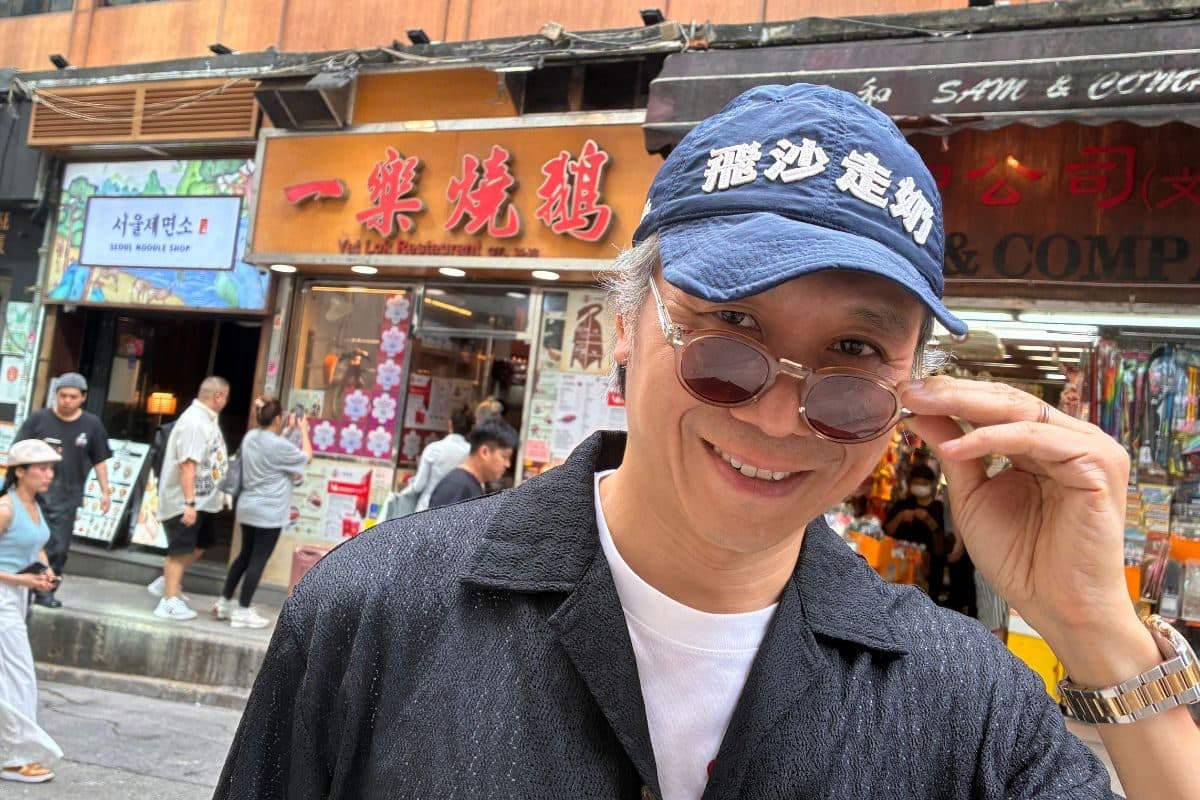
Photo by Foodie / Rubin Verebes. Licensed under Editorial use. Courtesy portrait from Foodie’s Uncle K profile; resized for web.
How to Follow Uncle K When You Eat in Hong Kong
Kent Wong films cha chaan tengs and cooked-food centres with a baseball cap and Cantonese narration. For visitors, his Instagram is a model for neighborhood eating, not only hotel dining.
July 27, 2026
A short video opens on a Formica table. Milk tea arrives. The man across from you wears a baseball cap and browline glasses, speaks Cantonese, and points at a wall of lettered breakfast sets as if you already live here. English and Chinese subtitles scroll underneath.
That is the usual entry into Uncle K, the Instagram handle of Kent Wong. By day he works in logistics and import-export. After hours he films the city’s everyday rooms: cha chaan tengs, bing sutts, dai pai dongs, cooked-food centres above wet markets, cart noodles in the New Territories. A meal-rhythm guide tells you when to eat. His feed shows which kind of table still carries that rhythm outside the hotel and Michelin circuit.
A logistics guy with a disguise that stuck
Wong has said the look began as cover. Colleagues were less likely to recognize him in a cap and glasses. The account grew out of a school video project with his daughter around 2023, first on Xiaohongshu, then on Instagram as @uncle_k_hong_kong. The early narrated roaming clips that made people stop scrolling date to late 2024, including a Sheung Shui cart-noodle reel that circulated widely. He posts a few times a week when work allows. He still prefers not to be called an influencer.
The beat matches a working Hong Konger’s map. Customer meetings take him across districts, so discoveries land in To Kwa Wan, San Po Kong, Tsuen Wan, Shek Kip Mei, Kowloon City, Tai Hang, and other neighborhoods visitors often skip for Central and Tsim Sha Tsui. He also covers affordable hotel buffets and the occasional fine-dining night, plus Shenzhen and Japan when the bill stays reasonable. The through line is price and pleasure, not prestige.
Why the neighborhood rooms matter
Interviews with Wong keep returning to the same worry: cooks retiring, shops closing, and day-trippers treating Shenzhen as the cheaper dinner. His answer is practical. Share places that still cook well for ordinary money. Bring English subtitles so visitors can follow without treating the city as a closed club. Frame the work as a win for diners, kitchens, and tourism at once.
That stance matters more than any single recommendation. A cooked-food centre lunch or a cha chaan teng breakfast is how Hong Kong eats on a Tuesday. Trophy lists alone erase that. Wong’s 2026 Hong Kong Food Map, released in English and Chinese online, extends the same idea into a portable guide. Treat the map and the reels as companions to a day shaped by breakfast sets, yum cha, afternoon tea, and late noodles, not as a scavenger hunt that replaces the city’s clock.
How to use the feed on a short trip
Habits that travel well
- Watch for format, not only the shop name. Cha chaan teng breakfast, market cooked-food floors, and cart noodles teach you what to look for two doors down.
- Read the subtitles, then check OpenRice or Google for hours before you commit. Reels outlive renovations and Monday closures.
- Cluster by MTR stop. One neighborhood block per meal keeps the map friendly.
- Order what the video actually shows. A pineapple bun with butter or a set meal is a clearer ask than “whatever Uncle K likes.”
- Leave room for a weak day. One visit is not a full verdict on a kitchen; standards move with staffing and rush.
- Prefer support over spectacle. If a plate is off, move on. A public pile-on helps nobody finishing service.
Follower counts on Instagram and Xiaohongshu now run into the hundreds of thousands, and coverage in 2026 noted that some viewers found recommendations uneven. Wong’s own reply is useful traveler advice: treat a clip as one meal’s report, not a lifetime rating. Cross-check, share the table, and keep a backup nearby.
To start, we recommend saving three neighborhood videos the night before you fly, then pairing each with a meal window: breakfast set, yum cha, afternoon tea, or late noodles. Let the baseball cap point you toward rooms locals still use. Let your own second stall, second café, or second bowl decide whether the city feels open after the first famous plate.