
How to Order at a Ramen Counter
Pay at the machine if there is one. Learn which word is the seasoning and which is the pork-bone broth, then eat the noodles while they still bounce.
Updated October 18, 2026
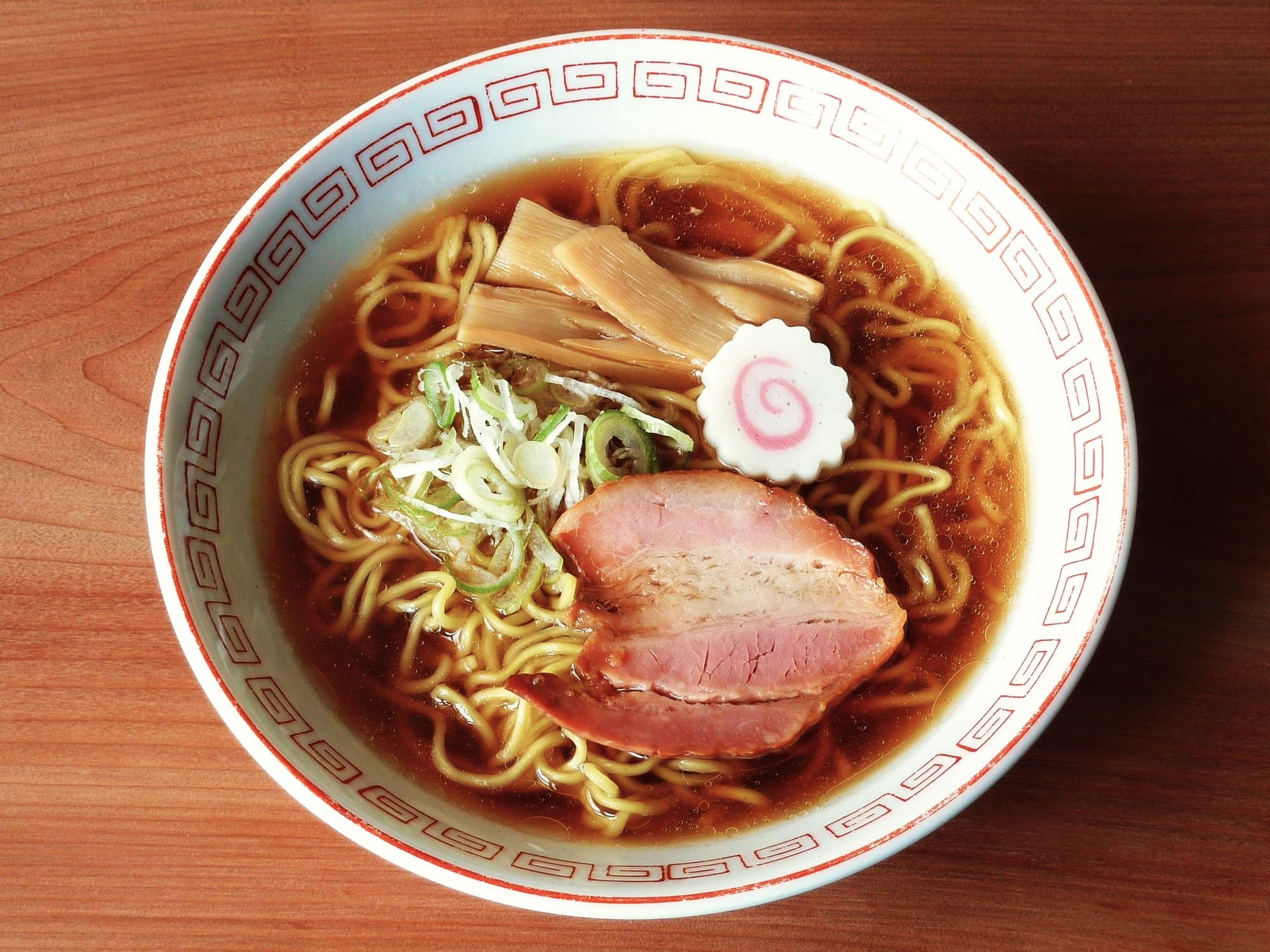
Photo by Quercus acuta. Licensed under CC BY-SA 4.0. Resized for web
Cash in your hand, a machine by the door, stools pulled close to the pots. The person ahead of you is already holding a small ticket.
At many counters in Japan, that ticket is how the bowl gets made. You pay before a cook asks you anything, and the soup arrives seasoned. Choose the shop's bowl, and answer if they ask about the noodles. Eat while they still bounce.
Pay before you sit
A lot of shops never send a server. Money goes into the machine, you press the bowl you want, and a ticket drops out. Press again for an egg or a side. Japan's National Consumer Affairs Center tells visitors that many of these machines still refuse cards, so cash is the pocket that works. If a button does nothing, feed the machine first. Some of them wait for the bills before they will take an order.
One ticket, one bowl. Extra chashu often has its own button, and so does the marinated egg. Gyoza is on some machines and absent from others. A few sell ramen and stop there. Take your change, then copy the person ahead of you. One counter collects the ticket as you sit. Another wants it in your hand until a stool opens.
When there is no machine, someone hands you a menu. That is common all over Japan, and it is the usual way once you are eating outside the country. Order the bowl the shop is built around.
Seasoning, then the broth
Shio, shoyu, miso, tonkotsu. Those four words cover most machines. Muneaki Yonemitsu, who studies pork-bone ramen at Kyushu Sangyo University, explained the split in Highlighting Japan, a magazine from the Cabinet Office. Shio (salt), shoyu (soy sauce), and miso are tare, the seasoning, also called kaeshi. A concentrated spoonful goes into the bowl. Tonkotsu is the broth itself: pork bones boiled hard until the soup turns cloudy. A pork-bone broth can still be seasoned with soy, miso, or salt. The button is naming one of those layers, and sometimes both.
You can taste the difference in two cities. Sapporo's famous bowl is miso seasoning on a pork-bone broth, often with corn and a pat of butter on top. Hakata, in Fukuoka, is the cloudy broth with thin straight noodles, and more noodles later if you want them.
Kotteri on a menu means rich. Assari means light. A clear shio bowl is the light one. A milky tonkotsu is the heavy one. Shoyu follows the stock underneath, amber and thin in some shops, dark and oily in others.
A menu with one ramen and an egg has already decided. Order the ramen.
On the button
- Shio (塩): salt seasoning. Usually the lighter, clearer bowl.
- Shoyu (醤油): soy seasoning. Often amber. In a lot of shops this is the Tokyo-style bowl.
- Miso (味噌): soybean-paste seasoning. Deeper, and often heavier. Sapporo’s version is the one with corn and butter.
- Tonkotsu (豚骨): cloudy pork-bone broth. The button may also name the soy or salt on top of it.
- Futsu (普通): regular noodles, if they ask.
- Kaedama (替え玉): another serving of noodles for the soup you still have. Noodles only.
- Ajitama (味玉): a soy-marinated soft egg.
If they ask how you want it
Some shops set the bowl down and never ask a thing.
A Hakata counter usually does. The noodles are thin, and they soften once they sit in the soup, so they ask how firm you want them. Fukuoka's tourism guide lines the words up from soft to very firm: yawa, futsu, kata, barikata. The first time, say futsu de. That is regular. A firmer noodle can wait for the next bowl, when you know you want more chew.
The portion can look small. In a Ministry of Agriculture portrait of Hakata ramen, food journalist Hantsu Endo put those thin noodles at about 100 grams. Eat them. If soup is left and you want more, order kaedama: another nest of noodles for the broth you still have. Kaedama onegaishimasu. One shop sends you back to the machine. Another lets you order it from the stool. If kaedama is missing from the board, let it go.
Ie-kei, the Yokohama pork-and-soy style, asks for three answers at once: how firm, how strong, how much oil. Futsu de, said once, can cover all three, and you get the bowl that shop calls normal. Spinach, pork, and a large sheet of nori come on it. Rice usually sits alongside. Dip the nori until it slackens with soup, then wrap a bite of the rice. The style began at Yoshimura-ya, which opened in Yokohama in 1974. Shops that followed kept ya, house, in the name, and ie-kei became the word for the family.
Jiro-style shops serve a heavier bowl: cabbage, bean sprouts, and thick slices of pork. As the bowl comes together they ask about garlic. They are also asking about the vegetables, the back fat, and a stronger seasoning. Sonomama means as it comes. On a first visit, that is a complete answer.
Taste the soup first
Look at the bowl before you buy more for it. A slice or two of chashu, the braised pork, usually shares the bowl with menma, salted bamboo. Ajitama, a soy-marinated egg with a soft yolk, is the extra worth pressing if you like that kind of egg. Naruto, the fish cake with the pink spiral, and a sheet of nori turn up on a lot of clear shoyu bowls. Corn and butter belong more often with miso.
Garlic, red pickled ginger, sesame, and pickled mustard greens sit on a lot of Hakata counters for the second half of the meal. Fukuoka's tourism office says to taste the soup as it arrives, then add. A heavy pour salts a bowl the cook has already seasoned.
If pork or wheat is a problem, speak up before you pay. Those are the ordinary bones and the ordinary noodles. The machine cannot rebuild the bowl. A cloudy chicken broth, or niboshi broth made from dried sardines, is available when a button says so.
Tsukemen is a different button
Tsukemen comes apart: noodles on a plate, often cooled, and a cup of broth cooked down for dipping. Take a few strands and drag them through. If the whole portion goes in, the cup cools and the noodles go soft.
Soup-wari is the last step, hot stock poured into what remains so you can drink it. Some shops bring the pot. Some leave it on the counter for you. Ask if you do not see it. Cold noodles are the usual order. Atsumori means you want them warmed.
While they still bounce
Start when the bowl lands. The bounce comes from kansui, an alkaline water in the dough, and a hot broth begins to take it as soon as the noodles are in. Slurping is ordinary in these rooms. It brings the broth up with the noodles. A quiet bite is welcome too. The spoon is for the soup, and the chopsticks are for the noodles.
The portion is one person's, meant to be eaten hot. Two people need two tickets. If a line is outside a small shop, finish and give up the stool. Japan's tourism office asks you to free the seat when people are waiting. A small shop has nowhere else to put them. On a quiet afternoon, you can sit with the bowl. Leave a broth that is too heavy. Eat the noodles.
The second time, you already know whether you wanted the clear soy or the milky pork, and whether regular noodles were enough. Order that. Add the egg if you want it. The machine is still by the door.