
Tokyo: Five Neighborhoods for Serious Eating
Five meal formats across the city, from market mornings to yakitori alleys.
Updated July 19, 2026
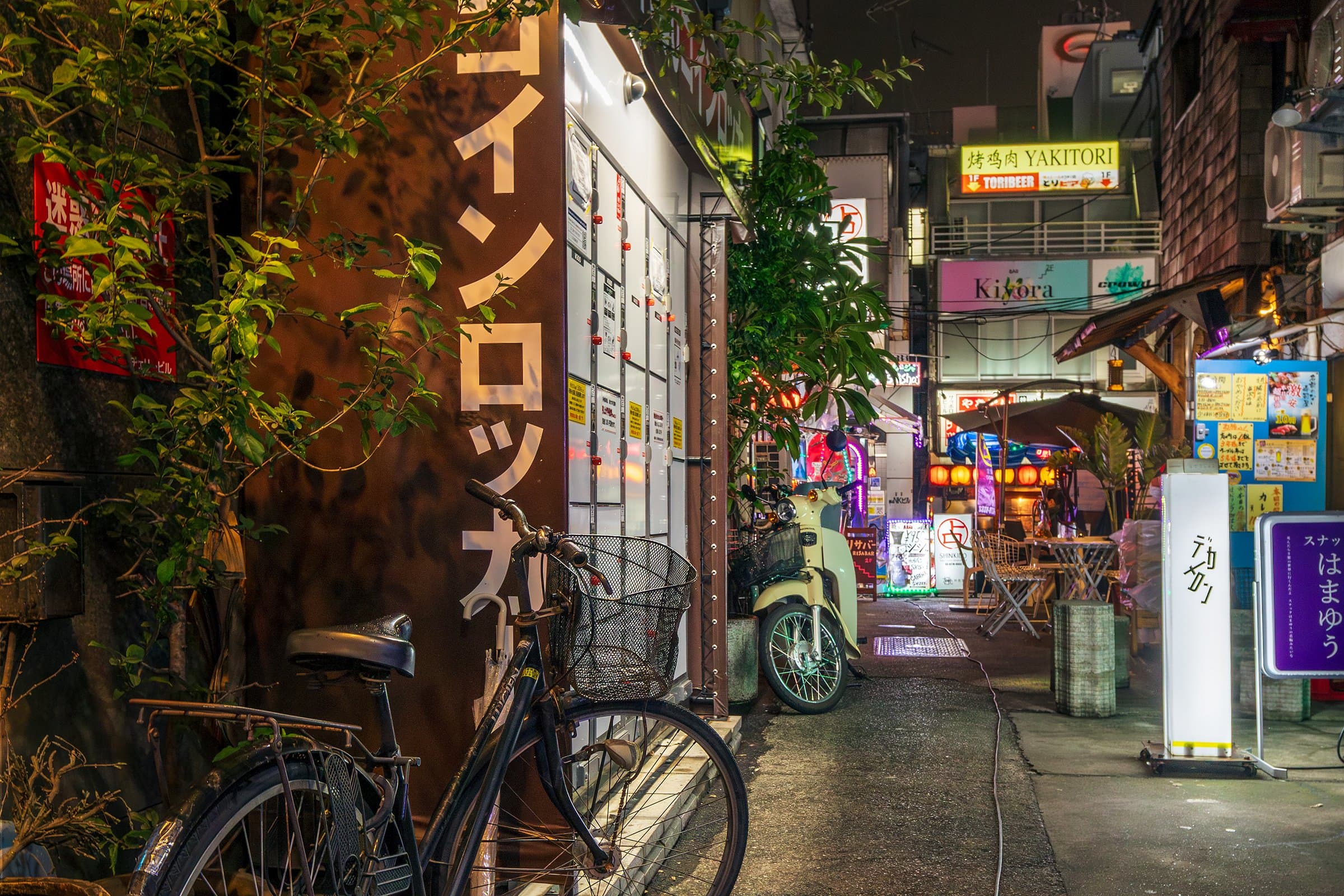
Photo by Simo Räsänen. Licensed under CC BY-SA 4.0. Cropped and resized for web
Tokyo eats cleanly when you pick one neighborhood per half-day and chase a format. Market mornings, temple-town snacks, yakitori alleys, department-store food floors, and neighborhood yokocho each ask for a different pace. This is a mood map, not a ranking of trophy counters.
Stay walkable once you arrive. Leave room for the stall you find by scent and line, not by a scavenger hunt across the whole map.
Tsukiji Outer Market
Come for standing sushi, tamagoyaki, and market snacks before midday. The wholesale auction moved to Toyosu in 2018. The Outer Market stayed and still works as a morning graze, not as the old wholesale floor.
Use the Hibiya Line to Tsukiji or the Oedo Line to Tsukijishijo. Professional buyers get priority early; public sales commonly run into early afternoon, though shops set their own hours. Check the official calendar. Eat at stalls or designated spots rather than while wandering. Energy fades after early afternoon. If you want the working auction complex instead, that is Toyosu.
Asakusa and Ueno
This east-side pairing covers old-Tokyo snacks and a busy market street. Walk Nakamise toward Senso-ji for savory crackers, sweets, and temple-town grazing. The approach street is short and crowded by midday. Treat the temple’s 628 founding story as legend; the current main hall is a postwar rebuild.
Then shift to Ameya-Yokocho between Ueno and Okachimachi for a denser market feel along the tracks. Shop hours often fall roughly between 10:00 and 20:00, with plenty of exceptions. Asakusa stations serve Nakamise; JR Ueno or Okachimachi serve Ameyoko.
Shinjuku
Shinjuku is the city’s clearest late-night alley lesson. Omoide Yokocho, by the West Exit, packs roughly sixty food and drink shops into a tiny postwar market footprint. Come for charcoal skewers, offal, and tiny counters that fill from about 17:00. Cash is still common.
Golden Gai, toward Kabukicho, is a better companion for drinks than dinner. Many bars have cover charges, and food is secondary. If you want a daytime stop first, Isetan’s basement food floor is a classic Shinjuku depachika for prepared dishes and sweets.
Shibuya and Ebisu
Use this stretch for modern department-store food by day and a covered izakaya alley by night. Tokyu Food Show sits under and around Shibuya Station, with deli counters, sweets, groceries, and a little rare standing seating for a depachika. Hours generally run through the shopping day into evening.
One stop or a short walk south lands you at Ebisu Yokocho near JR Ebisu’s West Exit. It is an indoor alley of small restaurants that wakes up around 17:00. The point is hopping, not booking one long omakase.
Kichijoji
Kichijoji is the residential-scale fifth stop. Harmonica Yokocho, at the north exit, has a day-market face and a lantern-bar night. JR Chuo Rapid trains take about fourteen minutes from Shinjuku.
Treat it as a shop-hopping evening rather than one sit-down meal. Weekends get busier. Compared with Nakano Broadway or Shimokitazawa, the food format here is clearer for a short visit: one alley, two moods, easy transit.
To start, choose the format you want most this trip and build the day around walking distance. Tokyo rewards that kind of intent.